Is Halloween Candy Toxic to Cats? (Xylitol, Chocolate & Wrapper Risks)
By WarmWag Official Pet Safety Team | Vet-Reviewed | Last Updated: August 2026
Disclaimer: This content is for educational purposes only and is not a substitute for professional veterinary advice. If your cat ingested candy, contact your vet immediately.
TABLE OF CONTENTS
- Introduction: The Sweet Danger in Your Candy Bowl
- Why Cats Are Attracted to Halloween Candy (Even Though They Can’t Taste Sweet)
- DANGER 1: Chocolate – The Number One Halloween Killer
- 3.1 The Science: Theobromine and Caffeine Toxicity
- 3.2 Toxicity Chart: Which Chocolate is Most Dangerous?
- 3.3 Symptoms of Chocolate Poisoning Timeline
- DANGER 2: Xylitol / Birch Sugar – The Hidden, Deadly Ingredient
- 4.1 What is Xylitol and Why It’s Rebranded as Birch Sugar?
- 4.2 Why Xylitol Causes Hypoglycemia and Liver Failure in Cats
- 4.3 Common Halloween Candies That Contain Xylitol
- DANGER 3: Wrappers, Foil, Cellophane & Sticks – The Surgical Emergency
- 5.1 Why Wrappers Are So Attractive to Cats
- 5.2 How Wrappers Cause Intestinal Blockage and Perforation
- 5.3 Symptoms of Foreign Body Obstruction
- Other Toxic Halloween Threats: Raisins, Nuts, High-Fat Sweets
- Emergency Action Plan: What To Do If Your Cat Ate Halloween Candy (5 Steps)
- Prevention Guide: How to Make Halloween 100% Cat-Safe
- Vet-Approved Safe Halloween Treats for Cats
- Frequently Asked Questions (FAQs)
- Conclusion
- Sources & Author Bio
1. Introduction: Is Halloween Candy Toxic to Cats?
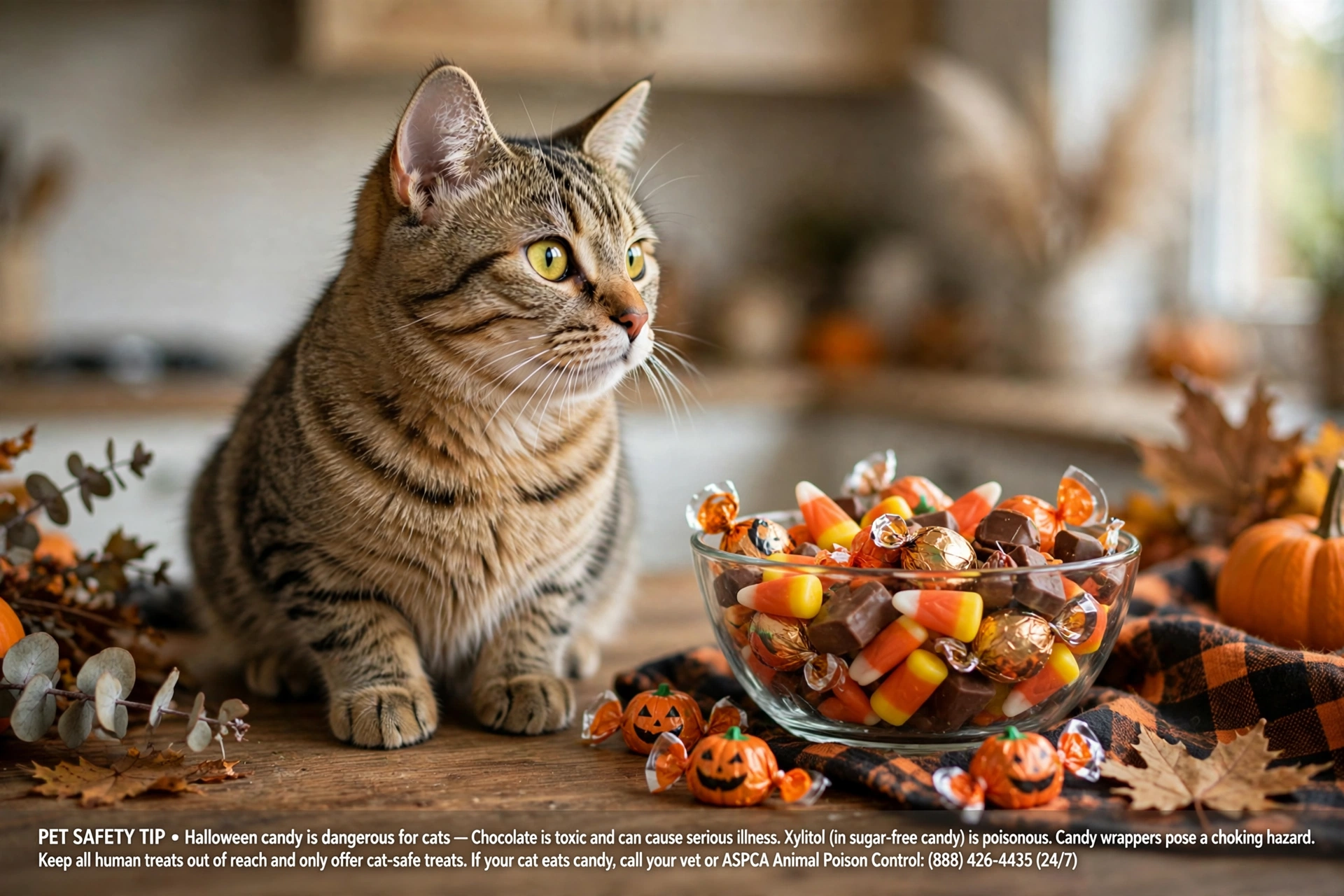
Halloween night sees a 30% spike in pet poisoning emergency calls. While everyone warns about dogs eating chocolate, cats are at an even higher risk. A typical cat weighs 4-5 kg, so even 5 grams of dark chocolate can be a life-threatening dose.
The question “Is Halloween candy toxic to cats?” is not just a seasonal curiosity – it’s a critical safety issue for every cat owner. The answer is a definitive YES, almost all Halloween candy is toxic or physically dangerous to cats for three distinct reasons: chemical toxicity from chocolate, chemical toxicity from xylitol, and physical danger from packaging.
2. Why Cats Are Attracted to Halloween Candy (Even Though They Can’t Taste Sweet)
Scientifically, cats lack the Tas1r2 gene, which means they cannot taste sweetness. So why do they eat candy?
A) High Fat Content: Chocolate, caramel, and peanut butter cups are high in animal fats and dairy. Cats are obligate carnivores attracted to fat.
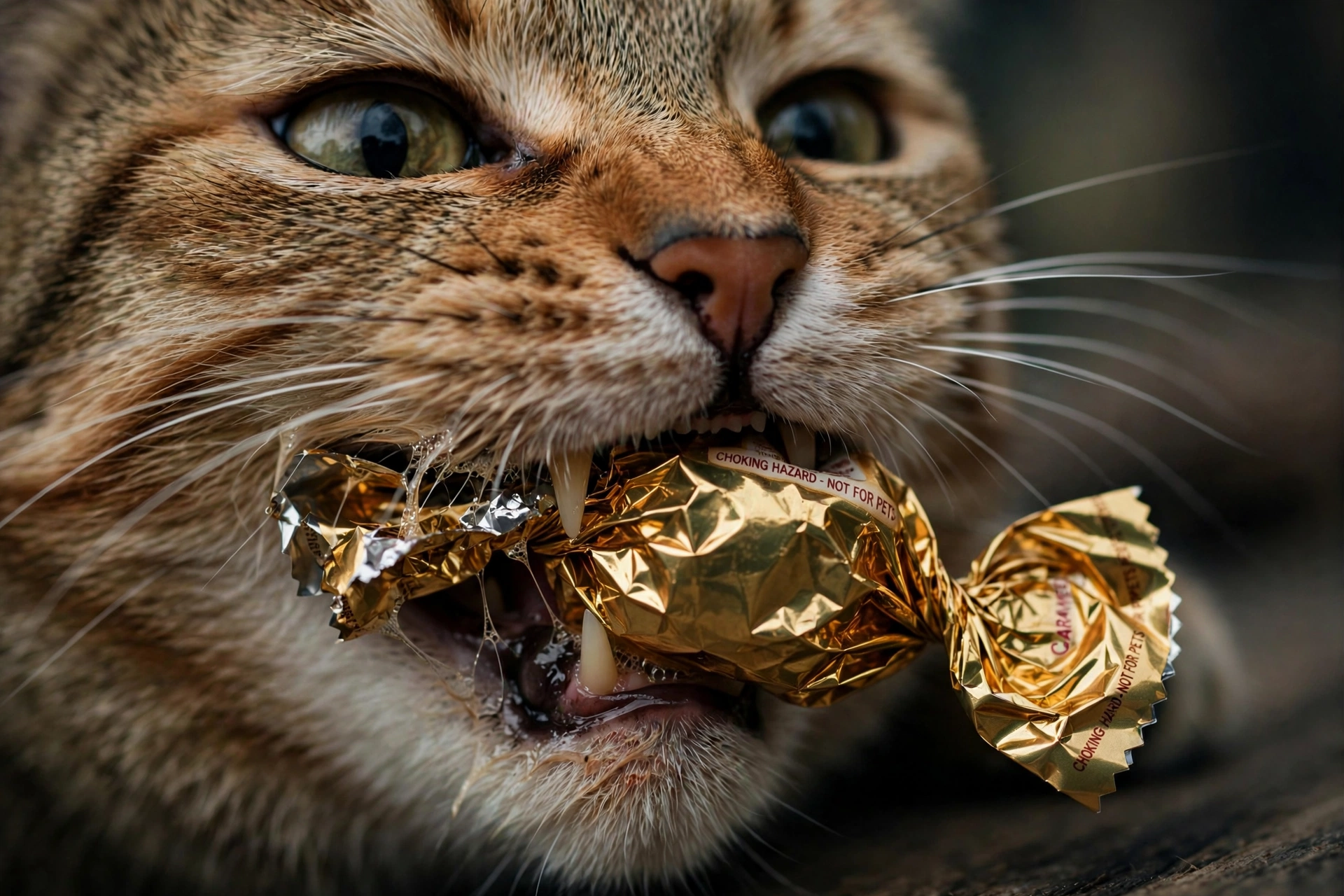
B) The Prey Instinct: Your cat doesn’t see candy, it sees a toy. Crinkly foil, shiny wrappers, and small rolling candies trigger their hunting instinct. The sound is similar to a mouse rustling.
C) Anxiety and Novelty: Halloween brings constant doorbell ringing, costumes, and strangers. An anxious cat may chew on unusual items as a coping behavior, a condition called Pica.
3. DANGER 1: Chocolate – The Number One Halloween Killer
3.1 The Science: Theobromine and Caffeine Toxicity
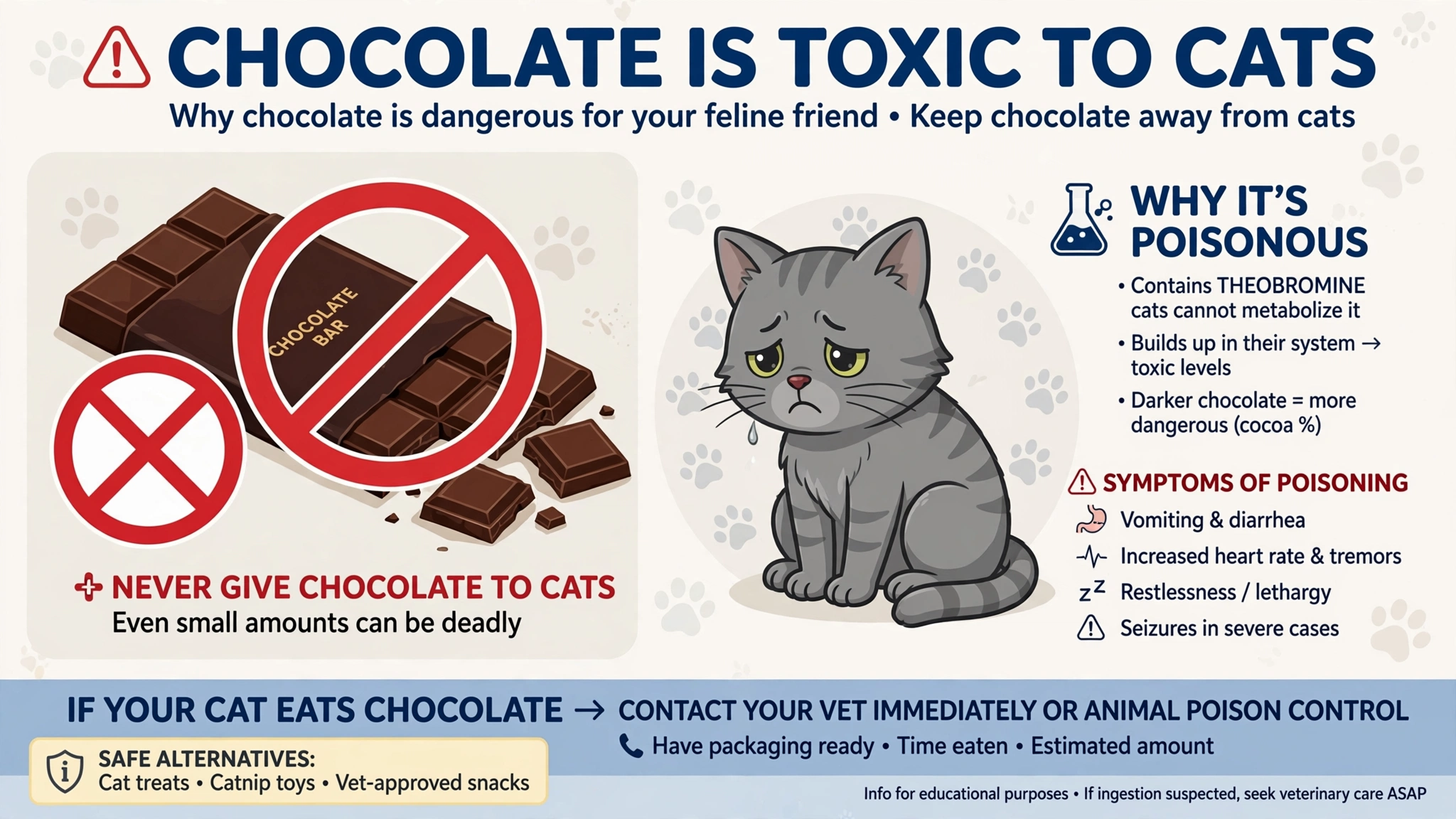
Chocolate contains theobromine and caffeine. Cats metabolize theobromine 10x slower than humans. It stays in their bloodstream for up to 72 hours, causing continuous stimulation of the heart and central nervous system.
3.2 Toxicity Chart: Which Chocolate is Most Dangerous?
This table is critical for understanding the risk.
Chocolate Type | Theobromine Content (mg per oz) | Risk Level for a 10lb Cat | What 1 oz Can Do |
|---|---|---|---|
Cocoa Powder & Baking Chocolate | 130-160 mg | EXTREME / FATAL | Can cause seizures & death |
Dark Chocolate 70-85% | 40-60 mg | VERY HIGH | Severe vomiting, rapid heart rate |
Milk Chocolate | 15-25 mg | HIGH | Vomiting, diarrhea, hyperactivity |
White Chocolate | 0.25 mg | LOW for theobromine, but HIGH for Pancreatitis | Vomiting from fat overload |
Important: There is no safe dose. White chocolate is still dangerous.
3.3 Symptoms of Chocolate Poisoning Timeline
Within 2-4 Hours: Vomiting, diarrhea, excessive thirst, restlessness.
Within 6-12 Hours: Rapid breathing, elevated heart rate, muscle twitching, hyperactivity.
Within 12-36 Hours: Tremors, seizures, heart arrhythmia, collapse. Without treatment, this can be fatal.
4. DANGER 2: Xylitol / Birch Sugar – The Hidden, Deadly Ingredient
4.1 What is Xylitol and Why It’s Rebranded as Birch Sugar?
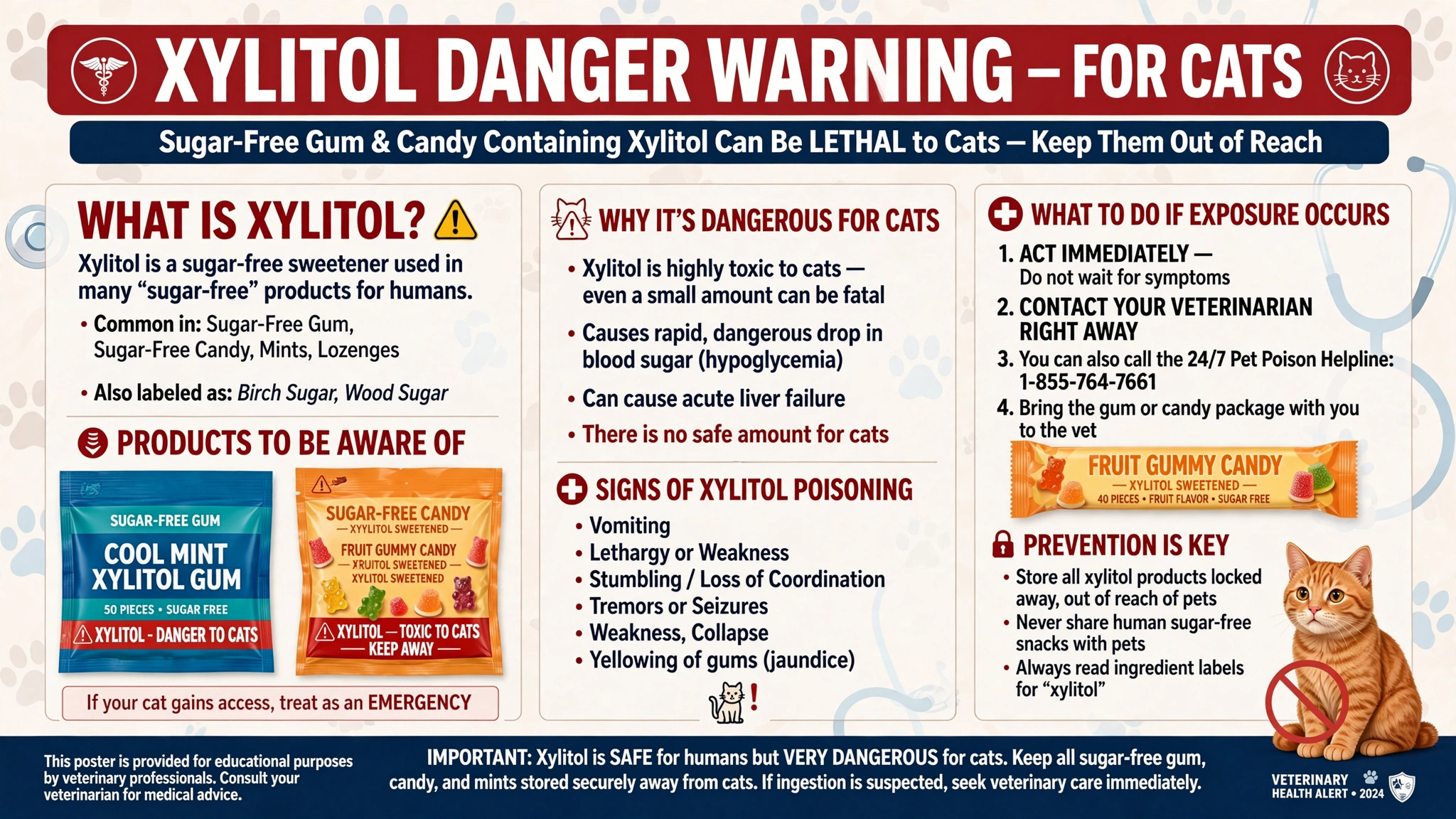
Xylitol is a sugar alcohol used as a zero-calorie sweetener. In 2024, the FDA approved its labeling as “Birch Sugar” or “Birch Sap Extract” to sound more natural. It is chemically identical and equally toxic.
4.2 Why Xylitol Causes Hypoglycemia and Liver Failure in Cats
Unlike in humans, xylitol in cats causes an immediate and massive insulin release.
Phase 1: Hypoglycemic Crisis (30-60 minutes after ingestion): Blood sugar drops dangerously low. Symptoms: vomiting, weakness, stumbling, disorientation, seizures, coma.
Phase 2: Acute Hepatic Necrosis (24-72 hours after ingestion): Xylitol destroys liver cells, causing acute liver failure. Signs: jaundiced (yellow) gums, black tarry stool, lethargy. Liver failure has a high mortality rate.
There is NO antidote for xylitol poisoning.
4.3 Common Halloween Candies That Contain Xylitol
- Sugar-Free Gum (Highest concentration)
- Sugar-Free Mints, Jolly Rancher Zero Sugar, Tootsie Rolls Sugar-Free
- Sugar-Free Peanut Butter Cups
- Low-sugar baked goods and protein bars given out as “healthy” alternatives
Rule: If the label says “Sugar-Free,” “No Sugar Added,” “Zero Sugar,” or “Birch Sugar,” lock it away.
5. DANGER 3: Wrappers, Foil, Cellophane & Sticks – The Surgical Emergency
This is the most underrated risk. Vets call it a “linear foreign body.”
5.1 Why Wrappers Are So Attractive
Cats love the texture and sound. They chew, and the wrapper gets stuck on the barbs of their tongue. They cannot spit it out easily, so they swallow.
5.2 How Wrappers Cause Intestinal Blockage and Perforation
Foil and cellophane cannot be digested. They can:
- Cause choking in the esophagus.
- Form a ball and block the intestine completely (obstruction).
- The stringy nature of wrappers can cause the intestines to “pleat” and saw through the intestinal wall, causing peritonitis – a fatal infection of the abdomen. Lollipop sticks can physically puncture the gut.
This requires emergency surgery costing $3000 – $7000.
5.3 Symptoms of Foreign Body Obstruction (12-48 Hours Delayed)
- Repeated vomiting, especially after eating or drinking
- Complete loss of appetite
- Lethargy, hiding
- No poop or very little, painful poop
- Swollen, painful abdomen
- Drooling
6. Other Toxic Halloween Threats
- Raisins & Currants: Found in trail mixes and some chocolate. Cause acute kidney failure in cats. Even 1-2 raisins are toxic.
- Macadamia Nuts: Cause weakness, vomiting, tremors.
- High-Fat Candies (Caramel, Toffee): Trigger acute pancreatitis.
- Glow Sticks: Dibutyl phthalate inside is not highly toxic but causes severe oral irritation, drooling, and agitation if bitten.
7. Emergency Action Plan: What To Do If Your Cat Ate Halloween Candy (5 Steps)
STEP 1: Secure and Collect Evidence. Move your cat to a safe room. DO NOT induce vomiting at home – hydrogen peroxide is toxic to cats. Collect the wrapper, the candy, and a photo of the ingredient list. Note weight of candy missing and time of ingestion.
STEP 2: Call For Help Immediately. Call your vet, nearest emergency animal hospital, or Pet Poison Helpline: US – (855) 764-7661 or ASPCA (888) 426-4435. Have this ready: Cat’s weight, age, breed, what it ate, how much, and when.
STEP 3: Do Not Wait and See. Toxins are absorbed quickly. Waiting for symptoms makes treatment much harder and more expensive. Early decontamination is key.
STEP 4: Veterinary Treatment. At the clinic, treatment may include: Inducing vomiting by injection (if within 2 hours), IV fluid therapy, activated charcoal, continuous ECG and blood glucose monitoring, liver protectants, and anti-seizure medication.
STEP 5: 72-Hour Monitoring. Even after discharge, monitor for 3 days. Xylitol’s liver effects are delayed.
8. Prevention Guide: How to Make Halloween 100% Cat-Safe
- High & Locked Storage: All candy in a latched cabinet, not a bowl on the table.
- Safe Room Protocol: From 5 PM onwards on Oct 31, put your cat in a quiet bedroom with litter, food, water, and toys. This prevents door-dashing and stress.
- Family Briefing: Tell kids: Candy is traded for cat treats. No sharing.
- Trash Lockdown: Use a trash can with a lid. Take all wrappers immediately to the outside bin.
- Leash Your Candy Bowl: When trick-or-treaters come, keep the candy bowl high, not on the floor.
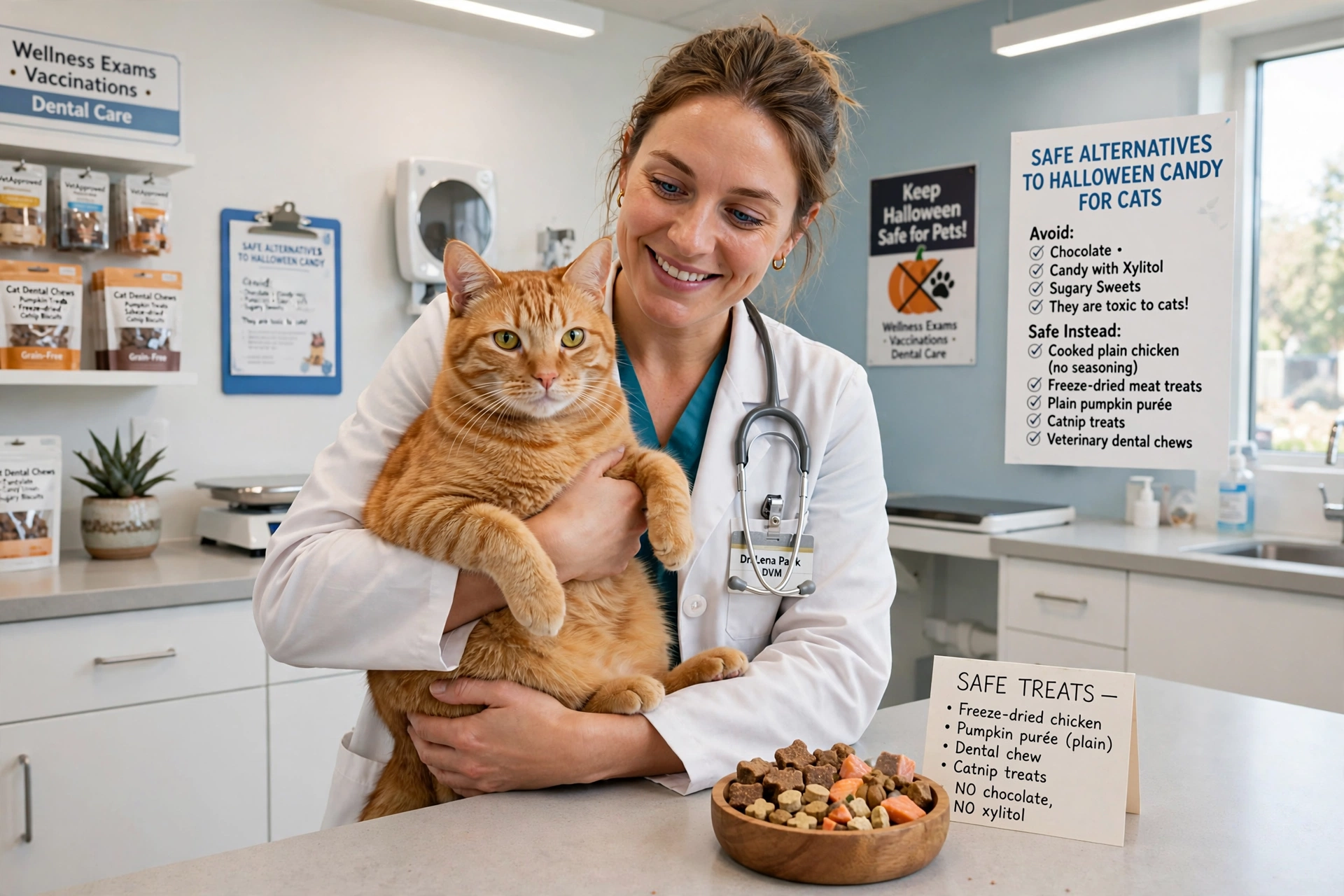
9. Vet-Approved Safe Halloween Treats for Cats
Instead of candy, give: Commercial cat treats, single-ingredient freeze-dried chicken, a spoonful of plain pumpkin puree (not pie filling), or a new silvervine toy. This satisfies their need for novelty safely.
10. Frequently Asked Questions (FAQs)
Q: Can a tiny lick of chocolate kill a cat?
A: Yes. For a small kitten or a cat with a heart condition, even a small amount of baking chocolate can be fatal. Never risk it.
Q: My cat ate a wrapper but is acting normal, is it okay?
A: No. Obstruction symptoms are delayed 24-48 hours. Call your vet now. Watch for vomiting and loss of appetite.
Q: Is birch sugar the same as xylitol?
A: Yes, it is 100% the same chemical, just marketed differently. It is equally toxic.
Q: How long after eating candy will a cat show symptoms?
A: Chocolate: 2-6 hours. Xylitol low blood sugar: 30-60 mins. Wrapper blockage: 12-48 hours. Liver failure from xylitol: 24-72 hours.
11. Conclusion
Your Halloween candy bowl contains three separate ways to kill your cat: theobromine in chocolate, xylitol in sugar-free candy, and intestinal blockage from wrappers. The only safe amount is zero.
This Halloween, protect your cat by storing candy securely, creating a safe room, and sharing this guide with fellow cat parents. A few simple steps prevent a tragic emergency room visit.
Stay Safe and Happy Halloween from WarmWag Official!
According to the ASPCA Animal Poison Control Center, chocolate and xylitol are among the most common causes of pet poisoning.
If your cat ingested xylitol, contact the
Pet Poison Helpline for Xylitol Poisoning immediately for 24/7 emergency advice.
The U.S. Food and Drug Administration (FDA) warns that xylitol, now labeled as birch sugar, is highly toxic to pets.
 Check Safe Halloween Treats for Cats
 10 Foods Toxic to Cats – Full List
 Cat First-Aid Guide – Read Now