Grain-Free Dog Food and Heart Disease: What the Science Actually Says (2026)
Grain-free dog food went from a premium trend to a genuine health question almost overnight in 2018, when the FDA opened an investigation into reports of dilated cardiomyopathy — a serious heart condition — in dogs eating certain grain-free diets. Years on, with a major research review published as recently as June 2026, the picture is clearer than it was, but still more nuanced than either the original alarm or the more recent reassurances suggest. Here’s what’s actually known.

Quick Answer
There’s a real, evidence-backed association between certain grain-free diets and dilated cardiomyopathy (DCM) in dogs, particularly diets high in peas, lentils, and other legumes — but it’s not as simple as “grain-free causes heart disease.” The clearest link involves a specific category of diets researchers call BEG diets (boutique, exotic-ingredient, grain-free), and the leading theory involves reduced taurine availability, an amino acid essential for heart muscle function. If your dog is currently on a grain-free diet, this is worth discussing with your vet rather than panicking or dismissing it outright — and it’s not a reason to avoid every grain-free product without looking at what’s actually in it.
Table of Contents
- What Is DCM, and Why Does It Matter?
- How the FDA Investigation Started
- What the FDA Actually Found
- The Taurine Theory, Explained
- What 2026 Research Shows
- Which Diets Are Actually Implicated
- Breeds at Higher Risk
- Should You Switch Away From Grain-Free?
- Signs of DCM to Watch For
- The Investigation Timeline
- Common Myths About This Topic
- How to Read a Dog Food Label for This
- FAQs
- Final Verdict
What Is DCM, and Why Does It Matter? {#what-is-dcm}
Dilated cardiomyopathy is a disease of the heart muscle in which the chambers enlarge and the muscle itself weakens, reducing the heart’s ability to pump blood effectively. It’s actually the second most common form of acquired heart disease in dogs. Left untreated, it can progress to congestive heart failure, dangerous heart rhythm problems, or sudden death. Clinical signs can be subtle early on — coughing, tiredness, reduced ability to exercise, laboured breathing — which is part of what makes this particular story concerning: dogs can be affected for a while before owners notice anything is wrong.

DCM has always existed as a disease, and it has a well-known genetic form that disproportionately affects certain large and giant breeds. What changed in 2018 was a spike in cases showing up in breeds with no known genetic predisposition to it at all — and a pattern connecting many of those cases to diet.
How the FDA Investigation Started {#fda-investigation}
In the year before the FDA’s public alert, veterinary cardiologists began independently noticing something odd. Dr. Joshua Stern at UC Davis saw a cluster of Golden Retrievers with DCM, low taurine levels, and similar grain-free diets. Around the same time, Dr. Lisa Freeman, a board-certified veterinary nutritionist at Tufts University, was seeing DCM in dogs eating what her team began calling BEG diets — boutique, exotic-ingredient, and grain-free. In June 2018, Freeman published a widely-read warning about the possible connection, and between January and July 2018, the FDA received 25 case reports connecting diet to DCM, before formally opening its investigation that July.
From January 2018 through April 2019, the FDA’s reports grew substantially — 553 cases were reported in that window, compared with typically zero to three cases reported in prior years. That scale of increase, across breeds without a known genetic risk, is what turned a handful of individual clinical observations into a formal federal investigation.
What the FDA Actually Found {#fda-findings}
The FDA’s examination of the case reports found a strong pattern: more than 90% of the implicated diets were grain-free, and 93% contained peas or lentils. In June 2019, the FDA took the unusual step of publishing a list of 16 pet food brands that appeared most frequently in the adverse-event reports — while explicitly stating that it had not established causation. That distinction mattered enormously but got lost in a lot of the media coverage at the time, which widely reported the brand list without carrying the caveat alongside it.
It’s worth being precise about what this data does and doesn’t show: it’s based on voluntarily submitted adverse-event reports, not a controlled scientific study designed specifically to prove cause and effect. A strong correlation across hundreds of cases is a serious signal worth investigating — which is exactly what happened next — but it isn’t, on its own, definitive proof that a specific ingredient causes the disease in a broader population of dogs.
The Taurine Theory, Explained {#taurine-theory}
The leading scientific theory centres on taurine, an amino acid that’s essential for normal heart muscle function. Unlike cats, dogs can normally synthesise their own taurine from other amino acids in their diet, so a taurine deficiency in dogs is less straightforward than it is in cats — but it can still happen, particularly when a diet’s overall composition interferes with taurine synthesis or absorption.
Several mechanisms have been proposed for how certain grain-free formulations might affect taurine status: legume-heavy recipes may provide the amino acid building blocks for taurine synthesis less efficiently than traditional grain-based recipes, some ingredients may interfere with taurine absorption in the gut, and some research has pointed to broader effects on metabolism and gut bacteria that could plausibly play a role too. Published research has shown dogs on non-traditional, legume-rich grain-free diets displaying measurable cardiac changes — larger heart chambers, reduced pumping function, and irregular heartbeats — compared to dogs on more traditional, lower-legume diets. That said, not every dog that develops diet-associated DCM has low taurine levels, which is part of why researchers describe the full picture as still not completely understood.
What 2026 Research Shows {#2026-research}
Eight years on from the original FDA alert, the research base has grown considerably, and a major research synthesis published in 2026 has helped clarify where the evidence stands. The overall picture that’s emerged is genuinely more nuanced than either the original 2018 alarm or some of the more dismissive recent takes suggest. The association between certain grain-free, legume-heavy diets and DCM risk factors has held up reasonably well across multiple independent studies, particularly regarding taurine deficiency and measurable cardiac changes. At the same time, researchers are increasingly cautious about over-simplifying this into “grain-free equals dangerous,” since plenty of well-formulated grain-free diets don’t share the same risk profile as the specific BEG-style diets originally implicated.
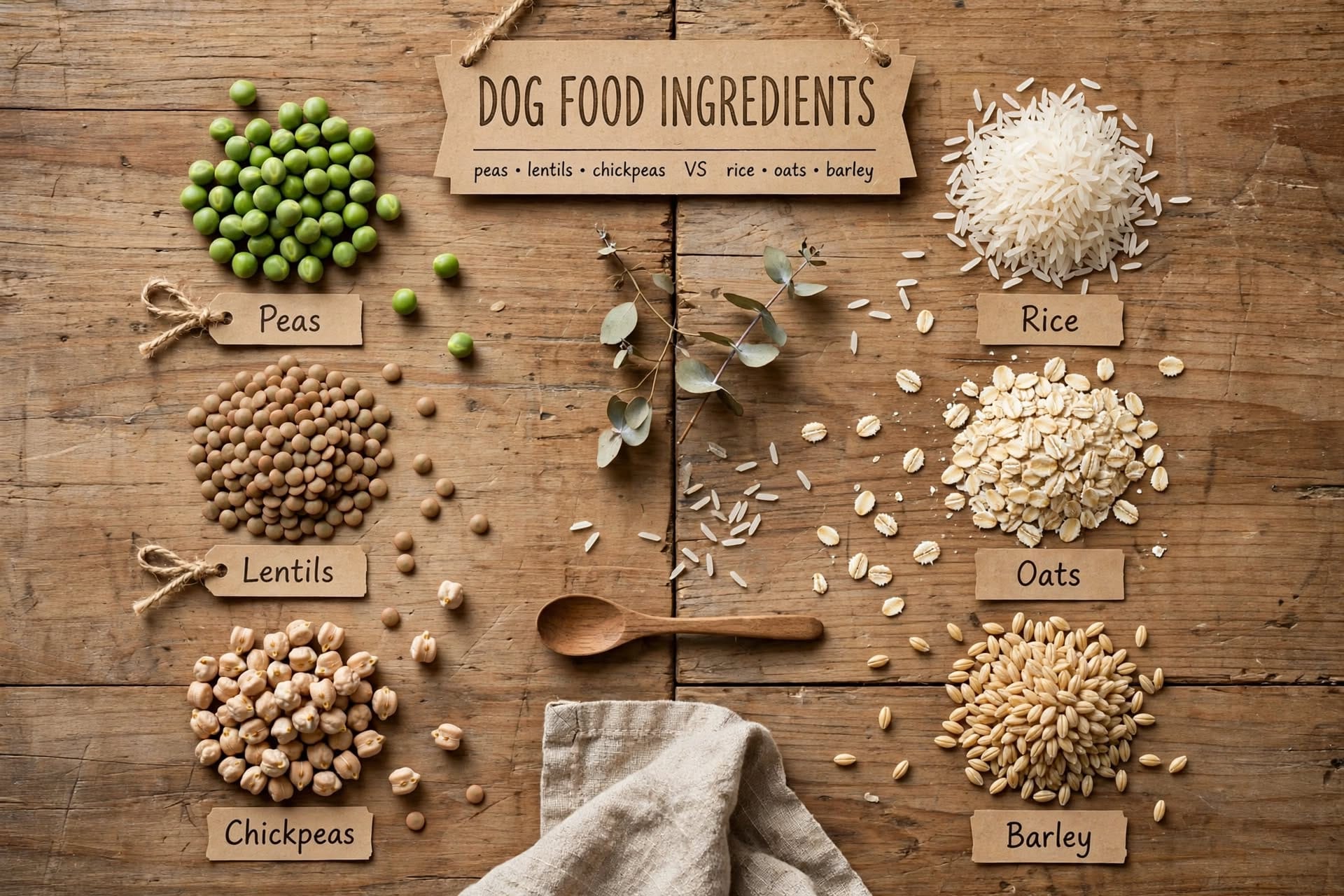
The current scientific consensus leans toward this being about specific formulations — heavy reliance on peas, lentils, and other legumes as primary protein and carbohydrate sources, often in “boutique” or smaller-manufacturer products — rather than the simple presence or absence of grain as an ingredient category.
Which Diets Are Actually Implicated {#which-diets}
| Diet Characteristic | Risk Level | Why |
|---|---|---|
| BEG diets (boutique, exotic-ingredient, grain-free) with peas/lentils as top ingredients | Higher concern | Most strongly represented in FDA case reports |
| Grain-free diets from large, established manufacturers with rigorous nutritional testing | Lower concern, but still worth monitoring | Better-resourced formulation and quality control, though the category overlap with implicated diets isn’t zero |
| Traditional grain-inclusive diets | Lowest concern based on current evidence | Not the diet category implicated in the case reports |
| Any diet, if genuinely nutritionally complete and appropriately tested | Lower concern regardless of grain content | Complete-and-balanced formulation with proper testing appears to matter more than grain status alone |
This is exactly why “just avoid anything labelled grain-free” is a blunter response than the evidence really calls for — the ingredient list and the manufacturer’s formulation rigour matter more than the grain-free label by itself.
Breeds at Higher Risk {#breeds-at-risk}
Certain large and giant breeds have a known genetic predisposition to DCM regardless of diet — Dobermans, Great Danes, Boxers, Irish Wolfhounds, and Cocker Spaniels among them. What made the 2018-2019 case reports notable is that they included breeds with no known genetic predisposition at all — Golden Retrievers and Labrador Retrievers were particularly overrepresented, alongside Whippets, Bulldogs, Shih Tzus, and dozens of other breeds. If your dog belongs to a breed with a known genetic risk and is also on a grain-free, legume-heavy diet, that combination is worth a specific conversation with your vet.
Should You Switch Away From Grain-Free? {#should-you-switch}
This isn’t a simple yes-or-no, and being honest about that is more useful than a blanket rule. Points worth weighing:

- If your dog is on a BEG-style diet with peas or lentils prominent in the first several ingredients, this is worth a genuine conversation with your vet, particularly if your dog’s breed carries any cardiac risk factors.
- If your dog is on a well-established, rigorously tested grain-free formula and doing well, the evidence doesn’t clearly demand an immediate switch — but it’s still worth mentioning at your next check-up.
- Don’t switch diets abruptly regardless of the reason — any diet change should be done gradually over a week or more to avoid digestive upset.
- A genuine grain allergy or intolerance is a legitimate reason some dogs are on grain-free diets in the first place, and this needs to be weighed against the DCM association rather than assuming one concern automatically outweighs the other.
- Your vet can check taurine levels with a blood test if there’s a specific concern, which is more useful than guessing based on diet category alone.
Signs of DCM to Watch For {#signs}
Because early DCM can be subtle, it’s worth knowing what to watch for regardless of what your dog currently eats:
- Coughing, particularly after exercise or at rest
- Tiring more easily than usual, or reduced interest in exercise
- Laboured or rapid breathing
- A swollen or distended abdomen
- Fainting or collapse
- Pale or bluish gums
Any of these, especially in combination, warrant a vet visit — DCM is far more manageable when caught earlier.
The Investigation Timeline {#timeline}
Understanding how this unfolded over time helps explain why the current picture is more nuanced than the initial headlines:
2017: Individual veterinary cardiologists at UC Davis and Tufts independently begin noticing unusual DCM cases in breeds without known genetic risk, all connected to grain-free, legume-heavy diets.
June 2018: Dr. Lisa Freeman publishes a widely-read warning about the possible connection, based on the clinical pattern her team and colleagues were observing.
July 2018: The FDA formally opens its investigation, having received 25 case reports in the preceding months.
2018-April 2019: Case reports grow to 553, an enormous jump from the typical zero-to-three cases reported in prior years.
June 2019: The FDA publishes a list of 16 brands most frequently represented in the reports, explicitly without claiming proven causation — a nuance that got lost in a lot of subsequent media coverage.
2019-2025: Ongoing research at multiple universities, funded partly through the AKC Canine Health Foundation, works to characterise the mechanism more precisely, including taurine status, cardiac imaging, and diet history across large dog populations.
2026: A major research synthesis consolidates years of published studies, producing the more precise, formulation-specific picture described in this guide rather than the broader “grain-free is dangerous” framing that dominated early coverage.
Common Myths About This Topic {#myths}
“Grain-free food is definitively proven to cause heart disease.” Not accurate — the FDA was explicit that its findings showed a strong association, not proven causation. The evidence has grown more supportive of a real link since 2018, but it’s specific to certain diet formulations, not a blanket indictment of every grain-free product.
“Grain-free diets are perfectly safe and this was all overblown media panic.” Also not accurate — the pattern across hundreds of independent case reports, combined with published research showing measurable cardiac changes in dogs on legume-heavy diets, represents a genuine signal worth taking seriously, not a manufactured scare.
“Only boutique brands are a concern, big brands are automatically fine.” Manufacturer size and resources correlate with formulation rigour on average, but it’s the actual ingredient profile — how legume-heavy the recipe is — that matters most, not the brand’s size alone.
“If my dog isn’t a large breed, this doesn’t apply.” The 2018-2019 reports notably included many breeds without prior known genetic risk, including medium-sized dogs like Cocker Spaniels — this isn’t purely a large-breed issue.
“Taurine supplements fix the problem regardless of diet.” Taurine supplementation can help in some diet-associated cases, but it’s not a substitute for addressing the underlying diet, and should be done under veterinary guidance rather than as a DIY workaround while continuing a higher-risk diet.
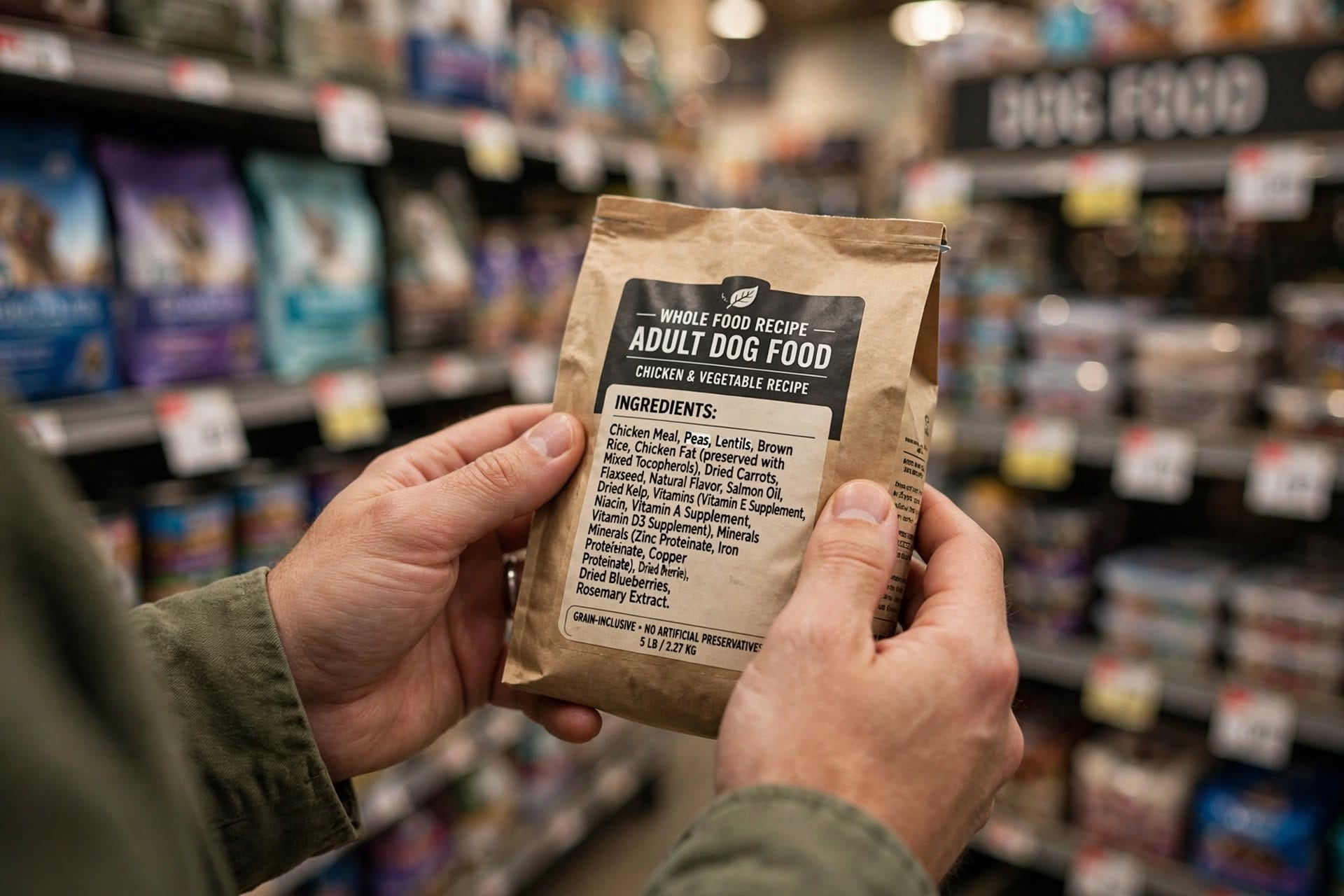
- Check the first five to ten ingredients — this is where peas, lentils, chickpeas, or other legumes being prominent (rather than appearing far down the list) matters most
- Look for a manufacturer with in-house veterinary nutritionists and published quality control practices, rather than a small boutique brand with limited testing infrastructure
- Check for AAFCO (or equivalent UK/EU) complete-and-balanced certification, which indicates the diet has been formulated to meet recognised nutritional standards
- Don’t assume “grain-free” and “BEG diet” are the same thing — plenty of grain-free diets from established manufacturers don’t share the same ingredient profile as the diets most represented in the FDA reports
FAQs {#faqs}
Does the FDA say grain-free food causes heart disease? No — the FDA identified a strong association based on adverse-event reports but was explicit that it hadn’t established direct causation. It’s a serious signal that prompted real research, not a proven cause-and-effect finding.
Is this only a US issue, or does it apply in the UK too? The underlying nutritional science (taurine, legume-heavy formulations) isn’t US-specific — it applies to any dog eating a similar diet profile, UK-made or otherwise. UK vets are aware of and monitor for this association too.
My dog has been on grain-free food for years and seems fine — should I still worry? Not necessarily panic, but it’s worth mentioning at your next vet visit, especially if the diet is legume-heavy or from a smaller boutique brand, or if your dog’s breed carries any cardiac risk factors.
Can this be reversed if caught early? In some cases, diet-associated DCM has shown improvement after switching diets and with appropriate veterinary treatment, particularly when caught before severe heart damage occurs — which is part of why early detection matters so much.
Is grain actually bad for dogs, which is why people go grain-free in the first place? No — true grain allergies are relatively uncommon in dogs, and grains aren’t inherently unhealthy for most dogs. Much of the original popularity of grain-free diets came from marketing and the human “low-carb” trend rather than a clear canine health need.
Should I get my dog’s taurine levels tested? If your dog is on a grain-free, legume-heavy diet, or shows any signs from the list above, it’s a reasonable thing to ask your vet about — a simple blood test can check taurine status directly rather than relying on diet category as a guess.
What breeds should be most cautious about grain-free diets? Breeds with an existing genetic predisposition to DCM (Dobermans, Great Danes, Boxers, Cocker Spaniels, Irish Wolfhounds) warrant extra caution, but the 2018-2019 reports also included many breeds with no prior known risk, so this isn’t purely a breed-specific concern.
How common is diet-associated DCM compared to genetic DCM? Exact proportions are still being refined by ongoing research, but the sudden, sharp increase in reports across non-predisposed breeds between 2018-2019 is what originally distinguished the diet-associated pattern from the baseline rate of genetic DCM, which had been relatively stable for years before that.
If I switch my dog off a grain-free diet, will their heart go back to normal? In cases caught before significant permanent heart damage, diet-associated DCM has shown improvement with a diet change and appropriate veterinary treatment, sometimes including taurine supplementation — but this needs veterinary monitoring, not just a diet swap on its own, and outcomes vary by how early it’s caught.
Are cats at risk from a similar issue? Cats have a well-established need for dietary taurine (unlike dogs, who normally synthesise their own), and taurine-deficient cat food was a recognised cause of feline DCM decades ago, which led to mandatory taurine fortification in commercial cat food. This is a different, older, and already well-addressed issue compared to the dog-specific grain-free question covered here.
Final Verdict {#final-verdict}
The grain-free and DCM story is a genuine example of nutritional science working as intended — an observed pattern, a formal investigation, and years of follow-up research that’s produced a more precise, nuanced understanding than the original headlines suggested. The clearest evidence points to specific BEG-style, legume-heavy formulations and their effect on taurine status, not to “grain-free” as a blanket category. If your dog is on a grain-free diet, this is worth a genuine conversation with your vet — checking the ingredient list, the manufacturer’s formulation standards, and your dog’s individual risk factors — rather than either dismissing the concern or panic-switching diets without a plan.
This guide is for general information and isn’t a substitute for professional veterinary advice. If you have concerns about your dog’s diet or heart health, talk to your vet, who may recommend blood testing or a referral to a veterinary nutritionist.
Further reading:
- FDA: Investigation Into Potential Link Between Certain Diets and Canine DCM
- AKC: Dilated Cardiomyopathy in Dogs
Related guides on WarmWag: