Xylitol Poisoning in Dogs: Signs, Sources & Emergency Steps
Xylitol cases have risen 75% since 2020, and it’s now the 4th most common poisoning call vets receive — yet a lot of dog owners have never heard of it, or don’t realise how many everyday products contain it. Unlike chocolate, which most owners already know to keep away from their dog, xylitol hides in plain sight: gum, peanut butter, toothpaste, even some medications. This guide covers where it hides, what it does, and exactly what to do if your dog gets into it.
Quick Answer
Xylitol is a sugar substitute that’s highly toxic to dogs, even in small amounts, and it works faster than chocolate. It triggers a rapid, dangerous drop in blood sugar within 30 minutes to 2 hours, and at higher doses can cause liver failure within 24-48 hours. If your dog has eaten anything containing xylitol, don’t wait for symptoms — contact your vet or an emergency vet immediately. Bring the packaging if you can, since knowing the exact product helps your vet judge the dose.
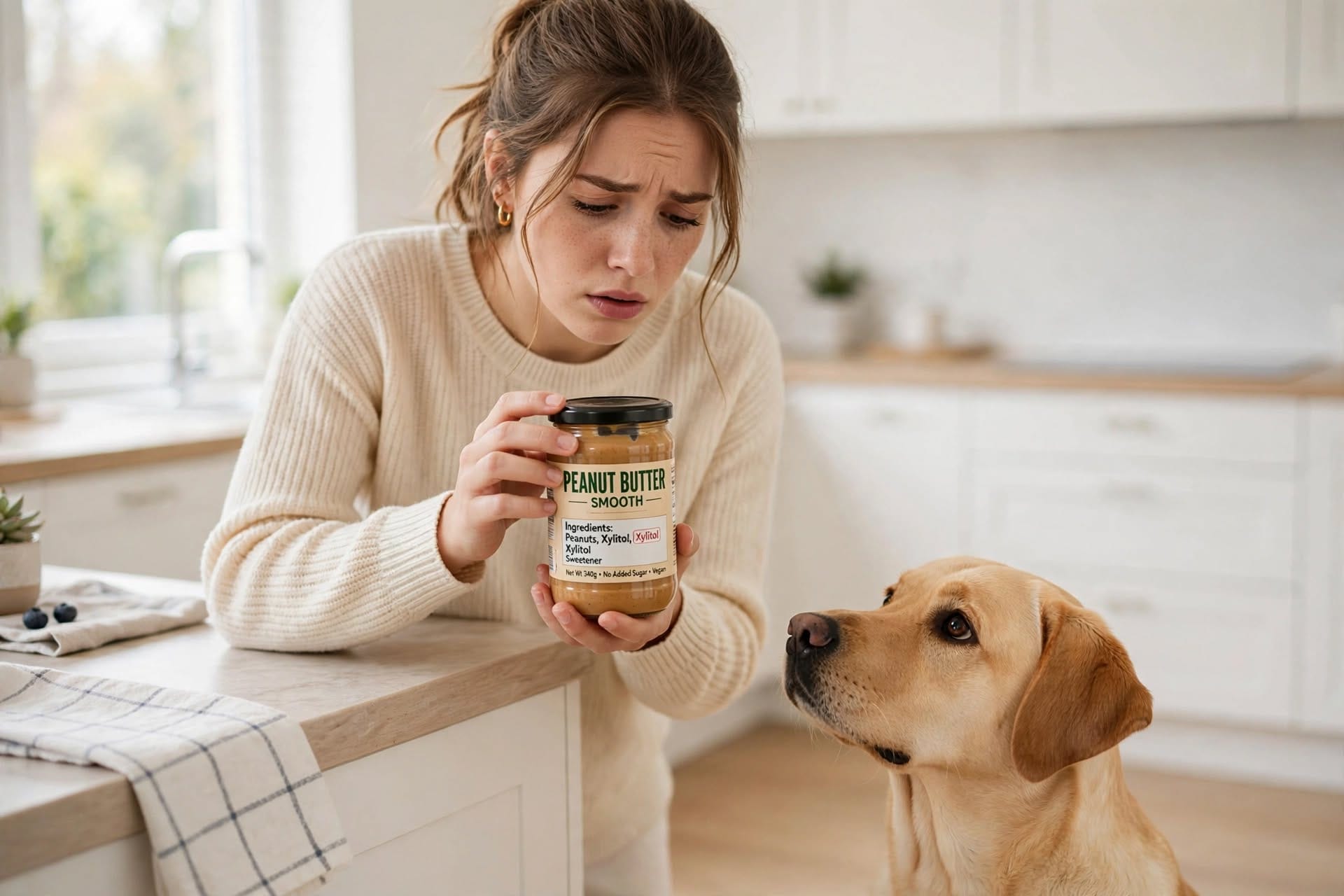
Table of Contents
- What Is Xylitol, and Why Is It So Dangerous?
- Where Xylitol Hides — More Places Than You’d Think
- How Xylitol Poisoning Actually Works
- Symptoms Timeline
- What to Do Right Now
- How Vets Treat Xylitol Poisoning
- Why Cases Are Rising
- Is Xylitol Dangerous to Cats Too?
- How to Xylitol-Proof Your Home
- Reading Labels for Hidden Xylitol
- Xylitol vs Chocolate: How the Risks Compare
- Common Real-World Exposure Scenarios
- FAQs
- Final Verdict
What Is Xylitol, and Why Is It So Dangerous? {#what-is-it}
Xylitol is a sugar alcohol used as a low-calorie sweetener in a huge range of “sugar-free” and “low-sugar” products. It’s genuinely harmless to humans — it’s even naturally present in small amounts in some fruits and vegetables like strawberries and plums. The problem is entirely species-specific: in dogs, xylitol is mistaken by the body for real sugar in a way that triggers a dangerous chain reaction, while in humans it doesn’t have this effect at all.
This is exactly why xylitol is such a sneaky danger compared to something like chocolate. Most owners already have “keep chocolate away from the dog” as a reflex. Far fewer think twice about a stick of sugar-free gum falling out of a bag, or a spoonful of “healthy” peanut butter used to hide a pill.
Where Xylitol Hides — More Places Than You’d Think {#where-it-hides}
- Sugar-free chewing gum and mints — still the single most common source of poisoning calls
- Peanut butter — a small but growing number of brands, especially “diet” or specialty varieties, use xylitol as a sweetener
- Toothpaste and mouthwash — both human and some pet dental products
- Baked goods — increasingly used in “healthier” cakes, muffins, and sugar-free treats
- Vitamin and supplement chewables — both human gummy vitamins and some flavoured medications
- Certain medications — including some liquid or chewable human medicines; gabapentin (sometimes prescribed off-label for dogs) has specifically been flagged as a product to double-check for xylitol content
- “Diabetic-friendly” or “keto” labelled foods — an increasingly common category given low-sugar diets have grown in popularity for humans
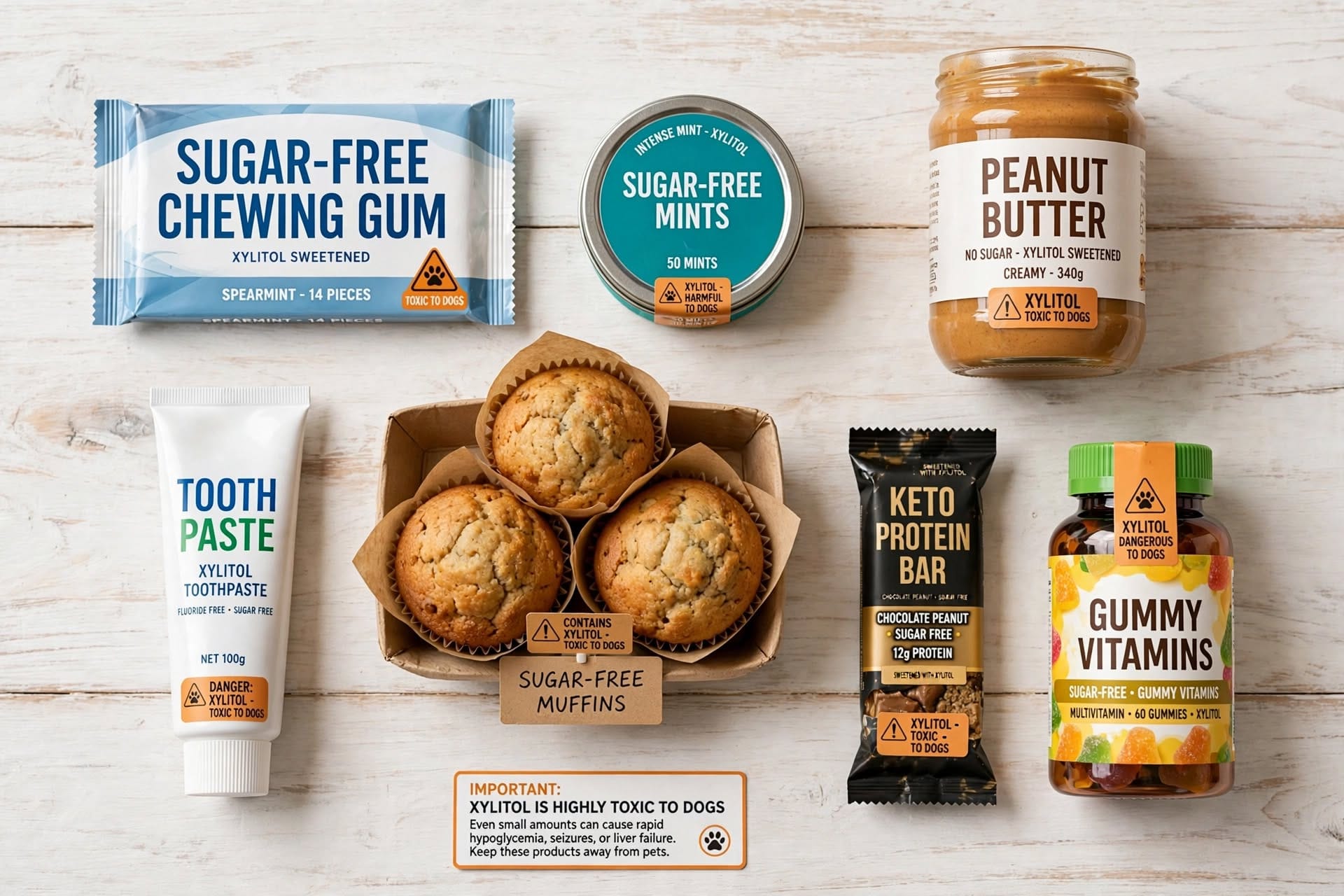
The common thread: anything marketed as “sugar-free,” “no added sugar,” or “diabetic-friendly” is worth a second look at the ingredients list before it’s anywhere near your dog.
How Xylitol Poisoning Actually Works {#mechanism}
In dogs, xylitol is absorbed into the bloodstream very quickly, and the body mistakenly treats it like a surge of real sugar — triggering the pancreas to release a large amount of insulin. That insulin then does what insulin normally does: it drives blood sugar down. The problem is there wasn’t actually any real sugar to process, so blood sugar crashes to dangerously low levels, a condition called hypoglycaemia, sometimes within as little as 30 minutes of ingestion.
At higher doses, there’s a second, separate danger: xylitol can cause serious liver damage, with elevated liver enzymes appearing within 12-48 hours and liver failure possible within 24-48 hours in severe cases. The exact mechanism behind the liver effect is still not fully understood, but the outcome is well documented and serious. Lower doses tend to cause the blood-sugar crash; higher doses raise the risk of liver injury on top of that.
Symptoms Timeline {#symptoms}
Within 30 minutes to 2 hours: Vomiting, weakness, wobbliness or poor coordination, lethargy — the early signs of a blood sugar crash.
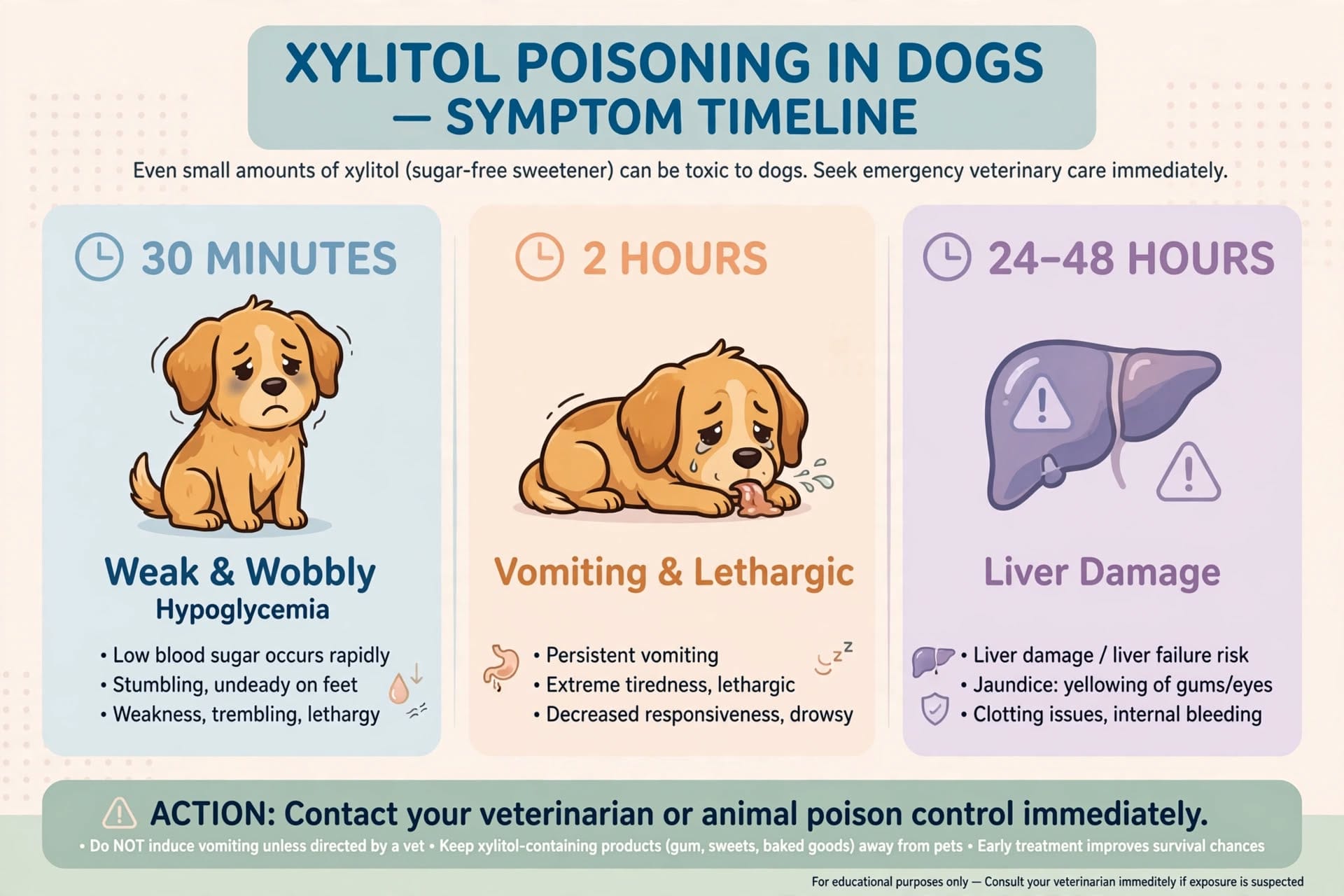
If untreated, hypoglycaemia can progress to: Seizures, collapse, and coma. This progression can happen quickly, which is part of why waiting to “see if anything happens” is genuinely dangerous with xylitol in a way it might not be with a milder toxin.
12-48 hours (higher doses): Signs of liver damage may develop, sometimes even in dogs who seemed to recover from the initial blood-sugar crash. This delayed second phase is exactly why vets often want to monitor a dog for longer than just the first few hours, and sometimes run follow-up bloodwork even after initial symptoms resolve.
What to Do Right Now {#what-to-do}
- Don’t wait for symptoms. Symptoms can be delayed up to 12 hours in some cases, and by the time they appear, treatment is more urgent and complicated.
- Call your vet or an emergency vet immediately, even outside normal hours.
- Bring the packaging if at all possible — knowing the exact product and, ideally, how much xylitol it contains per serving helps your vet judge the dose and urgency.
- Don’t try to induce vomiting at home unless specifically told to by a vet — by the time you’ve noticed, xylitol may already be absorbed, and inducing vomiting incorrectly can create additional problems.
- Don’t give food in an attempt to “fix” low blood sugar yourself — this needs proper veterinary assessment and, often, IV treatment, not a home remedy.
How Vets Treat Xylitol Poisoning {#treatment}
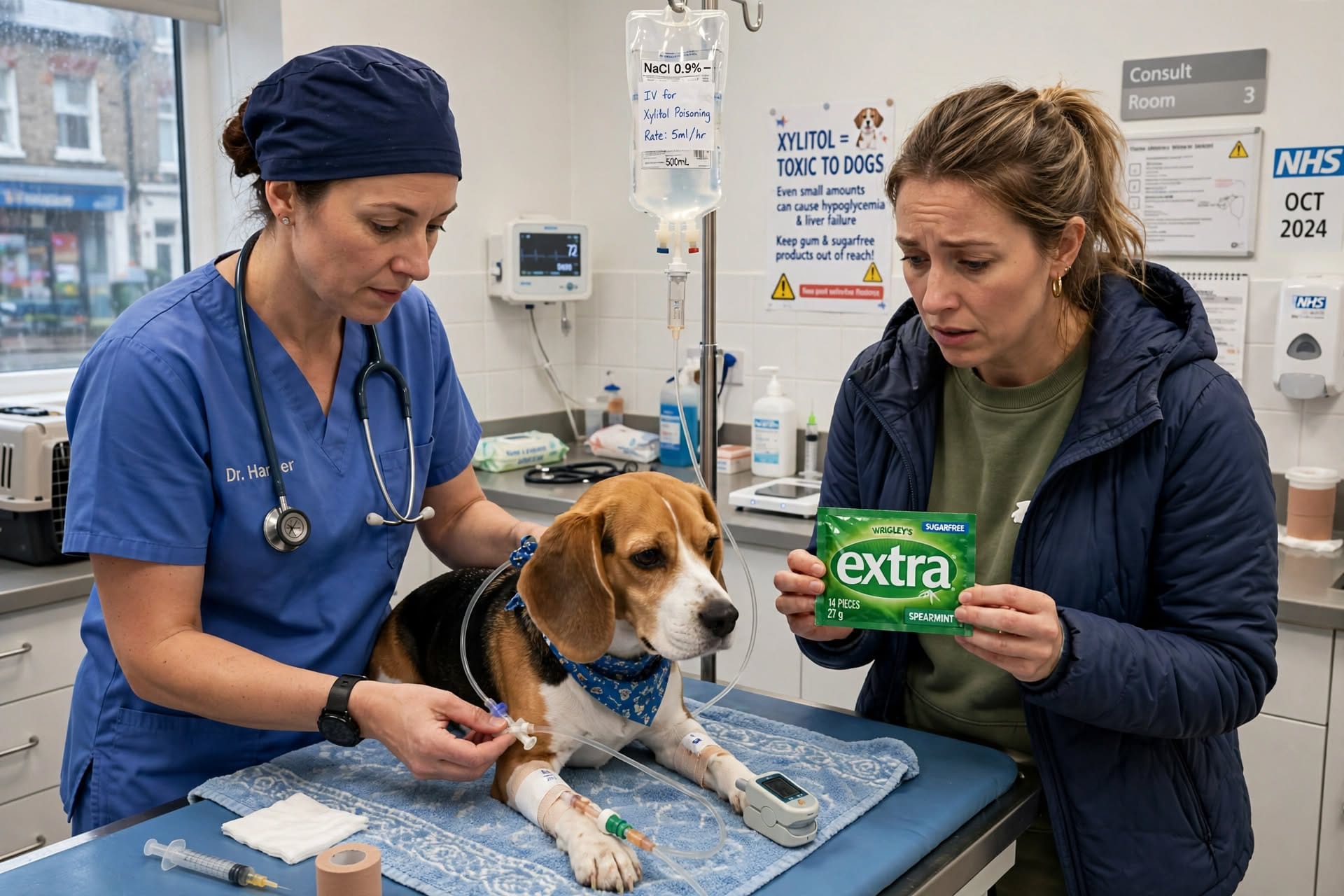
Treatment typically focuses on two things: correcting or preventing the blood sugar crash, and protecting the liver. This usually means IV fluids with added dextrose (sugar) to stabilise blood glucose, along with close monitoring of blood sugar levels over the following hours. For dogs who’ve ingested a higher dose, or where liver involvement is a concern, vets will often run bloodwork to check liver enzymes and may use liver-protective medication as a precaution, continuing to monitor for 24-48 hours given how the liver effects can lag behind the initial symptoms.
The outlook is generally good when treatment starts early — this is one of those situations where speed genuinely changes the outcome, which is the whole reason “don’t wait and see” is repeated so often throughout this guide.
Why Cases Are Rising {#why-rising}
This isn’t a static, old risk — it’s a genuinely growing one. Cases have risen roughly 75% since 2020, and xylitol-related calls were the 4th most common poisoning call received by the Pet Poison Helpline in both 2024 and 2025. The reasons line up with broader food trends: low-sugar and “healthy” eating has become more popular among humans, and xylitol is one of the most common sweeteners used to deliver that without sacrificing sweetness. As more human food and personal care products quietly switch to xylitol, more of it ends up within reach of dogs who have no idea it’s dangerous.
In the UK specifically, the Veterinary Poisons Information Service recorded over 250 xylitol poisoning cases in a single year as far back as 2016, with at least one confirmed death — and the growth trend since suggests that number is considerably higher now.
Is Xylitol Dangerous to Cats Too? {#cats}
This is genuinely one area where dogs and cats differ. According to veterinary toxicology references, dogs are the only common domestic species in which xylitol toxicity has been clearly documented — cats don’t show the same insulin-release response and aren’t considered to be at risk of the hypoglycaemia or liver injury seen in dogs. That said, this doesn’t mean deliberately feeding xylitol-containing products to a cat is a good idea, and if you’re ever unsure, treating it with the same caution as you would for a dog costs nothing.
How to Xylitol-Proof Your Home {#prevention}
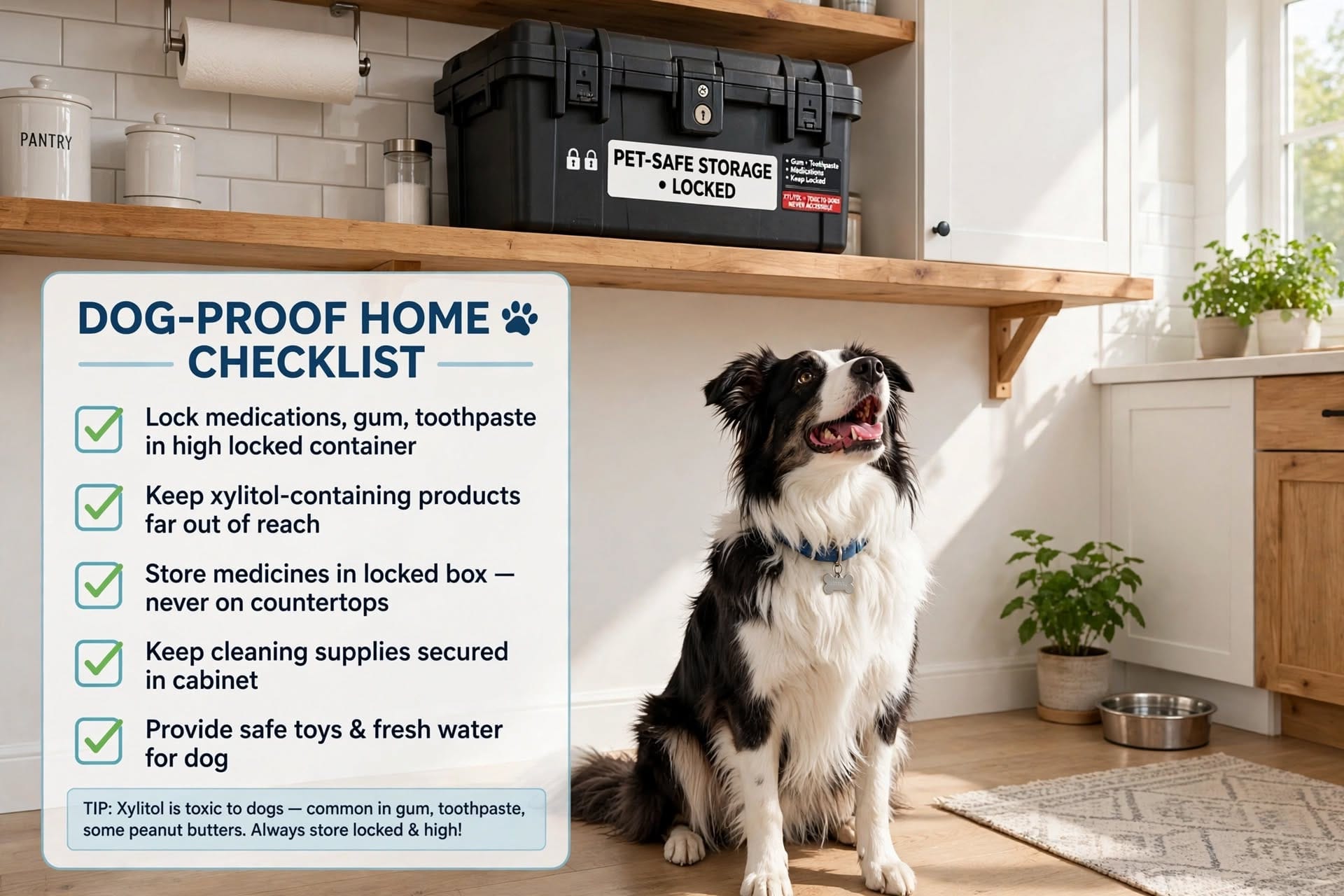
- Check labels on peanut butter before using it to hide a pill or as a treat — this is one of the most common accidental exposure routes
- Keep gum and mints in a bag or drawer your dog can’t reach, not a coat pocket or handbag left on the floor
- Store toothpaste and mouthwash out of reach, the same way you would any medication
- Warn guests, especially anyone likely to have gum, mints, or medication in a bag within your dog’s reach
- Double-check “sugar-free” baked goods before sharing any with your dog, even a small taste
- Ask your vet or pharmacist about any human medication prescribed for your dog, particularly liquid or chewable formulations
Reading Labels for Hidden Xylitol {#reading-labels}
Xylitol doesn’t always appear under its own name. Watch for:
- “Birch sugar” or “wood sugar” — alternative names for the same substance
- “Sugar alcohol” listed without further detail — worth checking further if the product is marketed as sugar-free
- Position in the ingredients list — if xylitol (or birch sugar) appears as the first or second ingredient, the product is likely to be especially concentrated and dangerous
Xylitol vs Chocolate: How the Risks Actually Compare {#xylitol-vs-chocolate}
Both are genuine emergencies, but they behave differently, and understanding the difference helps explain why xylitol catches so many owners off guard:
| Factor | Xylitol | Chocolate |
|---|---|---|
| Time to first symptoms | 30 min – 2 hours | 2-12 hours |
| Public awareness | Low — often hidden in “healthy” products | High — widely known as dangerous |
| Amount needed | Very small amounts of concentrated products | Varies significantly by chocolate type |
| Primary mechanism | Insulin surge, blood sugar crash | Theobromine buildup, affects heart |
| Secondary risk | Liver damage (higher doses) | Cardiac effects |
| Common source profile | Sugar-free/diet products, easy to miss | Recognisable sweets and treats |
The practical takeaway: chocolate danger is fairly well understood by most owners, so accidental exposure often gets caught and acted on quickly. Xylitol exposure is more likely to be genuinely accidental and unrecognised — an owner sharing a “healthy” homemade treat, or a dog getting into a bag without anyone realising gum was inside — which is part of why raising awareness of where it hides matters as much as knowing what to do once it’s happened.
Common Real-World Exposure Scenarios {#scenarios}
Knowing the typical situations makes prevention far more concrete than a generic warning:
Pill-hiding gone wrong.
Peanut butter is one of the most popular ways owners hide medication for a reluctant dog — which is exactly why checking that specific jar’s label matters every time, not just once.
A dropped piece of gum.
A stick or pellet of gum falling out of a bag, coat pocket, or car console is one of the most common accidental exposure routes, precisely because it seems so harmless.
Home baking with sugar substitutes.
As more households bake with xylitol to cut sugar, a “healthy” homemade treat left to cool on a counter has become a genuine and growing risk category.
A well-meaning visitor.
A guest offering the dog a “healthy” snack, or leaving a bag containing gum, mints, or medication within reach, is a common scenario precisely because most people outside the household have no idea xylitol is dangerous to dogs at all.
Counter-surfing a “diet” product.
Increasingly, dogs getting into diet yoghurts, protein bars, or low-sugar snacks left on a counter or in an open bag is turning up as a source, reflecting how widespread xylitol has become in everyday human food choices.
Is xylitol really more dangerous than chocolate?
In terms of speed and how little is needed to cause harm, yes — xylitol can cause a life-threatening blood sugar crash within 30 minutes to 2 hours, faster than typical chocolate poisoning symptoms develop.
How much xylitol is dangerous?
This varies by product and concentration, which is exactly why bringing the packaging to your vet matters — they can calculate the dose based on your dog’s weight and the specific product’s xylitol content rather than a generic rule of thumb.
My dog ate something with xylitol hours ago and seems fine — should I still worry?
Yes, still contact your vet. Some symptoms can be delayed up to 12 hours, and liver effects at higher doses can take even longer to appear.
Is all peanut butter dangerous?
No — most mainstream peanut butter brands don’t contain xylitol, but a growing number of “diet,” low-sugar, or specialty brands do. Always check the label of any peanut butter before giving it to your dog, especially if you haven’t checked that specific brand before.
Can a small amount of gum really hurt my dog?
Yes — a single piece of xylitol-containing gum can be enough to cause a dangerous reaction in a small dog, which is part of why it’s the single most common source of poisoning calls.
Is xylitol dangerous to cats?
Current veterinary understanding is that cats don’t show the same toxic response dogs do, but treating any accidental exposure with the same urgency costs nothing and is the safer approach.
What if I can’t find the packaging to show the vet?
Still call immediately and describe what you know — even an approximate description of the product helps, and your vet would rather treat based on limited information than not be called at all.
Can xylitol poisoning be fatal?
Yes, if untreated — severe hypoglycaemia can progress to seizures and coma, and higher-dose exposures carry a real risk of liver failure. This is exactly why early treatment matters so much, and outcomes are generally good when caught quickly.
Are some dog breeds or sizes more at risk?
Smaller dogs are at higher risk simply because a given amount of xylitol represents a much larger dose relative to their body weight — the same piece of gum that might cause mild symptoms in a large dog could be far more serious for a small one.
Is xylitol banned or regulated in the UK the way some other substances are?
No — xylitol remains a legal, widely used sweetener in human food and products, which is exactly why the responsibility for keeping it away from dogs falls on awareness and label-checking rather than product availability being restricted.
Can I test my dog’s blood sugar at home if I suspect xylitol exposure?
This isn’t a substitute for veterinary care — even if you have a home glucose monitor, the priority is getting your dog to a vet immediately rather than trying to manage this at home, since treatment often requires IV dextrose and ongoing monitoring beyond what’s possible outside a clinic.
Final Verdict {#final-verdict}
Xylitol is one of the more dangerous, fastest-acting, and most under-recognised threats in an average UK home with a dog — precisely because it doesn’t carry the same “obviously dangerous” reputation that chocolate does, despite arguably deserving more caution, not less. Cases have risen sharply in recent years as low-sugar products have become more common, which means this is a growing risk, not a rare one. The single most useful habit you can build is checking labels on anything sugar-free before it’s anywhere near your dog, and treating any suspected exposure as an immediate call to your vet — not a wait-and-see situation.
This guide is for general information and isn’t a substitute for professional veterinary advice. If your dog has eaten anything containing xylitol, contact your vet or an emergency vet service immediately.
Further reading:
Related guides on WarmWag: