Can Dogs Eat Peanut Butter UK? Vet-Safe Types & Xylitol Warning
Can Dogs Eat Peanut Butter UK? Milo does this thing where the second he hears the peanut butter jar lid twist, he appears from wherever he was sleeping in under three seconds flat. It’s honestly impressive. Like most dog owners in the UK, I’ve used peanut butter for everything — stuffing his Kong, hiding his worming tablet, as a lick-mat distraction during nail clipping. It’s become one of those staple “dog mum” tools.
But a few months ago, a friend mentioned her dog had a terrifying reaction after eating peanut butter — collapsing within the hour. Turned out the jar was a “no added sugar” variety sweetened with xylitol, something she had no idea was even in there. Her dog survived, but it was an emergency vet visit and a genuinely frightening few hours.
That conversation sent me down a rabbit hole of research, plus a proper conversation with my own vet about what’s actually safe. Here’s everything I learned — the good news, the one genuinely dangerous risk, and exactly how to feed peanut butter to your dog safely.
Quick Answer
Yes, dogs can eat peanut butter, and most dogs love it — but it comes with one non-negotiable rule: check the label for xylitol every single time. Xylitol is a sugar substitute found in a growing number of “diet,” “no added sugar,” and “keto” peanut butters, and it is extremely toxic to dogs. Even a small amount can cause a rapid, life-threatening drop in blood sugar, and in worse cases, liver failure.
Aside from the xylitol issue, plain peanut butter is actually a reasonably nutritious treat for dogs — it contains healthy fats, protein, vitamins B and E, and niacin. The key is moderation, because it’s also calorie-dense and high in fat.
📑 Table of Contents
- Quick Answer: Can Dogs Eat Peanut Butter?
- Why Dogs Love Peanut Butter So Much
- Nutritional Profile: What’s Actually in Peanut Butter
- Which Peanut Butter Is Safe for Dogs in the UK?
- Xylitol: Why It’s So Dangerous
- How Much Peanut Butter Can a Dog Eat? UK Vet Guidelines
- Creative (and Safe) Ways to Use Peanut Butter
- Risks Beyond Xylitol That UK Owners Miss
- Homemade vs Store-Bought: Which is Safer?
- Special Considerations for UK Dogs
- What If My Dog Eats a Large Amount?
- Frequently Asked Questions
- Final Takeaway
Why Dogs Love Peanut Butter So Much
There’s a reason peanut butter has become the go-to “hide anything in it” food for dog owners. Its thick, sticky texture makes it perfect for:
- Stuffing and freezing inside a Kong toy for long-lasting enrichment
- Disguising tablets and worming treatments
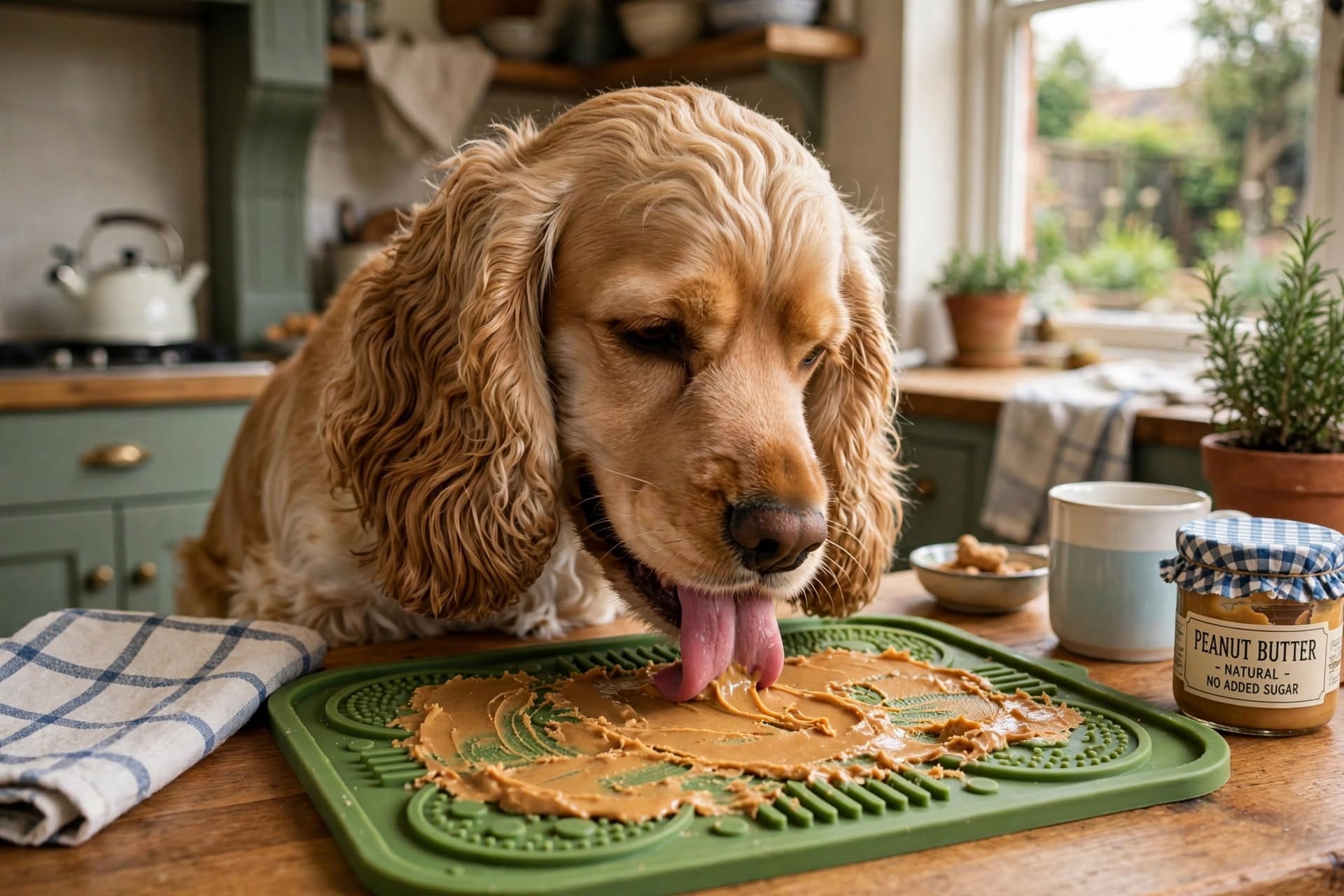
- Smearing on a lick mat to distract during grooming, nail trims, or bath time
- Using as a high-value training reward
- Making homemade dog treats and frozen “pupsicles” in summer
Beyond the practical uses, dogs are simply drawn to the smell and taste — peanuts are naturally high in fat and protein, which registers as a high-value food to a dog’s brain.
Nutritional Profile: What’s Actually in Peanut Butter
A typical tablespoon (around 16g) of plain peanut butter contains roughly:
| Nutrient | Amount (approx.) |
|---|---|
| Calories | 95–100 kcal |
| Fat | 8g |
| Protein | 4g |
| Carbohydrates | 3g |
| Fibre | 1g |
| Sodium | 60–75mg (varies by brand) |
In small amounts, this profile isn’t harmful — the protein and healthy fats can even be beneficial. The problem arises when it’s fed in large or frequent quantities, given how calorie-dense it is relative to a dog’s daily needs, especially for smaller breeds.
Peanut butter also contains vitamin E, vitamin B3 (niacin), and vitamin B6 in small amounts, along with heart-healthy monounsaturated and polyunsaturated fats — though these benefits are marginal at the serving sizes appropriate for dogs, so it shouldn’t be viewed as a “superfood,” just a reasonably safe treat.
Which Peanut Butter Is Safe for Dogs?
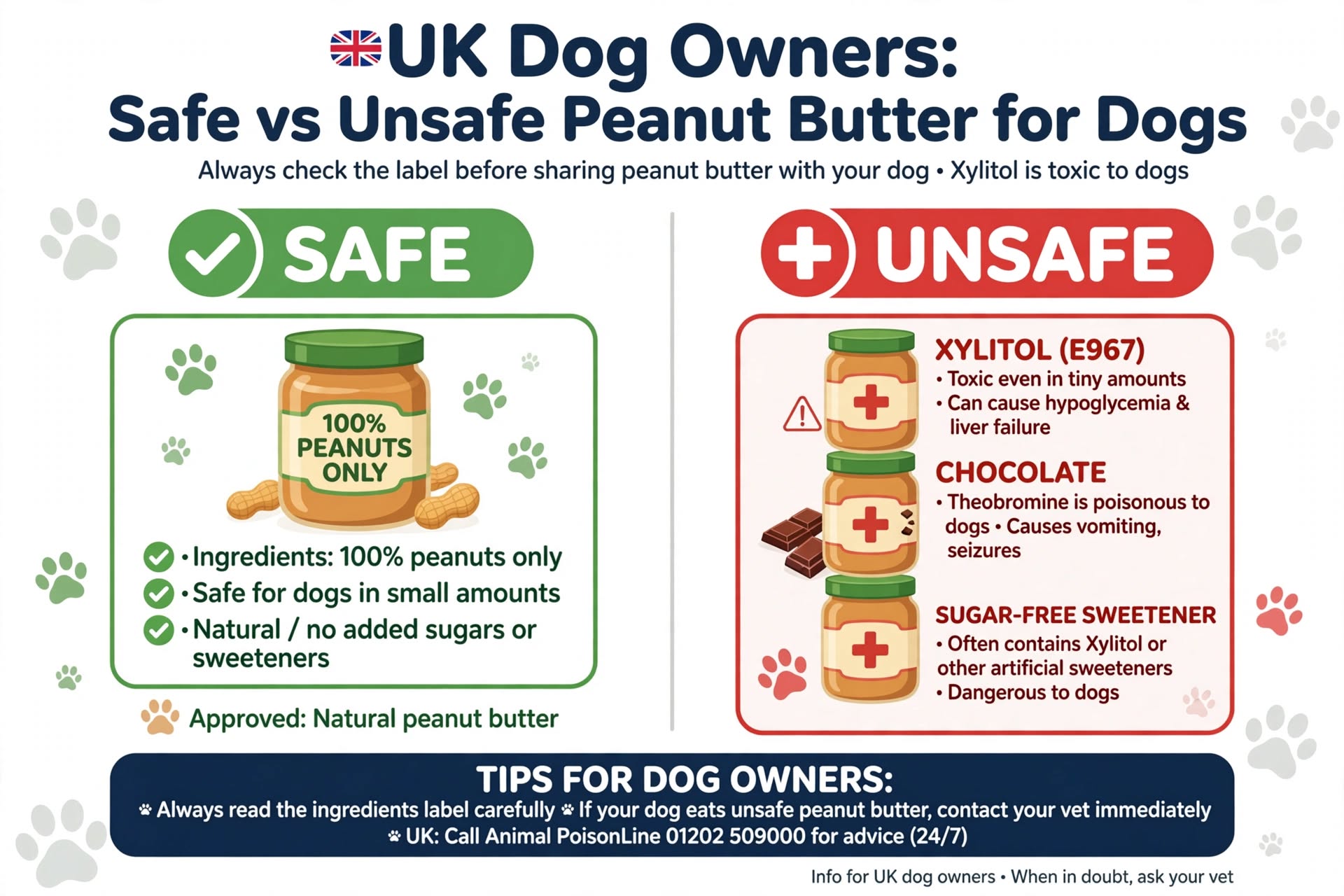
This is genuinely the most important section of this guide, so read it carefully.
✅ Safe
Plain peanut butter where the ingredients list is simply: peanuts (sometimes with a small amount of salt or oil, like palm or rapeseed oil). Most standard UK supermarket own-brand peanut butters, along with brands like Whole Earth and Meridian, fall into this category — but ingredient lists can change, so don’t assume.
⚠️ Check Every Single Time
- “No added sugar” or “reduced sugar” peanut butter — manufacturers frequently substitute sugar with xylitol (sometimes listed under alternative names like “sweetener” or “birch sugar”) to maintain sweetness while cutting calories.
- “Keto” or “diet” branded peanut butter — similarly likely to contain sugar substitutes.
- Any jar you haven’t personally checked — even if you’ve bought the same brand before, recipes are occasionally reformulated. Make label-checking a habit, not a one-time thing.
❌ Avoid
- Chocolate-swirled or chocolate-flavoured peanut butter (chocolate toxicity risk)
- Peanut butter with added raisins or macadamia-flavoured mix-ins (both toxic to dogs)
- Anything explicitly labelled as containing xylitol, sorbitol in large amounts, or artificial sweeteners
Practical tip: flip the jar over before every purchase and scan the ingredients list for the word “xylitol.” It only takes a few seconds and it’s the single most important habit in this entire guide.
Xylitol: Why It’s So Dangerous
Xylitol deserves its own dedicated section because the danger is genuinely severe and often misunderstood.
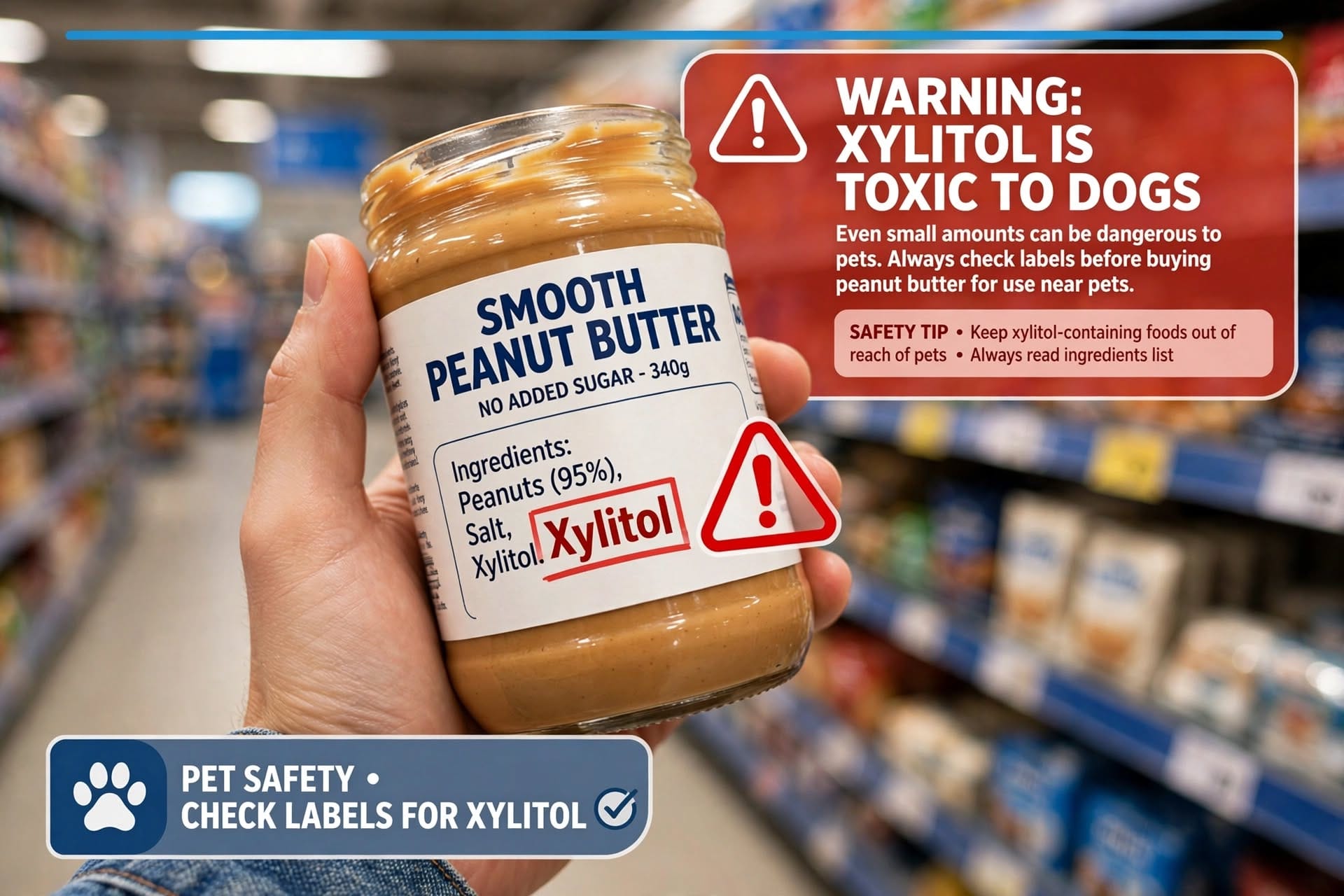
In humans, xylitol doesn’t trigger much of an insulin response. In dogs, it’s the opposite — their bodies mistake xylitol for real sugar and release a large, rapid surge of insulin. This causes a dangerous, sudden drop in blood sugar (hypoglycaemia), which can happen within 10 to 60 minutes of ingestion. In larger amounts, xylitol can also cause acute liver failure, sometimes appearing 12 to 24 hours after ingestion, even in dogs that seemed fine initially.
Symptoms of xylitol poisoning include:
- Vomiting
- Weakness or wobbliness (ataxia)
- Collapse
- Seizures
- Lethargy or disorientation
- In severe cases, symptoms of liver failure appearing a day or more later (jaundice, black tarry stools, further vomiting)
What to do if your dog eats xylitol:
This is a genuine emergency — do not wait to see if symptoms develop. Call your vet or an emergency vet line immediately, such as the Vets Now 24-hour emergency line or Animal PoisonLine. Bring the packaging with you if possible, since knowing the exact xylitol content helps vets assess the risk and treatment needed. Do not attempt to induce vomiting at home unless specifically told to by a vet, as timing and method matter for safety.
The size of the dog matters significantly here — a small dog eating a small amount of xylitol is at much higher risk than a large dog eating the same amount, simply due to body weight. But there is no “safe” amount of xylitol for a dog — the guidance is always to treat any known ingestion as an emergency.
How Much Peanut Butter Can a Dog Eat?
Assuming you’ve confirmed the peanut butter is xylitol-free, moderation is still the name of the game because of the fat and calorie content.
| Dog Size | Safe Serving | Frequency |
|---|---|---|
| Extra-small (up to 4kg) | ¼ teaspoon | 1–2x per week |
| Small (5–9kg) | ½ teaspoon | 2–3x per week |
| Medium (10–25kg) | 1 teaspoon | 2–3x per week |
| Large (26kg+) | 1–2 teaspoons | 2–3x per week |
| Extra-large (40kg+) | Up to 1 tablespoon | 2–3x per week |
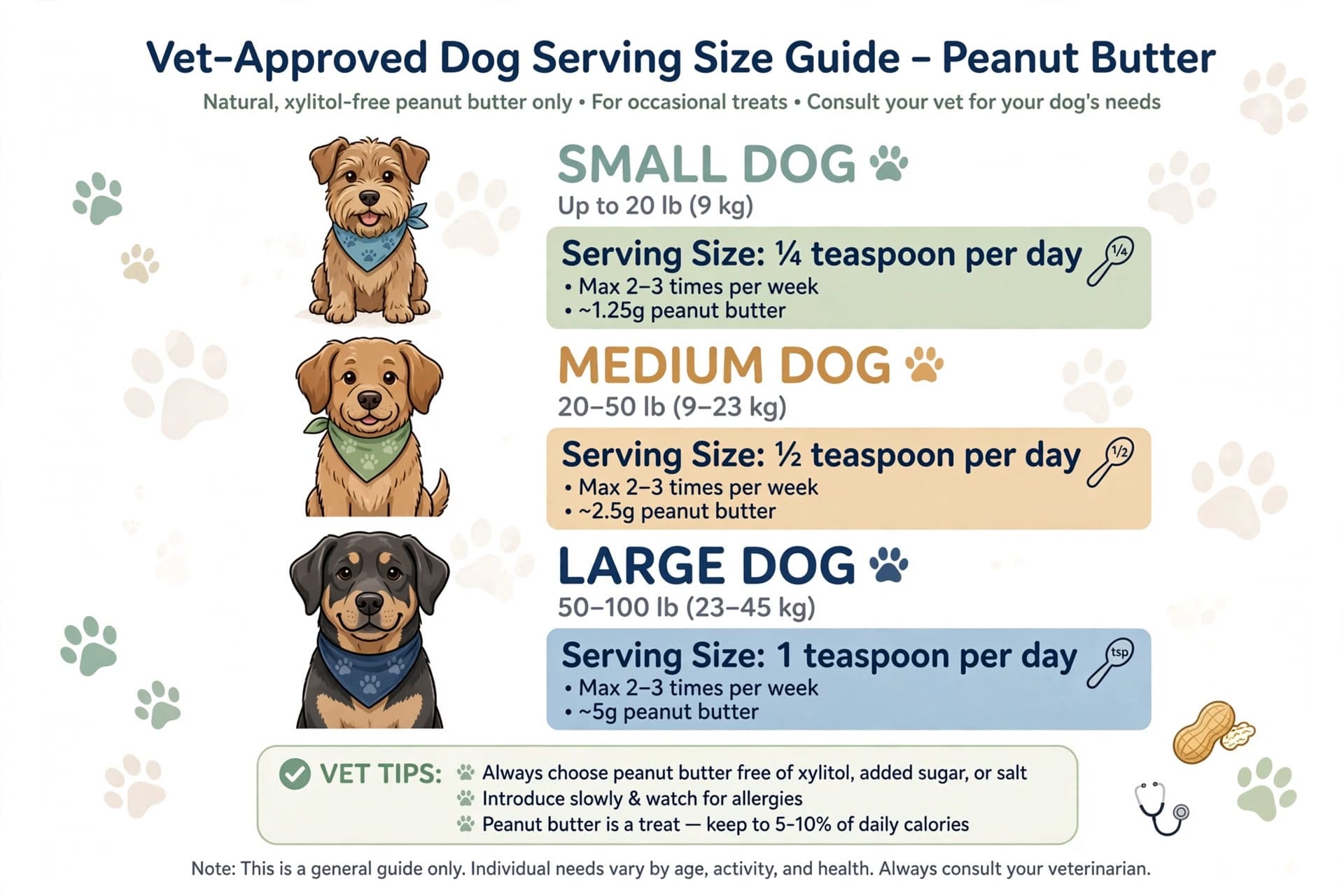
These amounts are guidelines rather than strict rules — the general principle is that treats, peanut butter included, should never make up more than about 10% of your dog’s total daily calorie intake. If your dog is on a calorie-controlled or weight-management diet, it’s worth checking with your vet before adding peanut butter regularly.
Creative (and Safe) Ways to Use Peanut Butter
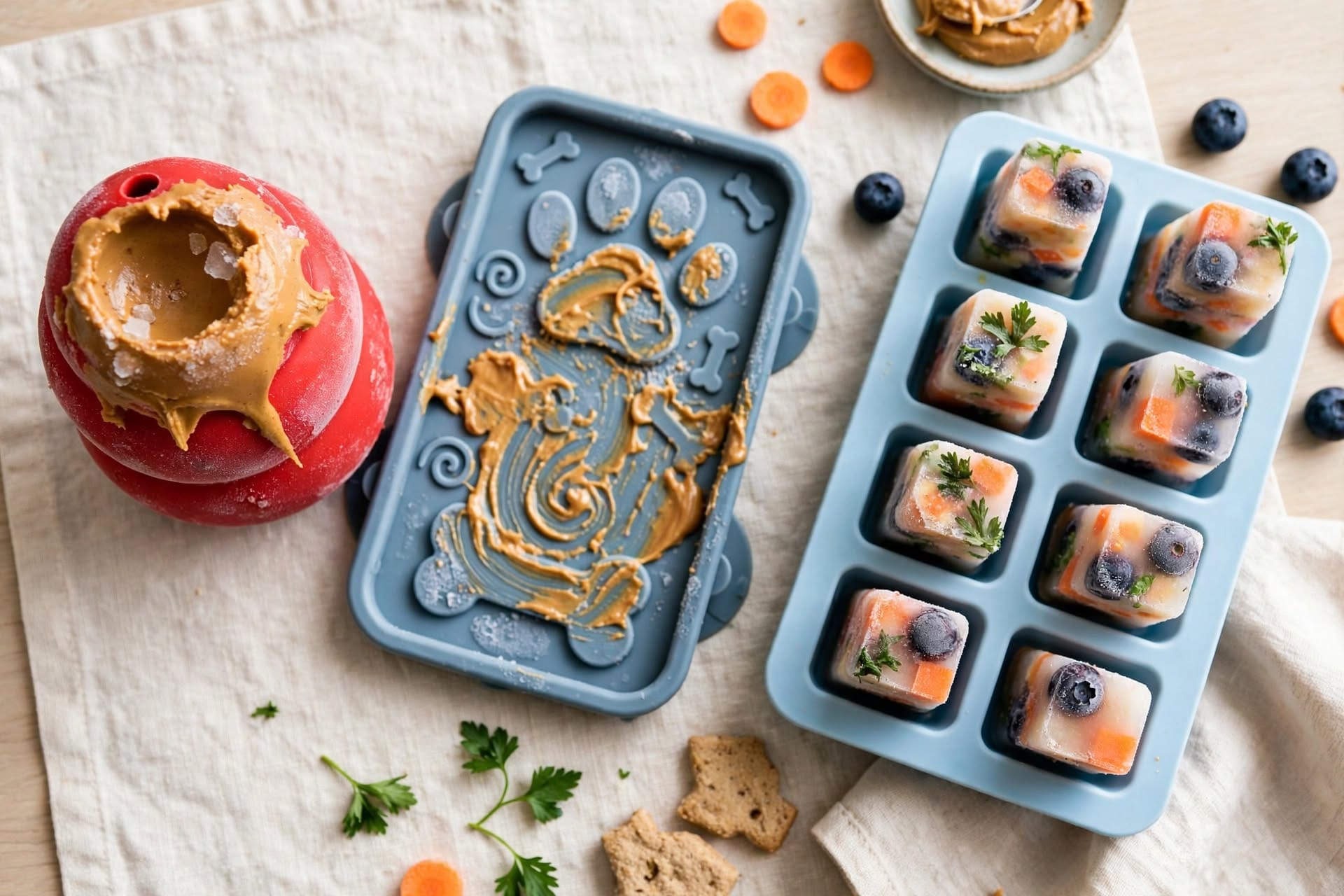
Beyond a spoonful as a treat, peanut butter has become genuinely popular among UK dog owners for a few clever uses:
- Kong stuffing: Smear a thin layer inside a Kong toy, then freeze it. This turns a small amount in
 to a long-lasting enrichment activity, perfect for crate training or keeping a dog occupied while you’re busy.
 - Lick mats: Spread thinly across a silicone lick mat during nail trims, grooming, or vet visits to provide a calming distraction.
- Pill hiding: A small dollop is one of the most reliable ways to get a dog to take tablets or worming treatments without a fight.
- Frozen “pupsicles”: Mix a small amount with plain yoghurt (also checked for xylitol) and freeze in ice cube trays for a summer treat.
- Training rewards: A tiny lick from a squeeze tube or silicone tube can work well as a high-value reward during training sessions, without needing a full serving each time.
Risks Beyond Xylitol
Even with a completely safe, plain peanut butter, there are a few other things worth keeping in mind:
- High fat content and pancreatitis risk: Regular or excessive peanut butter feeding, especially in breeds prone to pancreatitis (such as Miniature Schnauzers and Cocker Spaniels), can contribute to inflammation of the pancreas — a painful and potentially serious condition requiring veterinary treatment.
- Weight gain: Because peanut butter is calorie-dense, using it too often as a treat can add up quickly, especially for smaller dogs where even small amounts represent a larger proportion of their daily calories.
- Choking risk: A large dollop straight from a spoon can stick to the roof of a dog’s mouth or, in rare cases, pose a choking risk for very small dogs or puppies. Spreading it thinly or using it inside a toy is generally safer than offering a large spoonful directly.
- Peanut allergies: Uncommon in dogs compared to humans, but possible. If it’s the first time your dog is trying peanut butter, offer a very small amount first and monitor for any signs of itching, swelling, or digestive upset before making it a regular treat.
- Sodium content: Some peanut butters contain a moderate amount of added salt. This generally isn’t a concern for healthy dogs in small servings, but it’s worth being mindful of for dogs with heart or kidney conditions, where sodium intake needs to be more carefully managed.
Homemade vs Store-Bought Peanut Butter
Some owners prefer making their own peanut butter at home to have full control over ingredients. This can be a good option, provided you use only plain, unsalted peanuts and avoid adding any sugar or sweeteners. The main advantage is complete certainty that no xylitol or other sweeteners are present. The downside is convenience — store-bought is faster and, as long as you’re diligent about checking labels, equally safe.
If buying store-bought, sticking to well-known plain varieties and developing the habit of checking the label every time remains the safest and most practical approach for most owners.
Special Considerations
Diabetic dogs: Peanut butter’s fat and calorie content means it should be used cautiously in diabetic dogs, and always under veterinary guidance regarding portion size and frequency.
Overweight dogs: If your dog is already overweight or on a weight-management plan, it’s worth discussing with your vet whether peanut butter fits into their calorie allowance, or whether a lower-calorie treat alternative would be more appropriate.
Breeds prone to pancreatitis: Miniature Schnauzers, Cocker Spaniels, and other breeds with a known predisposition to pancreatitis may benefit from more cautious, less frequent use of high-fat treats like peanut butter.
What If My Dog Eats a Large Amount (No Xylitol)?
If your dog manages to get into a jar of confirmed xylitol-free peanut butter and eats more than intended, this is generally not an emergency, but it’s still worth monitoring. Watch for:
- Vomiting or diarrhoea within the following 24 hours, often resolving on its own
- Signs of pancreatitis in more serious cases — repeated vomiting, a hunched posture, abdominal pain, lethargy, or refusing food, which would warrant a vet visit
- General lethargy or reduced appetite the following day
Withholding food for a few hours, then offering a bland diet such as plain boiled chicken and rice, is usually sufficient for a mild case. If symptoms persist beyond 24 hours or worsen, contact your vet.
Frequently Asked Questions
Can puppies eat peanut butter?
Yes, in very small amounts, provided it’s confirmed xylitol-free. Puppies have more sensitive digestive systems, so start with a much smaller amount than you would for an adult dog and watch closely for any reaction.
Is peanut butter good for hiding pills?
Yes, it’s one of the most effective and popular methods among UK dog owners — just make absolutely sure the jar is xylitol-free before using it this way.
Can dogs eat peanut butter every day?
It’s better used as an occasional treat rather than a daily habit, mainly due to its fat and calorie density. If you want a daily training reward, consider rotating with lower-fat treat options.
What’s the safest peanut butter brand for dogs in the UK?
Any plain peanut butter where peanuts (and possibly a small amount of salt) are the only ingredients. There isn’t one universally “safest” brand, since recipes can change — checking the label yourself, every time, is the most reliable approach.
Can dogs have crunchy peanut butter?
Yes, as long as it’s plain and xylitol-free, crunchy peanut butter is generally fine. Some owners prefer smooth for easier use in Kongs and lick mats, but there’s no safety difference between the two textures themselves.
Is peanut butter safe for dogs with allergies?
Peanut allergies are uncommon in dogs but not impossible. If your dog has known food sensitivities, introduce peanut butter cautiously in a small amount first, and consult your vet if you have concerns.
Can dogs eat peanuts (not butter)?
Plain, unsalted peanuts in their shell-free form are generally safe in small amounts, though the same xylitol caution doesn’t typically apply to whole peanuts — the risk is specific to processed peanut butter products with added sweeteners.
How do I know for certain a peanut butter is xylitol-free?
Check the full ingredients list on the jar. If it lists only peanuts (and possibly salt or oil), it’s safe. If you see “sweetener,” “birch sugar,” or “xylitol” anywhere on the label, do not feed it to your dog.
Related Guides:
Final Takeaway
Peanut butter is a genuinely useful, dog-safe treat when it’s plain and confirmed xylitol-free — that single check is the one non-negotiable step every time you buy or use a jar, with no exceptions. Beyond that, moderate portions given its fat and calorie density, and it remains one of the most versatile tools for training, enrichment, and hiding medication that UK dog owners have available.
Vet Disclaimer: This guide is for general information and isn’t a substitute for professional veterinary advice. If you suspect your dog has eaten peanut butter containing xylitol, treat it as an emergency and contact your vet or an emergency vet line immediately.