Can Dogs Eat Apples?
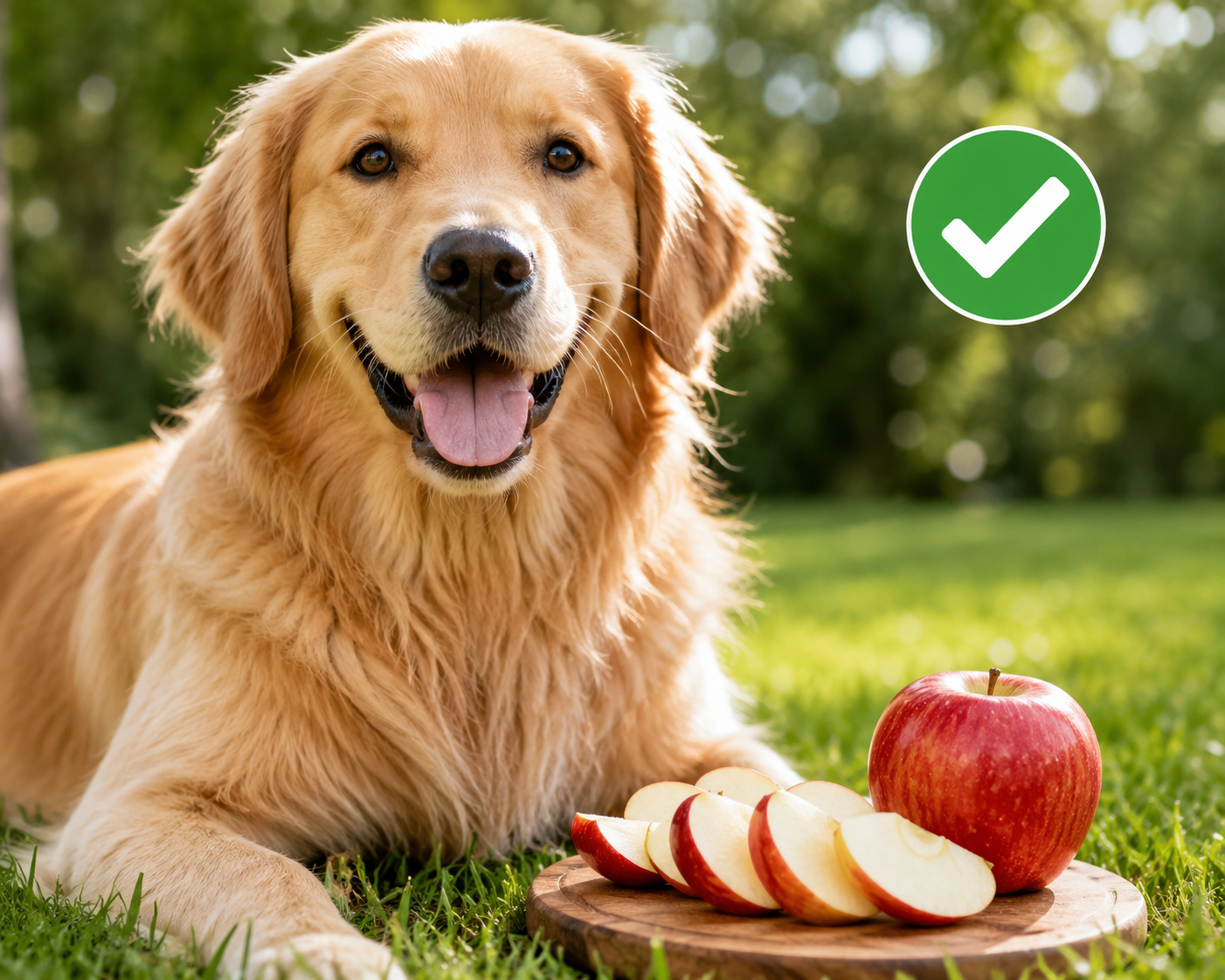
Yes, dogs can eat apples in moderation. Apples are a healthy, low-calorie fruit that provides fiber, vitamins, and antioxidants. When served correctly, they make an excellent occasional treat for most healthy dogs.
However, not every part of an apple is safe. Dog owners should always remove the seeds and core before offering apple slices because these parts can create health risks.
If prepared properly, apples can be a refreshing snack that supports your dog’s overall health while adding variety to their diet.
Are Apples Safe for Dogs?
For most healthy dogs, apples are completely safe when they are:
- Fresh
- Washed thoroughly
- Cut into bite-sized pieces
- Served without seeds
- Served without the hard core
- Given in moderation
Many American veterinarians recommend fresh fruits like apples as healthier alternatives to processed dog treats because they contain natural nutrients without excessive fat.
Still, apples should never replace a complete and balanced dog food. Think of them as an occasional reward rather than a daily meal.
Quick Safety Overview
| Question | Answer |
|---|---|
| Can dogs eat apples? |  Yes Yes |
| Can puppies eat apples? | Yes, in small pieces |
| Can dogs eat apple skin? | Yes, after washing |
| Can dogs eat apple seeds? |  No No |
| Can dogs eat the apple core? | No |
| Can diabetic dogs eat apples? |  Ask your veterinarian first Ask your veterinarian first |
Nutritional Value of Apples
Apples contain several nutrients that may support your dog’s health when fed in moderation.
| Nutrient | Potential Benefit |
|---|---|
| Fiber | Supports healthy digestion |
| Vitamin C | Helps support immune function |
| Vitamin A | Supports healthy vision and skin |
| Potassium | Supports muscle and nerve function |
| Antioxidants | Help protect cells from oxidative stress |
| Water | Helps with hydration |
Although dogs naturally produce vitamin C, the extra nutrients found in apples can still be part of a balanced treat routine.
5 Health Benefits of Apples for Dogs
1. Supports Healthy Digestion
Apples are a natural source of dietary fiber, which may help maintain regular bowel movements and promote healthy digestion when offered in appropriate portions.
2. Low-Calorie Treat
Compared with many commercial dog biscuits, apple slices are naturally low in calories and contain no added fat, making them a smart choice for dogs that need to manage their weight.
3. Helps Keep Dogs Hydrated
Fresh apples are made up of about 85% water, making them a refreshing snack during warm weather or after outdoor activities.
4. Rich in Natural Antioxidants
Apples contain plant compounds that help protect cells from everyday damage caused by free radicals. While apples aren’t a cure for disease, they can be part of a varied, healthy diet.
5. A Crunchy Alternative to Processed Treats
Many dogs enjoy the crisp texture of fresh apple slices. Offering apples occasionally can add variety to your dog’s treats without relying solely on packaged snacks.

Are Apple Seeds Dangerous for Dogs?
One of the most common questions dog owners ask is whether apple seeds are safe. The short answer is no.
Apple seeds contain a natural compound called amygdalin. When the seeds are chewed and digested, amygdalin can release small amounts of cyanide. While eating one or two whole seeds accidentally is unlikely to harm a large dog, regularly eating apple seeds or consuming a large quantity can be dangerous.
In addition to the seeds, the apple core itself is hard and can become a choking hazard or cause an intestinal blockage, especially in small dogs and puppies.
Parts of an Apple: Safe vs. Unsafe
| Apple Part | Safe for Dogs? | Notes |
|---|---|---|
| Apple flesh | Yes | Healthy in moderation |
| Apple skin | Yes | Wash thoroughly before serving |
| Apple seeds | No | Contain amygdalin, which can release cyanide when chewed |
| Apple core | No | Choking and blockage risk |
| Apple stem | No | Remove before feeding |
Expert Tip: Always slice the apple, remove the seeds and core completely, and serve only fresh pieces.
Can Puppies Eat Apples?
Yes, puppies can eat apples, but only in small amounts and after they have started eating solid food.
Because puppies have smaller mouths and developing digestive systems, apple pieces should be cut into tiny bite-sized chunks to reduce the risk of choking.
Safe Feeding Tips for Puppies
- Introduce apples slowly.
- Feed only a few tiny pieces.
- Watch for any digestive upset.
- Never give apple seeds or the core.
- Use apples as an occasional treat, not a meal replacement.
How Much Apple Can Dogs Eat?
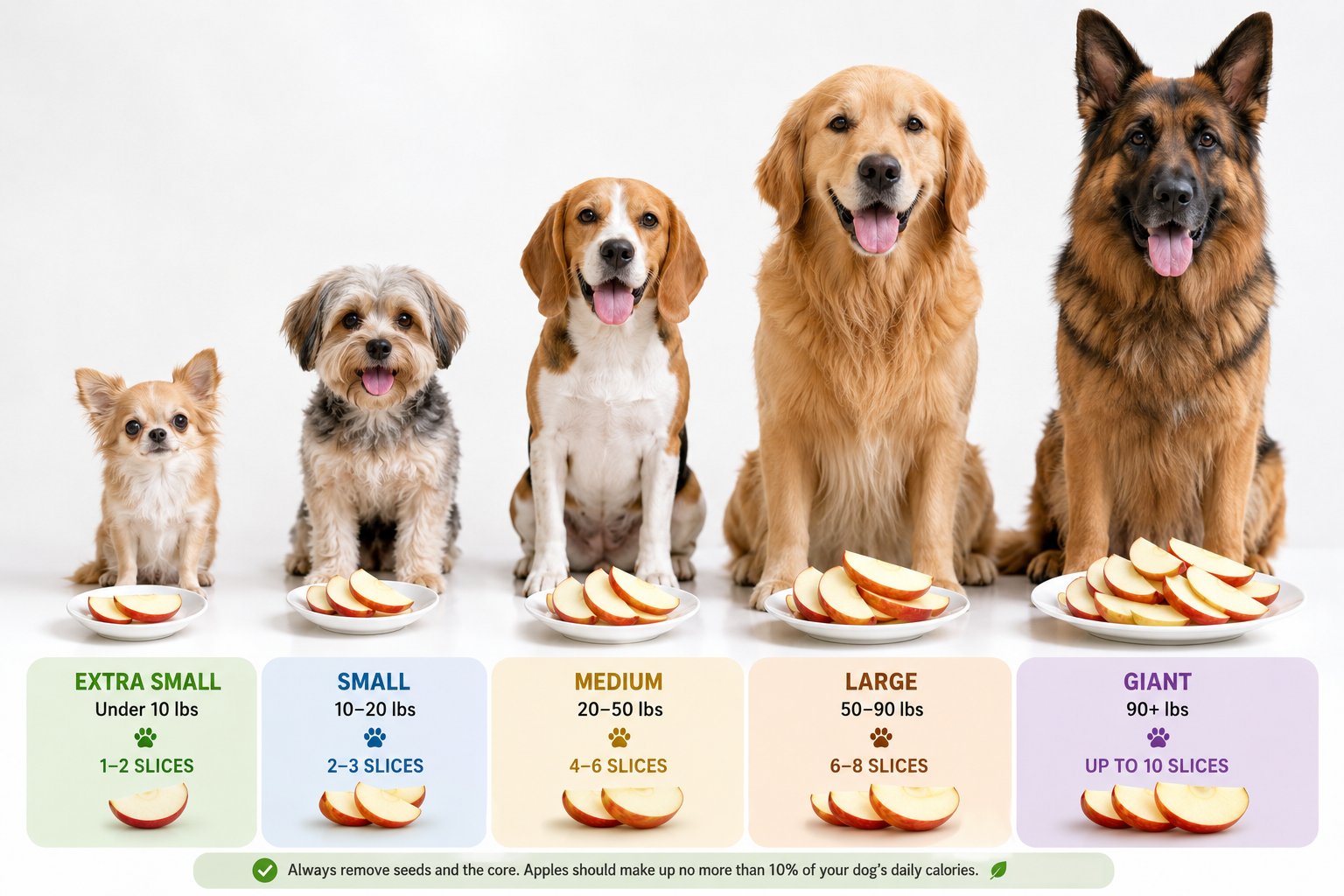
Apples should make up no more than 10% of your dog’s daily calorie intake. The remaining 90% should come from a complete and balanced dog food.
Recommended Serving Size
| Dog Size | Suggested Amount |
|---|---|
| Extra Small (under 10 lbs) | 1–2 small slices |
| Small (10–20 lbs) | 2–3 slices |
| Medium (20–50 lbs) | 4–6 slices |
| Large (50–90 lbs) | 6–8 slices |
| Giant (90+ lbs) | Up to 10 slices occasionally |
These are general guidelines. Active dogs, senior dogs, or dogs with medical conditions may need different portions. If you’re unsure, consult your veterinarian.
How to Prepare Apples for Dogs
Preparing apples correctly is just as important as choosing the right amount.
Step 1: Wash the Apple
Rinse the apple thoroughly under running water to remove dirt, wax, and any pesticide residue.
Step 2: Remove the Core
Cut away the tough center completely.
Step 3: Remove Every Seed
Double-check that no seeds remain before serving.
Step 4: Slice into Bite-Sized Pieces
Smaller pieces are safer and easier to chew.
Step 5: Serve Fresh
Offer plain apple slices without sugar, caramel, chocolate, spices, or other toppings.
Healthy Ways to Feed Apples
Dogs enjoy apples in many different ways.
Fresh Apple Slices
The easiest and healthiest option.
Frozen Apple Treats
Freeze thin slices during hot summer days for a refreshing snack.
Apple Puree
Blend fresh apples without seeds or added sugar and serve a spoonful as a food topper.
Homemade Dog Treats
Mix mashed apple with pumpkin puree and oats to make homemade dog biscuits.
Apple Recipes Dogs Should Never Eat
Many human apple desserts contain ingredients that are unsafe for dogs.
Avoid giving your dog:
 Apple pie
- Caramel apples
- Apple crisp
- Apple cobbler
- Apple cake
- Apples with peanut butter containing xylitol
- Sweetened canned apples
- Apples cooked with raisins
These foods often contain excessive sugar, butter, spices, or toxic ingredients.
Signs Your Dog Ate Too Much Apple
Although apples are healthy, eating too many can upset your dog’s stomach.
Watch for:
- Vomiting
- Diarrhea
- Gas
- Bloating
- Loss of appetite
- Stomach discomfort
Most mild symptoms improve after the digestive system settles. However, if your dog eats a large amount of apple seeds or the entire core, contact your veterinarian immediately.
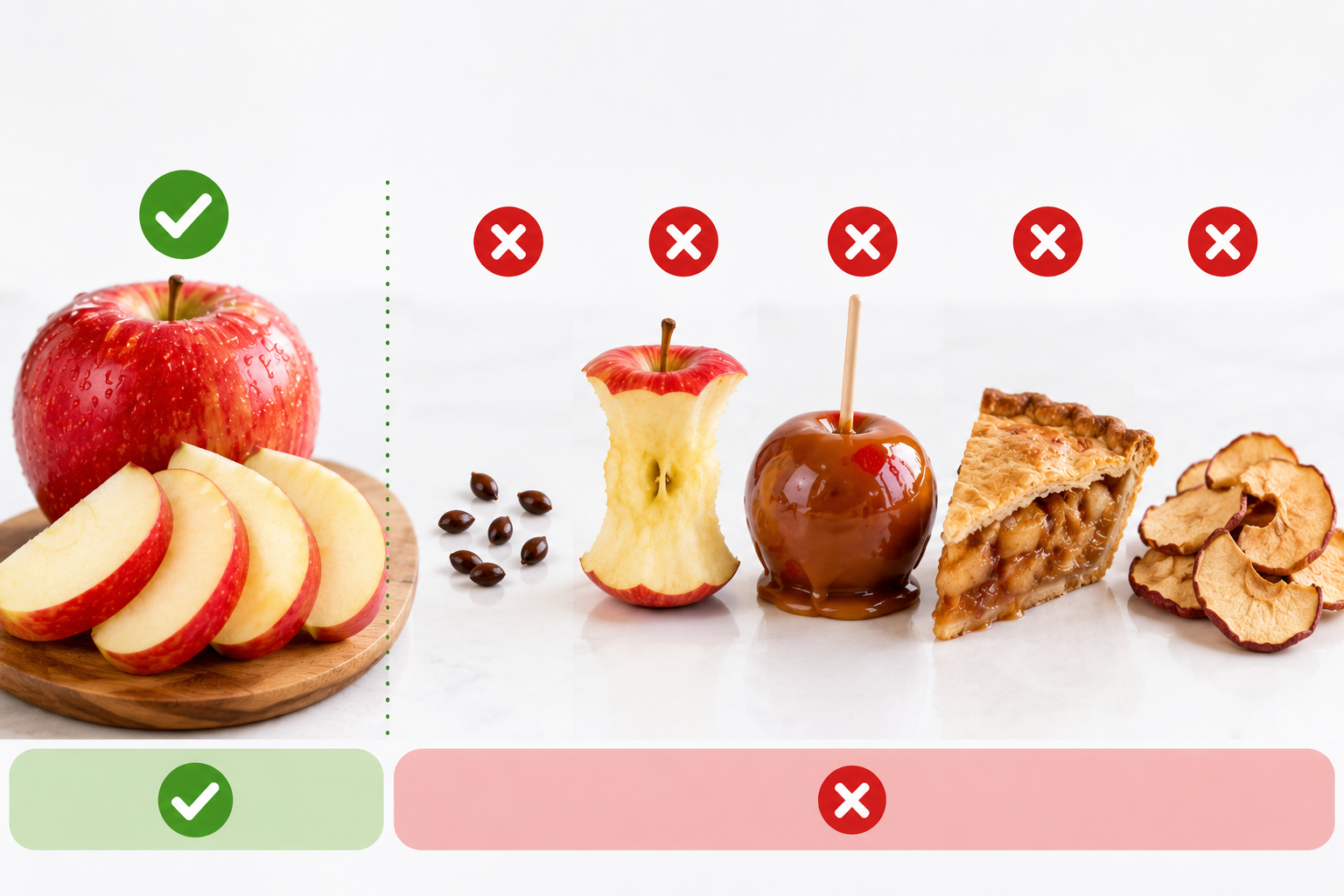
Many problems happen because apples are served incorrectly.
Avoid these common mistakes:
Feeding the whole apple
Leaving the seeds inside
Giving the hard core
Feeding apple pie or caramel apples
Offering too many slices
Giving dried apples with added sugar
Feeding moldy apples
Using apples instead of balanced dog food
Following proper preparation and portion control helps keep apples a safe, healthy treat.
Veterinary Tips for Feeding Apples
Veterinarians commonly recommend these best practices:
Introduce New Foods Slowly
Whenever you introduce a new fruit, start with a very small amount to see how your dog responds.
Use Apples as Treats Only
Treats—including apples—should make up less than 10% of your dog’s daily calorie intake.
Always Wash Fresh Produce
Washing apples helps remove dirt, bacteria, and pesticide residue.
Store Apples Properly
Keep fresh apples refrigerated and discard any pieces that become soft, moldy, or spoiled.
Supervise While Eating
Even healthy treats can become choking hazards if dogs swallow large pieces too quickly.
Myths About Dogs and Apples
Myth 1: Dogs Can Eat Every Part of an Apple
False.
Only the flesh and properly washed skin are safe. The seeds, core, and stem should always be removed.
Myth 2: Apples Clean Dogs’ Teeth
Partly True.
Crunchy apples may help remove a small amount of food debris, but they do not replace regular tooth brushing or professional dental care.
Myth 3: More Apples Mean More Health Benefits
False.
Too much fruit can cause digestive upset and unnecessary calorie intake. Moderation is always best.
Myth 4: Apple Juice Is Good for Dogs
False.
Most commercial apple juice contains added sugar and lacks the fiber found in whole apples. Fresh apple slices are a much healthier choice.
When Should You Call a Veterinarian?
Contact your veterinarian if your dog:
- Eats a large number of apple seeds
- Swallows the entire apple core
- Chokes on a large apple piece
- Vomits repeatedly after eating apples
- Has severe diarrhea
- Shows signs of an allergic reaction
- Appears weak, lethargic, or in pain
Prompt veterinary advice is especially important for puppies, senior dogs, and dogs with underlying medical conditions.
Vet-Reviewed Feeding Checklist
Before giving your dog apples, make sure you can answer “Yes” to each question:
Did I wash the apple thoroughly?
Did I remove the seeds?
Did I remove the core?
Did I cut it into bite-sized pieces?
Am I feeding only a small amount?
Is my dog healthy enough for fruit treats?
If the answer is yes to all of these, apples can be a safe and enjoyable occasional snack.
Frequently Asked Questions (FAQs)
1. Can dogs eat apples every day?
While apples are healthy, they should be given as an occasional treat, not a daily food. Treats, including apples, should make up no more than 10% of your dog’s daily calories.
2. Can puppies eat apples safely?
Yes. Puppies can eat apples once they are eating solid food. Always remove the seeds and core, and cut the apple into very small pieces to reduce the risk of choking.
3. Can dogs eat apple skin?
Yes. Apple skin is generally safe as long as the apple has been washed thoroughly to remove dirt and pesticide residue. Some dogs with sensitive stomachs may digest peeled apples more easily.
4. Are apple seeds poisonous to dogs?
Yes. Apple seeds contain amygdalin, a compound that can release cyanide when the seeds are chewed and digested. Always remove every seed before feeding apples to your dog.
5. Can diabetic dogs eat apples?
Possibly. Apples contain natural sugars, so dogs with diabetes should only eat them if their veterinarian approves and recommends an appropriate serving size.
6. What is the healthiest way to feed apples to dogs?
Fresh, washed apple slices with the core and seeds removed are the healthiest option. Avoid apple pie, caramel apples, sweetened apples, or dried apples with added sugar.
7. What fruits are safer than apples for dogs?
Many dogs can also enjoy bananas, blueberries, watermelon (seedless), strawberries, and cantaloupe in moderation. Introduce any new fruit gradually and watch for digestive upset.
8. What should I do if my dog eats an apple core?
Monitor your dog closely. If the core is large or your dog is small, contact your veterinarian because the core may become a choking hazard or cause an intestinal blockage.
Key Takeaways
- Apples are generally safe for healthy dogs when served correctly.
- Always remove the seeds, core, and stem before feeding.
- Feed apples only in moderation as an occasional treat.
- Puppies and senior dogs should receive small, bite-sized pieces.
- Dogs with diabetes or other health conditions should only eat apples with veterinary guidance.
- Avoid apple pie, caramel apples, dried apples with added sugar, and other processed apple products.
Final Conclusion
Can dogs eat apples? Yes, most healthy dogs can eat apples safely when they are served in moderation. If you’re wondering can dogs eat apples every day, the answer is that apples should be an occasional treat rather than a daily food. Always remove the seeds and core before feeding apples to your dog. By following these simple safety tips, can dogs eat apples becomes an easy question to answer—yes, when prepared correctly.