

Complete Banana Feeding Guide by Dog Size
The safest way to think about banana portions is to consider your dog’s size, total daily calories, activity level, and health status.
There is no single banana serving that is appropriate for every dog. A tiny piece may be enough for a toy breed, while a larger dog may tolerate several small pieces. However, even large dogs should not be given unlimited banana.
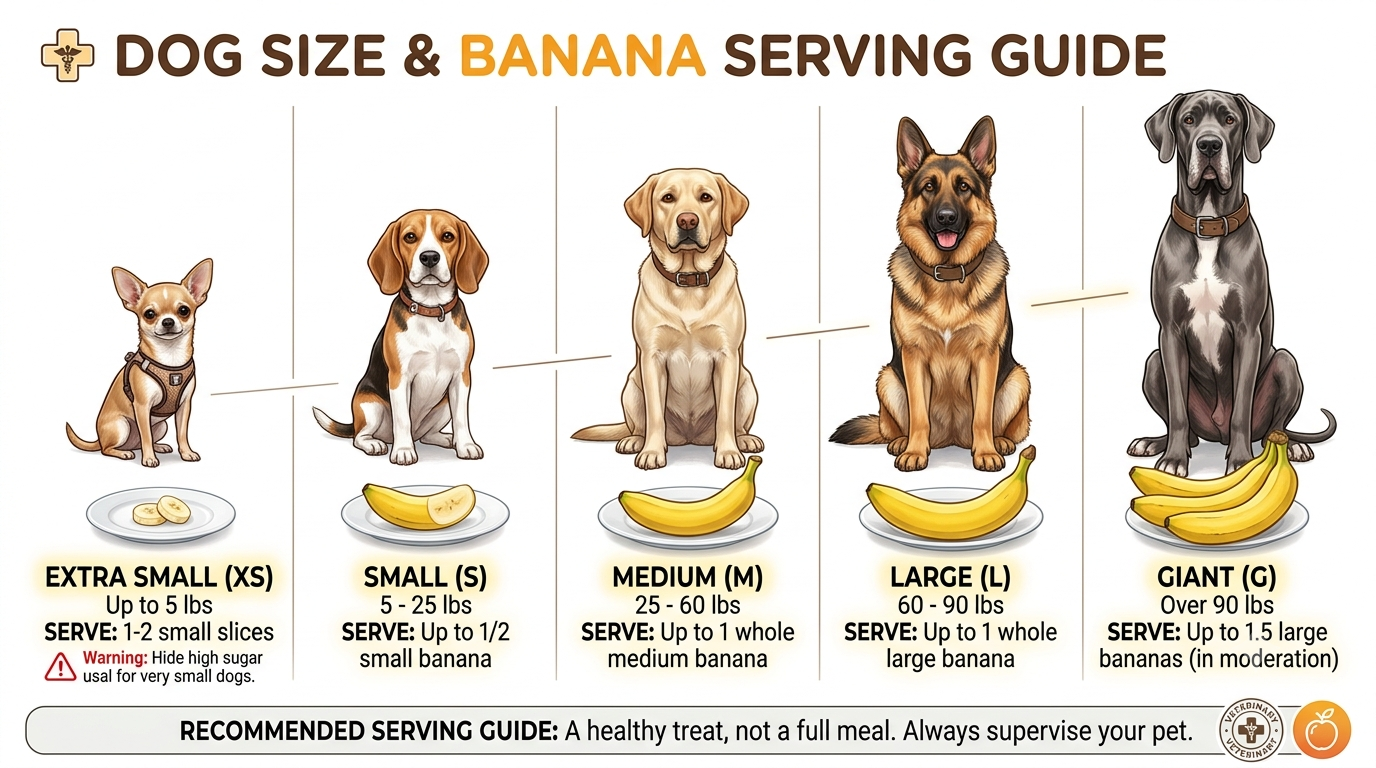
Extra-Small Dogs
For very small dogs, start with one or two tiny pieces.
Because their calorie requirements are lower, even a small amount of fruit can represent a meaningful portion of their daily treat allowance.
Small Dogs
Small dogs can generally start with a few small pieces of peeled banana.
Keep the pieces appropriately sized and avoid giving a large portion at once.
Medium Dogs
A medium-sized dog may tolerate several small slices as an occasional treat.
The exact amount should still depend on the dog’s overall diet and calorie needs.
Large Dogs
Large dogs can generally handle a somewhat larger portion, but that does not mean they should eat an entire banana regularly.
Several small pieces may be enough for an occasional treat.
Extra-Large Dogs
Even very large dogs should receive banana in moderation.
A small portion can provide the enjoyment of a new treat without unnecessarily adding excessive calories or sugar.
Important Reminder
These serving suggestions are general guidelines rather than individualized veterinary recommendations.
If your dog has diabetes, obesity, pancreatitis, digestive disease, food allergies, or another medical condition, ask your veterinarian about appropriate treats.
Can Dogs Eat Bananas? 10 Frequently Asked Questions
1. Can dogs eat bananas every day?
Healthy dogs may tolerate small amounts of banana, but they do not need to eat bananas every day. Banana is best treated as an occasional snack rather than a daily dietary requirement. Too much can add unnecessary calories and carbohydrates and may cause digestive upset.
2. Are bananas good for dogs?
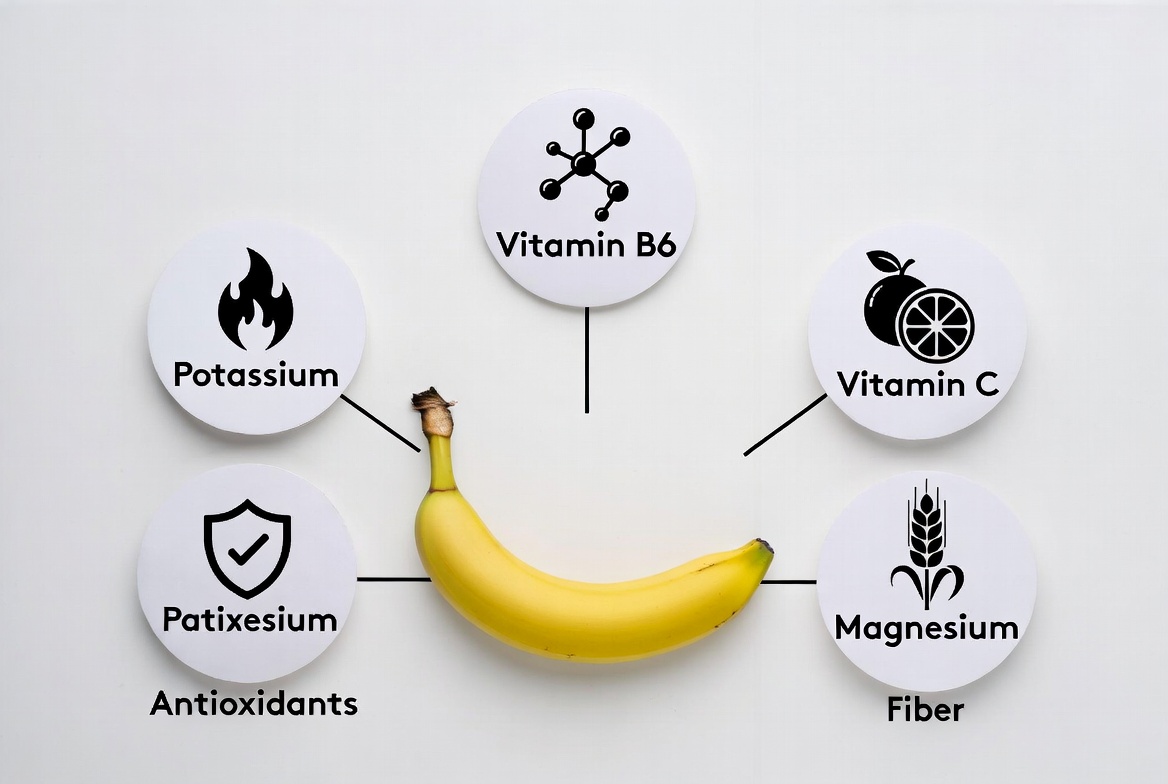
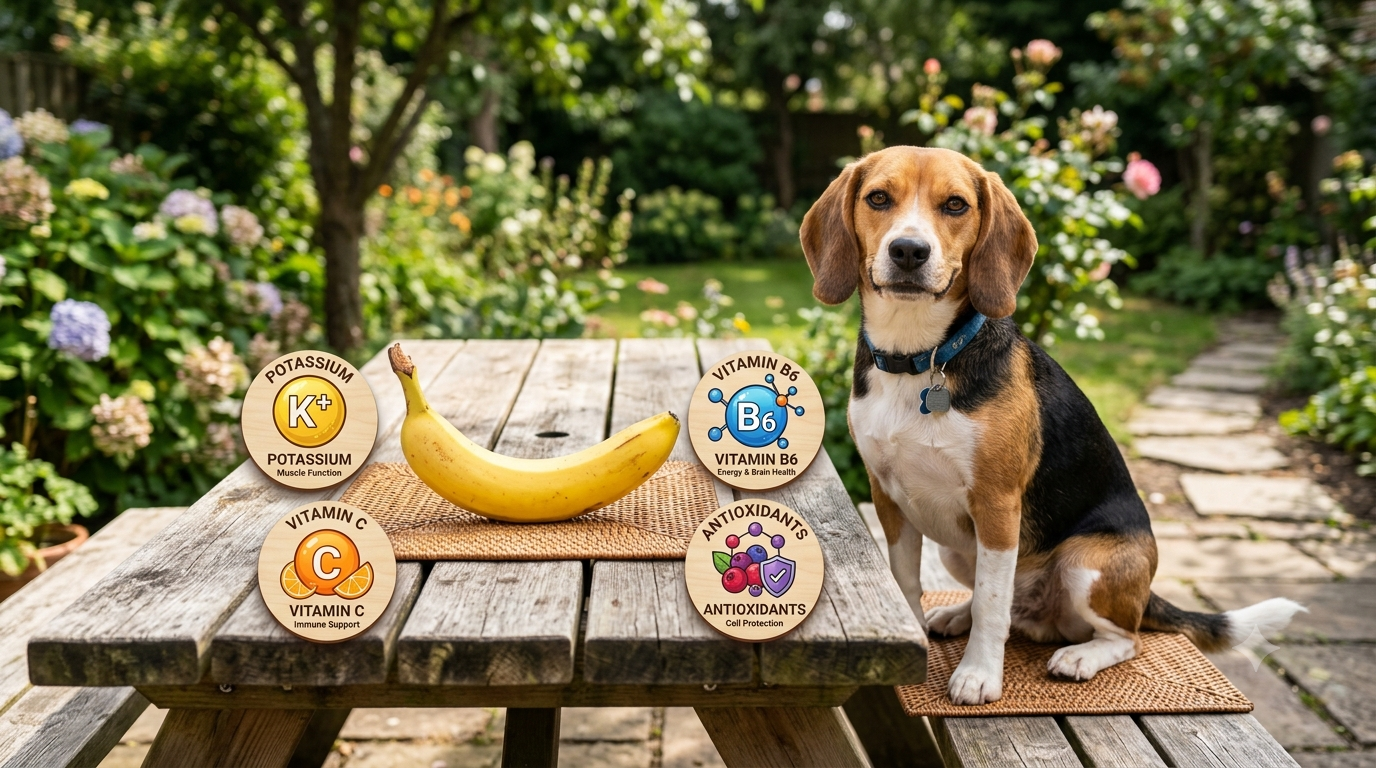
Bananas can be a reasonable occasional treat for many healthy dogs. They contain fiber, potassium, vitamin B6, and vitamin C. However, dogs should get their primary nutrition from a complete and balanced diet, so bananas should not replace regular dog food.
3. How much banana can a dog eat?
The appropriate amount depends on the dog’s size, calorie needs, activity level, and health. Start with a very small amount of peeled banana and monitor your dog. If tolerated, a small occasional serving may be appropriate.
4. Can puppies eat bananas?
Yes, weaned puppies that are eating solid food can generally have tiny amounts of plain, peeled banana as an occasional treat. Their main nutrition should come from a complete and balanced puppy diet formulated for growth.
5. Can dogs eat banana peels?
Dogs should not be intentionally fed banana peels. The peel is tough and difficult to digest and may cause digestive problems. Large amounts could potentially contribute to an intestinal blockage.
6. Can dogs eat banana chips?
Plain, unsweetened banana chips may be acceptable in tiny quantities for some dogs, but fresh banana is generally a simpler option. Avoid banana chips containing added sugar, chocolate, artificial sweeteners, or other unsafe ingredients.
7. Can dogs eat banana bread?
Banana bread is not recommended as a regular dog treat. Recipes may contain sugar, butter, chocolate, raisins, macadamia nuts, or xylitol. Plain fresh banana is a much safer option.
8. Can dogs eat bananas with peanut butter?
Some healthy dogs can enjoy a tiny amount of banana with plain, dog-safe peanut butter. Always check the label to ensure the peanut butter contains no xylitol. Because peanut butter is high in calories and fat, use only a small amount.
9. Are bananas bad for dogs?
Bananas are not generally considered toxic to dogs, but too much can cause problems. Excessive portions may contribute to digestive upset and unnecessary calorie intake. Dogs with certain medical conditions may also need to avoid or limit bananas.
10. What should I do if my dog eats too much banana?
Monitor your dog for vomiting, diarrhea, constipation, gas, or stomach discomfort. If your dog develops severe or persistent symptoms, or if they have eaten a large amount of banana peel, contact your veterinarian for advice.
Final Verdict: Can Dogs Eat Bananas?
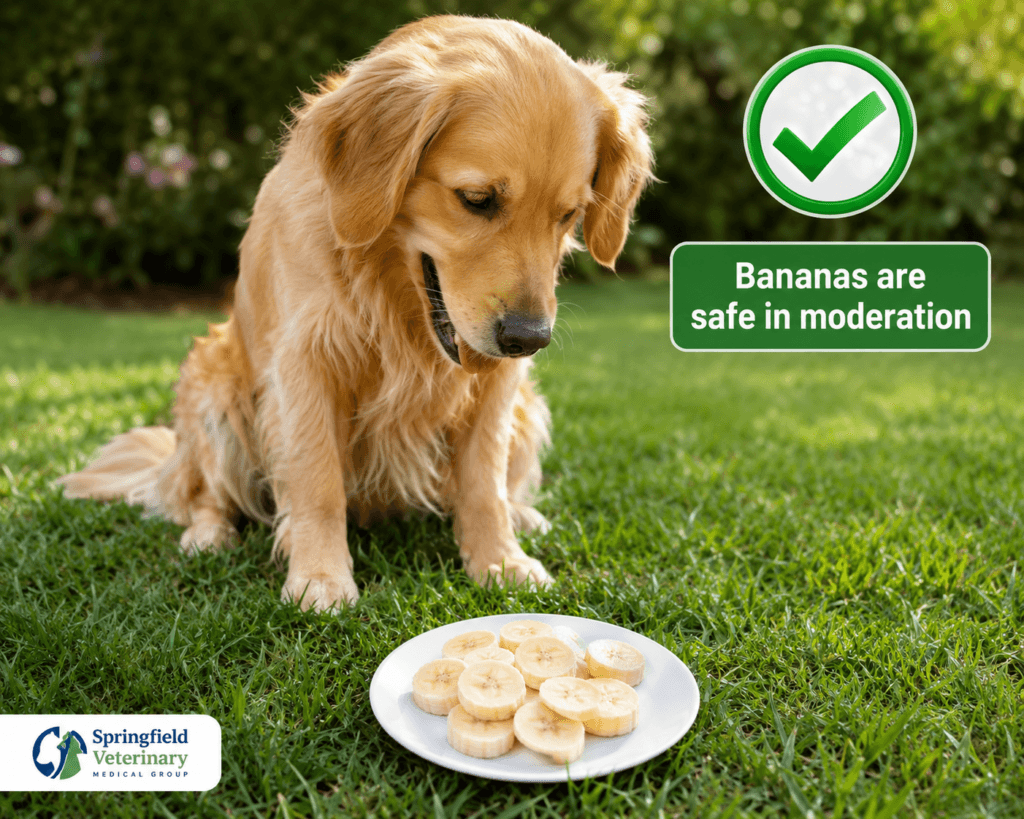
Yes, most healthy dogs can eat plain, ripe bananas in moderation.
Bananas are not considered a toxic fruit for dogs, and small amounts of peeled banana can be used as an occasional treat. The fruit contains fiber and several nutrients, but it also contains natural sugars and carbohydrates, which is why portion control is important.
The safest approach is to:
- Remove the banana peel
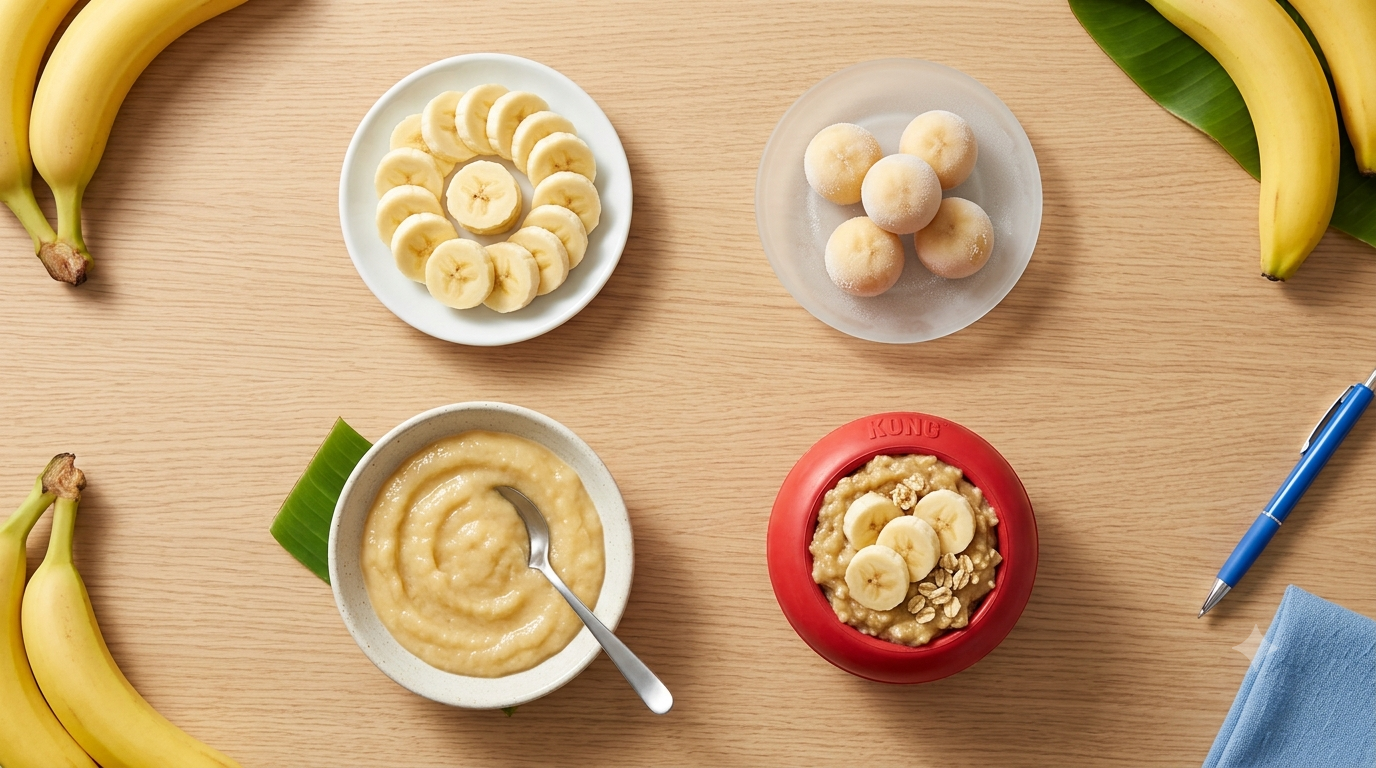
- Cut the fruit into small pieces
- Start with a small amount
- Monitor your dog’s response
- Keep portions appropriate for your dog’s size
- Avoid processed banana products with unsafe ingredients
- Remember that treats should complement, not replace, a complete and balanced diet
Puppies that are weaned and eating solid food may also enjoy tiny amounts of banana, but their nutritional needs should be met primarily through an appropriate puppy diet.
If your dog has diabetes, obesity, pancreatitis, gastrointestinal disease, food allergies, or another health condition, speak with your veterinarian before introducing banana or other new treats.
The Bottom Line
Can dogs eat bananas? Yes.
For most healthy dogs, a small amount of plain, peeled banana can be a tasty occasional treat. The key is moderation, appropriate portion sizes, and safe preparation.
Key Takeaways
 Dogs can generally eat plain ripe bananas.
- Bananas should be an occasional treat, not a replacement for balanced dog food.
- Start with a very small portion.
- Adjust serving sizes according to your dog’s size and calorie needs.
- Weaned puppies can generally have tiny amounts of banana.
- Do not intentionally feed banana peels.
- Avoid banana products containing xylitol, chocolate, raisins, or other unsafe ingredients.
- Fresh banana is generally a simpler choice than processed banana snacks.
- Dogs with medical conditions may need individualized dietary advice.
- Monitor your dog when introducing any new food.
 Dogs can generally eat plain ripe bananas.
 Bananas should be an occasional treat, not a replacement for balanced dog food.
 Start with a very small portion.
 Adjust serving sizes according to your dog’s size and calorie needs.
 Weaned puppies can generally have tiny amounts of banana.
 Do not intentionally feed banana peels.
 Avoid banana products containing xylitol, chocolate, raisins, or other unsafe ingredients.
 Dogs with medical conditions may need individualized dietary advice.
 Monitor your dog when introducing any new food.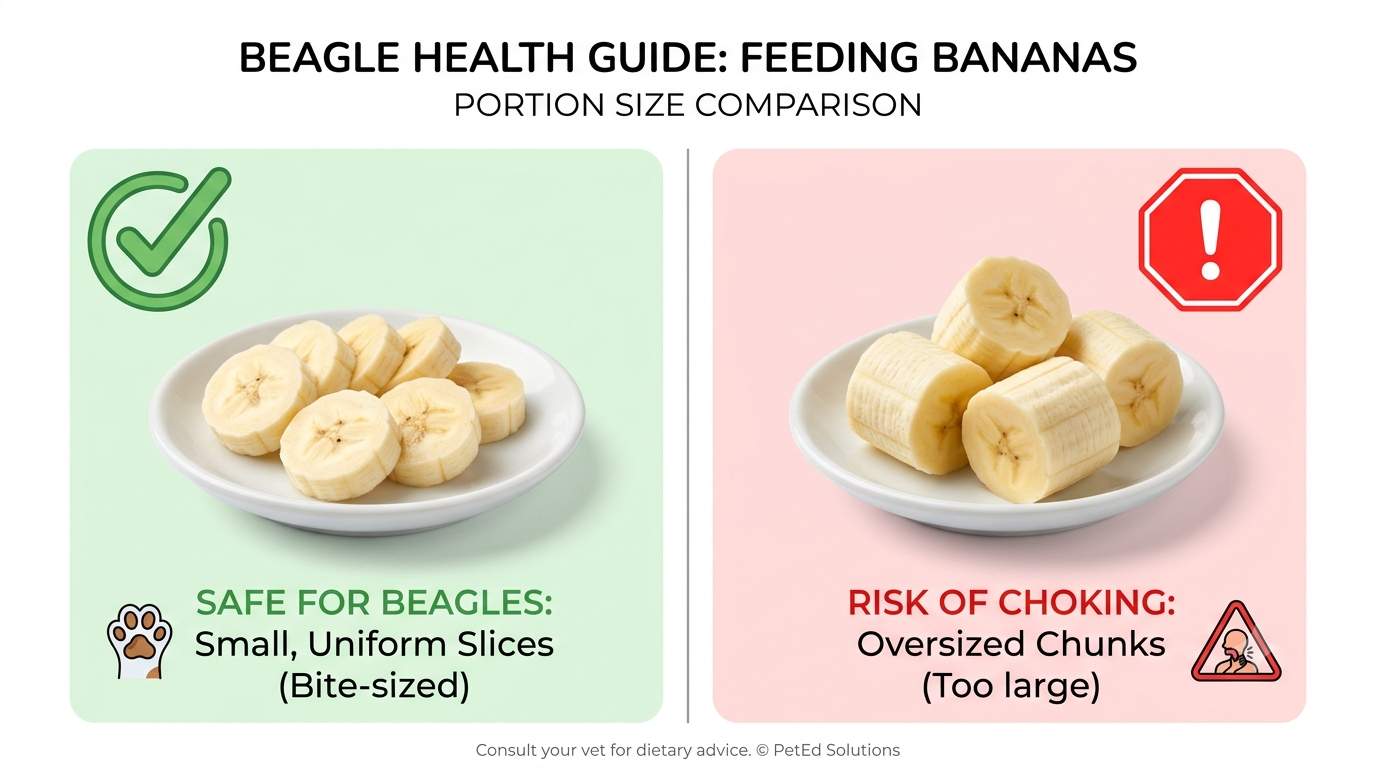

Can Dogs Eat Banana Peels?
Technically, banana peels are not considered toxic, but they are not recommended for dogs.
Banana peels are:
- Difficult to digest
- High in fiber
- Tough to chew
- More likely to cause stomach upset or intestinal blockage if swallowed in large pieces
If your dog accidentally eats a small piece of banana peel, monitor them closely. If they consume a large amount or show signs such as vomiting, abdominal pain, or difficulty passing stool, contact your veterinarian promptly.
Quick Takeaway
 Quick Takeaway
 Banana fruit: Safe in moderation.
 Banana peel: Best avoided.
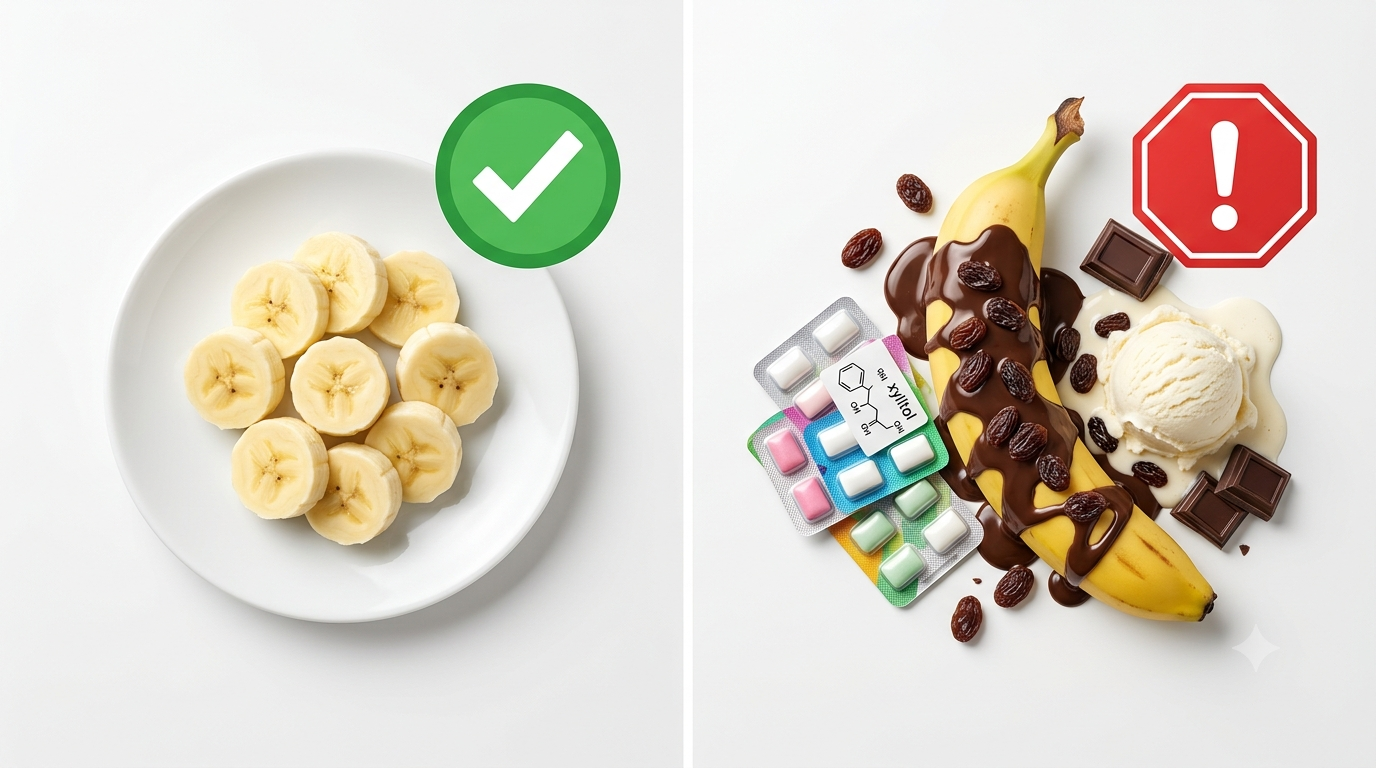


Common Mistakes Dog Owners Make
Many dog owners accidentally make feeding mistakes that can increase health risks.
Avoid these common errors:
Feeding too much banana at one time.
Offering banana peels.
Mixing bananas with chocolate or raisins.
Giving bananas every day.
Ignoring signs of digestive upset.
Replacing balanced dog food with fruit treats.
Remember, bananas are a supplement to a balanced diet—not a substitute.
Final Verdict
Yes, dogs can eat bananas, and for most healthy dogs they can be a delicious and nutritious occasional treat.
Bananas provide beneficial nutrients such as potassium, vitamin B6, vitamin C, fiber, and antioxidants. When served in small portions, they can be a healthier alternative to many processed treats.
However, moderation is essential. Too much banana may lead to digestive upset or unnecessary sugar intake. Always remove the peel, cut bananas into bite-sized pieces, and monitor your dog’s reaction whenever introducing a new food.
If your dog has diabetes, obesity, digestive disease, or another medical condition, consult your veterinarian before feeding bananas.
Key Takeaways
Bananas are generally safe for healthy dogs.
Feed bananas only in moderation.
Remove the peel before serving.
Cut bananas into small pieces.
Avoid banana-based desserts and foods containing chocolate, raisins, or xylitol.
Puppies can enjoy bananas in very small amounts.
Consult your veterinarian if your dog has a medical condition.