Why Do Cats Slow Blink at You? The Science of Cat “Kisses”
If you’ve ever locked eyes with a cat who slowly narrowed their eyes and blinked at you, you’ve experienced one of the most charming — and scientifically real — forms of cat communication there is. It’s often called a “cat kiss,” and unlike a lot of pet folklore, this one has genuine peer-reviewed research behind it, from a study that went viral around the world.
Quick Answer
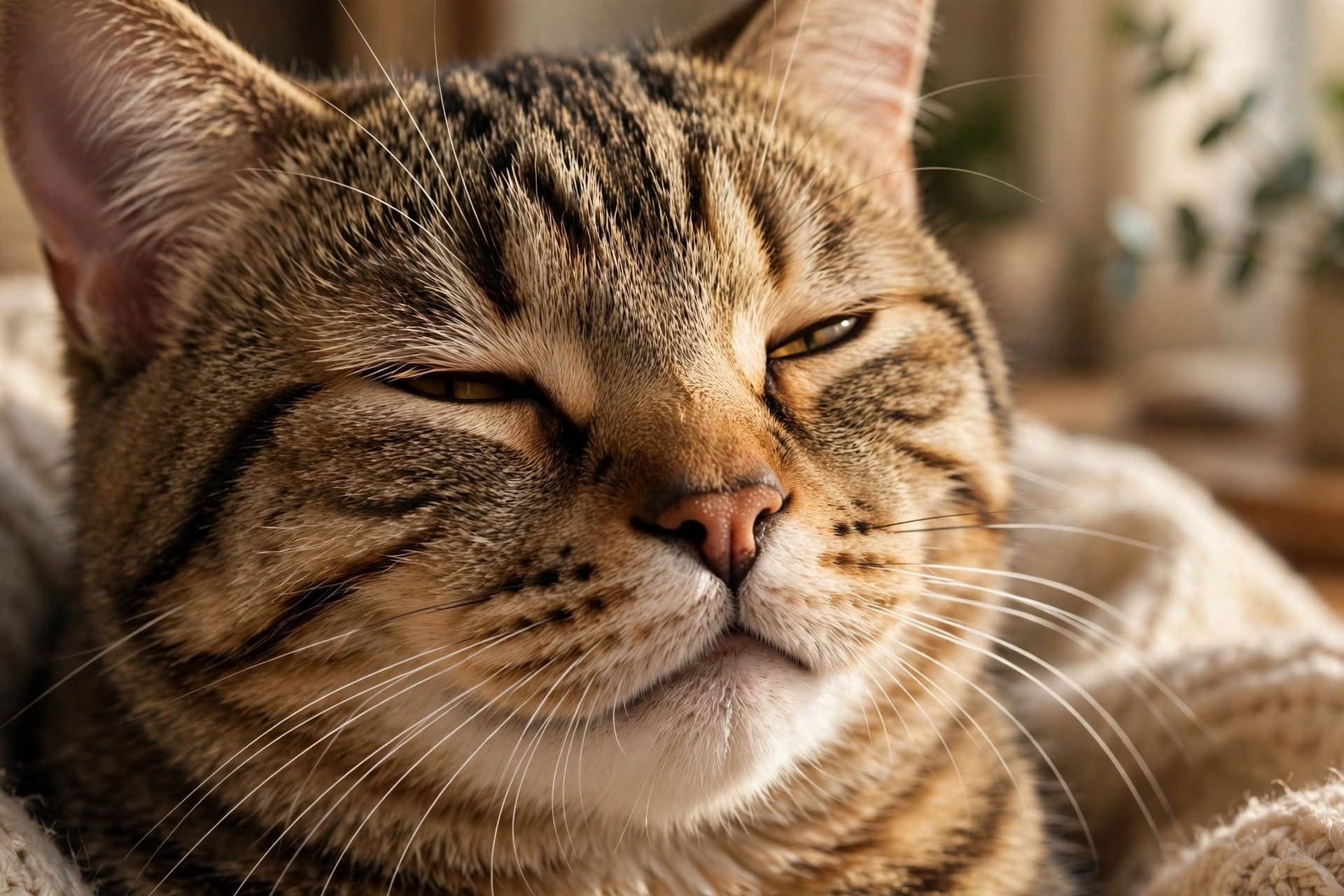
Yes, the cat slow blink is real communication, confirmed by a 2020 study from the Universities of Sussex and Portsmouth published in Scientific Reports. Cats slow-blink back at humans who slow-blink at them, and are more likely to approach a person (even a stranger) after a slow blink than after a neutral expression. It functions as a form of positive communication, similar in spirit to a relaxed human smile — though researchers are careful to note it’s more accurately read as a signal of comfort and trust than literally “I love you.”
Table of Contents
- What Exactly Is a Cat Slow Blink?
- The Real Science Behind It
- Does It Actually Mean “I Love You”?
- How to Slow Blink Back at Your Cat
- The Shelter Study: Slow Blinks and Faster Adoptions
- Other Genuine Signs of Feline Trust
- Common Cat Body Language Myths
- Capturing and Sharing the Moment
- What the Study Doesn’t Claim
- FAQs
- Final Verdict
What Exactly Is a Cat Slow Blink? {#what-is-it}
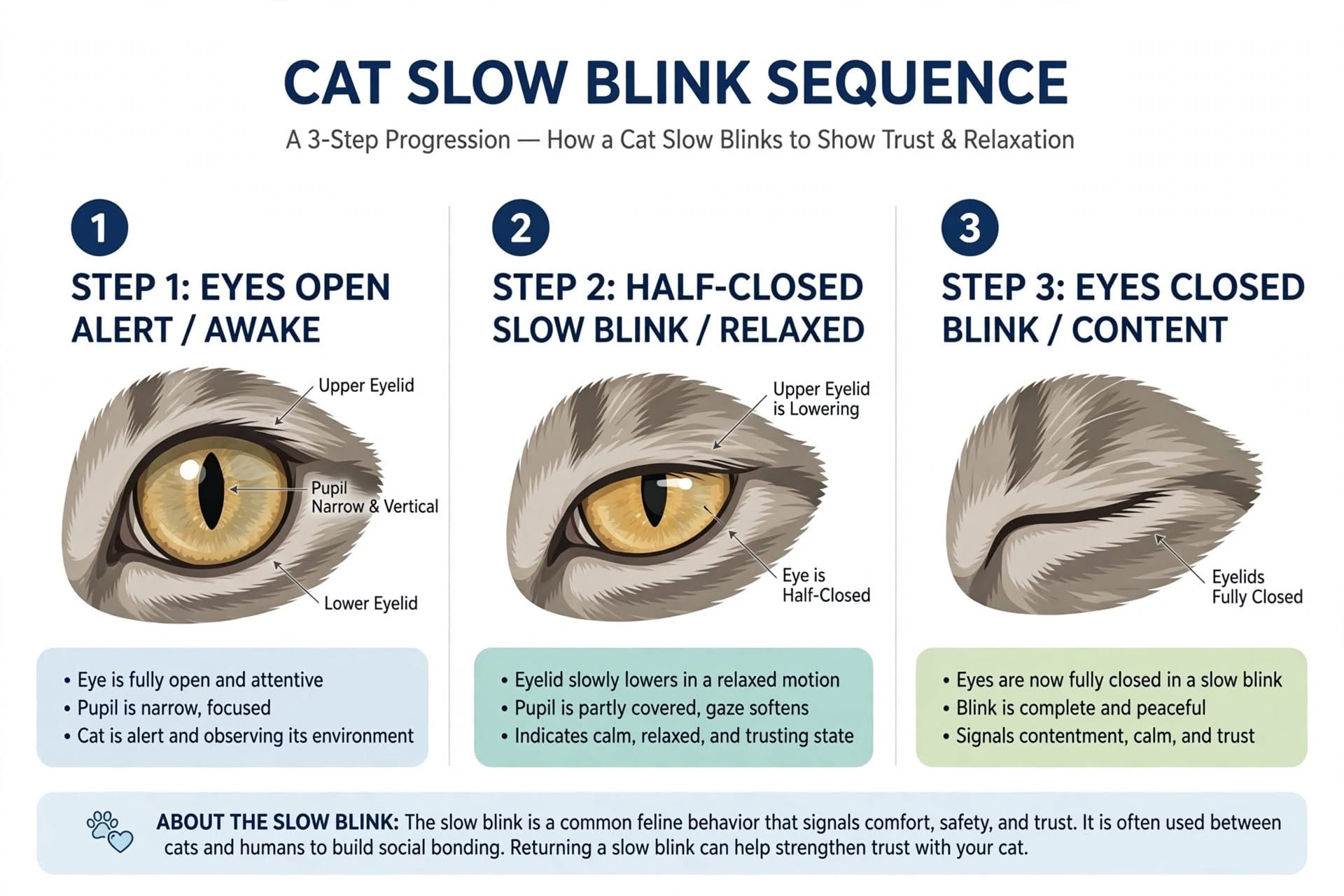
A slow blink is a distinct, recognisable sequence: a series of slow, partial eye narrowings, often followed by either a longer eye narrow or a brief eye closure — different from a normal blink, which is quick and doesn’t carry the same relaxed, deliberate quality. It’s sometimes compared to a genuine human smile (a Duchenne smile), which similarly involves a slight eye-narrowing that’s difficult to fake convincingly.
The Real Science Behind It {#the-science}
This isn’t internet folklore — it’s a peer-reviewed finding. In 2020, researchers Dr. Tasmin Humphrey, Professor Karen McComb, and Dr. Leanne Proops, from the Universities of Sussex and Portsmouth, published a study specifically investigating slow blinking in cat-human communication in the journal Scientific Reports, part of the Nature family of journals.
The research involved two separate experiments. In the first, 21 cats across 14 households were observed as their own owners slow-blinked at them, and the cats’ responses were recorded and analysed. In the second experiment, an unfamiliar researcher — not the cat’s owner — performed the same slow blink, to test whether the effect held with strangers too. The cats were significantly more likely to approach the researcher after a slow blink than after the researcher held a neutral expression, suggesting the response isn’t just about a familiar bond with an owner, but a more general form of cat-human communication.
The study received substantial global media attention when published, including coverage from the BBC and BBC Radio 4, and ranked in the top 100 most-discussed research papers of 2020 across all fields of science, according to Altmetric’s yearly tracking.
How the Study Was Actually Conducted
It’s worth understanding the methodology in a bit more detail, since it’s part of what makes this finding credible rather than just an appealing assumption. In the first experiment, researchers visited each cat in their own home environment to reduce stress and keep behaviour as natural as possible. Owners were given specific instructions on how to perform the slow blink consistently, and cat responses were video recorded from a fixed position to allow for careful, standardised behavioural coding afterward — researchers counted eye narrowing movements, blink frequency, and approach behaviour, comparing periods when the owner slow-blinked against comparable periods without it.
The second experiment specifically controlled for familiarity by using a researcher the cat had never met, which is a meaningful design choice — it rules out the simpler explanation that cats simply respond to slow blinking from people they already trust, and instead shows a more general communicative response to the behaviour itself, regardless of who’s performing it.
The cats involved ranged widely in age (from six months to sixteen years) and included both male and female cats, which strengthens the generalisability of the finding rather than it being specific to a narrow group of cats.
Why Might Cats Have Evolved This Behaviour?
The evolutionary story here is genuinely interesting, even though it remains somewhat speculative compared to the experimental findings themselves. One leading idea is that slow blinking may have originated as a way for cats to signal non-threat to each other — direct, sustained eye contact between cats (and between many other animals) tends to be read as a challenge or threat, so a deliberate eye-narrowing or brief closure may function as an active “I mean no harm” signal, similar in spirit to how looking away or softening body language reduces perceived aggression across many species.
Domestic cats may have extended this natural feline-to-feline signal to their interactions with humans over the long course of domestication, particularly since humans who responded positively to the behaviour (by feeling closer to a slow-blinking cat, giving them more attention or care) may have inadvertently reinforced and selected for cats that used the behaviour more readily — a plausible example of how a species’ behaviour can shift through its relationship with humans over generations, even without deliberate breeding for the trait specifically.
Does It Actually Mean “I Love You”? {#what-it-means}
This is worth being precise about, since it’s easy to over-romanticise. The researchers themselves are fairly measured in how they describe the finding: it’s best understood as a signal of positive emotional communication and comfort, rather than a direct feline translation of “I love you” in the human romantic sense. One of the study’s authors has suggested the behaviour may partly reflect a learned association — cats may pick up that humans respond positively when they slow-blink back, reinforcing the behaviour over time, rather than it being purely an innate declaration of affection.
A widely known cat behaviourist has offered a similarly grounded take: a slow blink reads less like a romantic “I love you” and more like “I trust you,” which fits well with the study’s broader framing of the behaviour as a marker of comfort and safety around a person rather than romantic attachment.
Either way, the practical takeaway is the same: a cat slow-blinking at you is a genuine, measurable positive signal, and responding to it is a real way to build rapport, whatever the precise underlying emotional mechanism turns out to be with further research.
How to Slow Blink Back at Your Cat {#how-to-do-it}
Trying this yourself is simple, and it’s exactly the technique described by the study’s lead researchers:
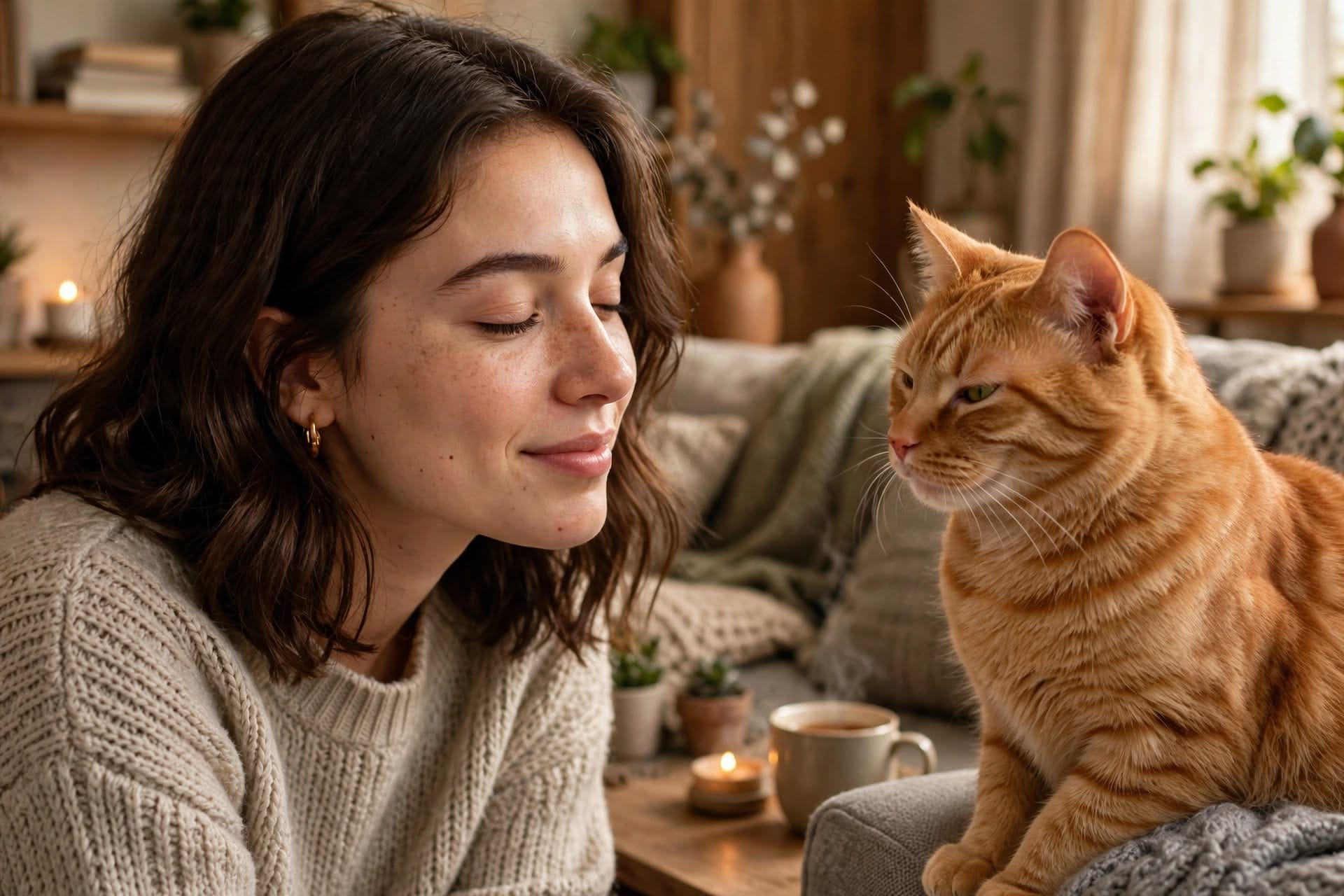
- Make relaxed eye contact with your cat from a comfortable distance — not staring intensely, which cats can read as a threat display.
- Narrow your eyes slowly, similar to the eye shape of a relaxed, genuine smile.
- Close your eyes gently for a second or two.
- Open them slowly again, keeping your overall body language relaxed and unhurried.
- Watch for a response — many cats will slow-blink back, or show other relaxed signals like a soft gaze or slow approach.
This works with cats you don’t know too, based on the study’s second experiment — it’s worth trying gently with a new cat, not just your own, though always let the cat set the pace of any closer interaction.
Do Kittens Slow Blink Too?
Kittens can and often do slow blink, though the behaviour may be less consistent or pronounced than in adult cats, since social communication behaviours often continue developing through early life. Gently practising a slow blink with a new kitten is a low-pressure way to start building a positive association early, alongside the usual gentle handling and positive experiences that support good socialisation more broadly.
Does Slow Blinking Happen in Other Animals?
Cats aren’t entirely alone in using eye-narrowing as a positive or non-threatening signal, though the specific slow-blink sequence studied in cats hasn’t been researched to the same experimental degree in other common pets. Some primates show comparable eye-narrowing or squinting expressions in relaxed, positive social contexts, and the researchers behind the cat study specifically drew a comparison to the human Duchenne smile — a genuine smile that involves the eyes, not just the mouth, and is notably difficult to produce convincingly on command, similar to how a cat’s slow blink appears to be a more involuntary-feeling, relaxed signal rather than a performed one.
The Shelter Study: Slow Blinks and Faster Adoptions {#shelter-study}
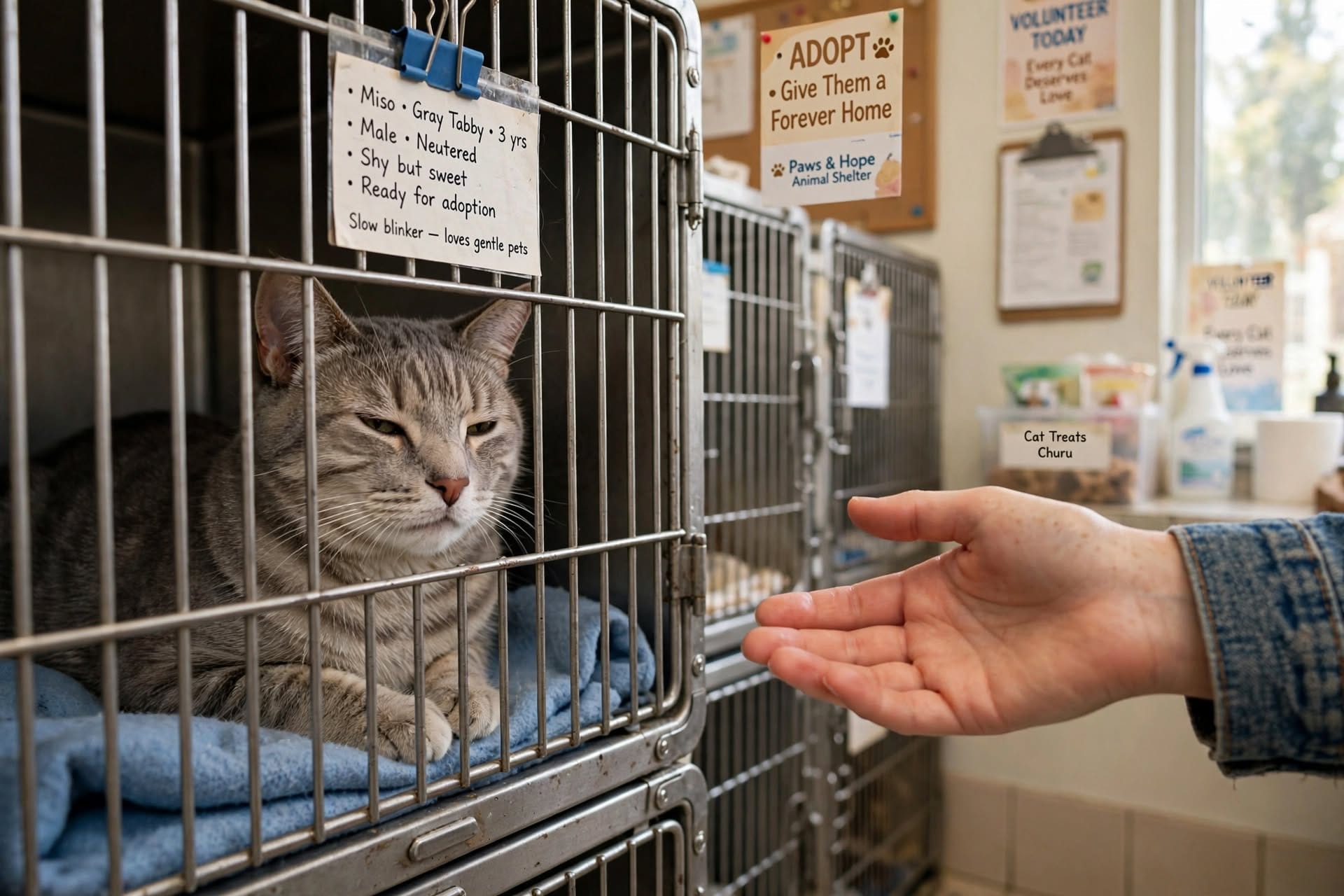
A genuinely practical follow-up finding makes this more than just a cute party trick. In a related study, shelter cats who were more responsive to a researcher’s slow blink — meaning they blinked back or approached more readily — were adopted more quickly by members of the public than cats who were less responsive. This suggests the slow blink isn’t just a nice interaction to try at home; it may play a real role in how quickly a rescue cat forms a visible connection with a potential adopter, which is a genuinely useful thing for shelter staff and volunteers to know and potentially use deliberately with cats waiting for homes.
Other Genuine Signs of Feline Trust {#other-signs}
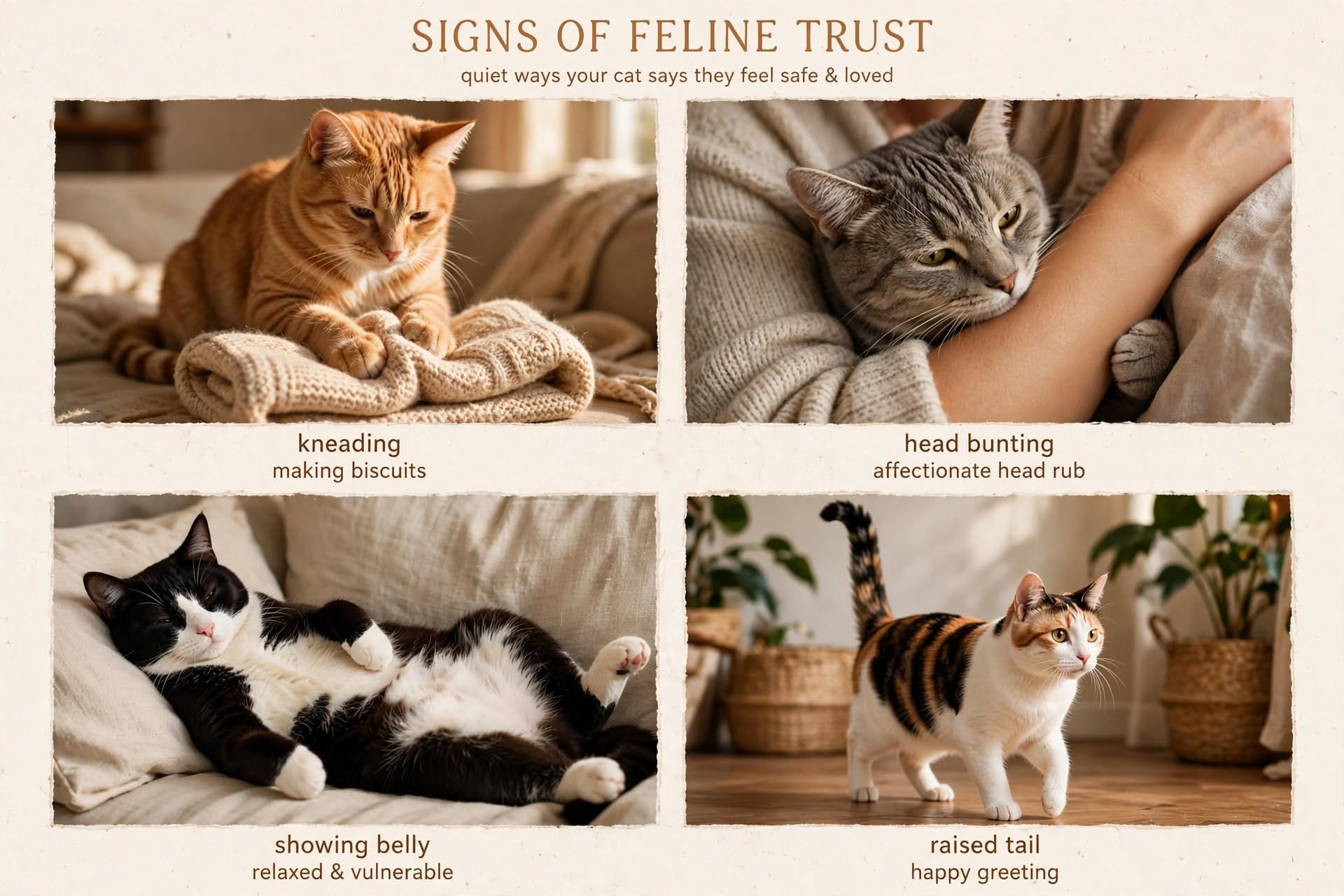
The slow blink is one of several well-documented, genuine trust signals cats show, worth knowing alongside it:
- Exposing their belly — often a sign of trust and relaxation, though notably not necessarily an invitation for a belly rub, which many cats still don’t enjoy despite the trusting posture
- Kneading with their paws — a behaviour retained from kittenhood nursing, often shown when a cat feels comfortable and content
- A raised, relaxed tail, sometimes with a slight curve or quiver at the tip, generally signalling a friendly, confident greeting
- Head bunting or cheek rubbing against you — cats have scent glands in this area, and rubbing against you is a genuine affiliative and marking behaviour
- Following you between rooms without an obvious practical reason, often reflecting simple social preference for your company
Common Cat Body Language Myths {#myths}
“A cat showing its belly always wants a belly rub.” Often the opposite — many cats show their belly as a sign of trust and relaxation but will react defensively if you actually touch it, since the belly is a vulnerable area even for a relaxed cat.
“Purring always means a happy, content cat.” Cats also purr when anxious, in pain, or unwell, sometimes as a self-soothing mechanism, so purring alone isn’t a fully reliable single indicator of a cat’s emotional state.
“A wagging tail means the same thing in cats as in dogs.” The opposite, generally — a rapidly swishing or thumping tail in a cat often signals irritation or overstimulation, quite different from the friendly association a wagging tail carries in dogs.
“Cats that slow blink always want to be picked up or petted more.” Not necessarily — a slow blink signals comfort and positive association, but it isn’t automatically an invitation for more physical contact, which many cats still prefer to initiate and control themselves.
Capturing and Sharing the Moment {#capturing-it}
Given how visually simple and genuinely charming a slow blink is, it’s become a popular thing for owners to try to photograph or film, particularly since the behaviour has such a strong social media following. A few practical tips if you want to catch it well: natural, soft lighting tends to show the eye-narrowing more clearly than harsh overhead light; getting down to your cat’s eye level generally produces a more engaging shot than looking down at them; and patience matters more than a perfect setup, since a slow blink can’t really be forced or rushed — it happens on the cat’s terms, in a moment of genuine relaxation, which is part of what makes a captured one feel special rather than staged.
It’s worth remembering, too, that the value of the interaction itself doesn’t depend on capturing it — the bonding moment between you and your cat is real whether or not a camera is involved, and prioritising your cat’s comfort over getting the shot matters more than the photo or video itself.
What the Study Doesn’t Claim {#limitations}
Good science reporting means being honest about a study’s boundaries, not just its headline finding. A few things worth knowing about what this research does and doesn’t establish:
Sample size was modest. Twenty-one cats in the first experiment is a reasonable number for this kind of detailed behavioural observation, but it’s not a massive population study — the finding is a genuine, statistically meaningful result, not a claim based on thousands of cats.
It doesn’t measure internal emotional states directly. The study measured observable behaviour (blink responses, approach behaviour), not what a cat is actually feeling internally — researchers are appropriately cautious about equating a behavioural response with a specific named emotion like “love,” which is part of why the more measured “positive communication” framing is used rather than more dramatic headline claims.
It’s one study, not the final word. Like any single piece of research, it’s a strong, credible finding worth taking seriously, but science generally builds confidence through replication and follow-up work over time rather than a single study being treated as absolutely definitive on its own.
Correlation and causation nuances still apply. The shelter study finding faster adoptions for more slow-blink-responsive cats is a genuinely interesting association, but it doesn’t rule out other explanations (perhaps generally more relaxed, adoptable-seeming cats both slow-blink more and get adopted faster for related but distinct reasons) as cleanly as a fully controlled experiment might.
None of this undermines the core finding — it’s genuinely one of the better-designed pieces of research in this area — but holding it with appropriate scientific humility is part of what makes it credible rather than oversold.
FAQs {#faqs}
Is the cat slow blink scientifically proven, or just a popular belief? It’s genuinely proven — a peer-reviewed 2020 study published in Scientific Reports (Nature) specifically tested and confirmed the behaviour experimentally, rather than it being purely anecdotal.
Does slow blinking work with any cat, or only cats that know me well? Based on the study’s second experiment, it worked even with unfamiliar cats being approached by a researcher they’d never met, suggesting it’s a more general form of communication rather than something requiring an existing bond.
What’s the difference between a slow blink and a normal blink? A normal blink is quick and reflexive. A slow blink is a deliberate-looking sequence of slow partial eye narrowings, often followed by a longer eye closure, giving it a distinctly relaxed, unhurried quality.
Can I use slow blinking to help a nervous or shelter cat feel more comfortable? It’s a reasonable, gentle technique to try, and related research found shelter cats more responsive to slow blinking were adopted faster — though always let a nervous cat set the pace, and don’t force closer contact even after a positive blink response.
Does a cat that doesn’t slow blink back dislike me? Not necessarily — individual cats vary in how expressive they are, and a cat’s overall comfort with you is better read across multiple signals (relaxed body posture, proximity, purring in appropriate contexts) rather than any single behaviour in isolation.
Is slow blinking the same as “cat kisses,” a term some owners use? Yes, this is generally what people mean by the term — it’s become a popular shorthand for the behaviour, especially on social media, even though the scientific papers themselves use the more precise term “slow blink” or “eye narrowing.”
Do all cats respond to slow blinking, or are some cats just not “blinkers”? Individual cats vary in expressiveness, the same as individual humans vary in how readily they smile or make eye contact — a cat not responding with an obvious slow blink back doesn’t necessarily mean they’re uncomfortable, just that their communication style may be more subtle.
Can slow blinking help with a multi-cat household where cats don’t get along? It hasn’t been specifically studied in this context, and it’s not a substitute for proper introduction techniques and behavioural support for cats in conflict, but there’s no harm in using it as one small, gentle tool alongside more established approaches to easing tension between cats.
Why did this particular study go so viral compared to other cat behaviour research? Likely a combination of factors: it confirmed something many owners already suspected from experience (giving it an appealing “science proves it” angle), it’s simple enough for anyone to try themselves immediately, and it taps into the universally popular subject of pets and affection, which tends to travel well on social media and in general news coverage alike.
Has any research been done on whether dogs do something similar? Dogs communicate affection and comfort through a different, generally more overt set of signals (relaxed body language, tail movement, seeking physical contact), and while dogs do use eye contact meaningfully with humans, the specific slow-blink sequence studied in cats hasn’t been the subject of comparable dedicated research in dogs — it appears to be a particularly feline form of communication, tied to how cats otherwise use eye narrowing to signal non-threat to each other.
Final Verdict {#final-verdict}
The cat slow blink is a rare example of internet-famous pet folklore that turned out to hold up under real scientific scrutiny — a genuine, peer-reviewed, experimentally confirmed form of positive cat-human communication, not just a charming assumption people wanted to believe. It’s best understood as a signal of comfort and trust rather than a literal translation of romantic love, but either way, it’s a real, simple, and genuinely research-backed way to build rapport with a cat, whether it’s your own or one you’ve just met.
If you take one thing from this guide, let it be this: the next time your cat looks at you and slowly narrows their eyes, take a moment to blink slowly back. It costs nothing, takes only a couple of seconds, and according to real published research, it’s genuinely one of the simplest ways to say something meaningful to a cat in a language they actually understand.
This guide is for general information based on published, peer-reviewed research. Individual cats vary considerably in temperament and expressiveness, and this isn’t a substitute for professional veterinary or behavioural advice if you have specific concerns about your own cat’s wellbeing or behaviour.
Further reading:
Related guides on WarmWag:
Both of these guides, like this one, are built on real published research and current scientific understanding rather than assumption or pure marketing claims — the same editorial standard applied consistently throughout every single article published on WarmWag.