 Quick Answer
 Quick Answer
No, dogs should not eat cherries.
Although the flesh of a ripe cherry is not highly toxic, the pit, stem, and leaves contain cyanogenic compounds that can become dangerous if chewed or digested. Cherry pits can also create a choking hazard or intestinal blockage, especially in small and medium-sized dogs.
There are many safer fruits—such as blueberries, pears, peaches (without the pit), and watermelon—that provide similar nutritional benefits without the same level of risk.
Vet’s Tip
 Vet’s Tip
Veterinarian Recommendation: If your dog accidentally eats one cherry without chewing the pit, serious poisoning is unlikely. However, if your dog eats several cherries, chews the pits, or begins showing symptoms such as vomiting, weakness, difficulty breathing, or collapse, contact your veterinarian immediately.
Can Dogs Eat Cherries?
The simple answer is no. While many pet owners ask, can dogs eat cherries, veterinarians generally recommend avoiding them because the risks outweigh the benefits.
The soft flesh of a ripe cherry contains vitamins, antioxidants, and fiber. However, separating the edible flesh from the dangerous pit for every cherry is difficult, making accidental ingestion much more likely.
Unlike fruits such as pears or peaches, where removing a single seed or pit is relatively easy, cherries are much smaller. Dogs often swallow them whole, increasing the chance of choking or intestinal blockage.
Cherry pits also contain naturally occurring cyanogenic compounds. When the pit is crushed or chewed, these compounds can release cyanide, which interferes with the body’s ability to use oxygen properly. Although severe poisoning is uncommon, it can become a medical emergency when multiple pits are consumed.
For these reasons, most veterinarians recommend choosing safer fruits instead of cherries.
If you’re asking can dogs eat cherries as an occasional treat, the safest answer remains no. The nutritional benefits simply do not justify the potential risks.
According to the ASPCA, cherry stems, leaves, and pits contain cyanogenic compounds that may be harmful to pets if chewed or ingested.
Are Cherries Safe for Dogs?
Fresh cherries may look like a healthy fruit, but they are not recommended for dogs.
While the flesh itself is not considered highly toxic, dogs rarely eat only the flesh. Most dogs swallow cherries whole or chew them, exposing themselves to the dangerous pit.
There are three major concerns:
- Cherry pits may release cyanogenic compounds if chewed.
- The pits can become lodged in the throat or intestines.
- Stems and leaves also contain harmful compounds.
Because safer fruits are widely available, there is little reason to include cherries in a dog’s diet.
Even large dogs can experience digestive problems after swallowing multiple cherry pits, while puppies and toy breeds face an even greater choking risk.
Cherry Nutrition Facts
Although cherries are not recommended, they do contain nutrients that benefit humans.
| Nutrient | Potential Benefit |
|---|---|
| Vitamin C | Supports immune health |
| Vitamin A | Supports eye health |
| Potassium | Helps muscles function |
| Fiber | Supports digestion |
| Antioxidants | Help protect healthy cells |
| Water | Provides hydration |
These nutrients can also be found in many dog-safe fruits that do not carry the same risks as cherries.


What Should You Do If Your Dog Eats Cherries?
Stay calm and assess the situation carefully.
Step 1: Determine What Was Eaten
Ask yourself:
- Did your dog eat only the flesh?
- Were the pits swallowed?
- Were the stems or leaves eaten?
- Approximately how many cherries were consumed?
This information will help your veterinarian assess the level of risk.
Step 2: Watch for Symptoms
Observe your dog over the next several hours for any of the signs listed above. Even if your dog seems normal initially, continue monitoring because digestive blockages may develop later.
Step 3: Contact Your Veterinarian
If your dog:
- Chewed multiple pits,
- Swallowed several whole cherries,
- Ate stems or leaves,
- Is very small,
- Or begins showing symptoms,
contact your veterinarian or an emergency animal clinic immediately.
Do not try to induce vomiting unless you are specifically instructed to do so by a veterinary professional.
Can Puppies Eat Cherries?
No.
Puppies should never be given cherries intentionally.
Because puppies are smaller, even a single cherry pit can present a choking hazard or cause digestive problems. Their developing digestive systems are also more sensitive than those of adult dogs.
If a puppy accidentally eats a cherry, contact your veterinarian promptly for advice.
Fresh Cherries vs. Maraschino Cherries
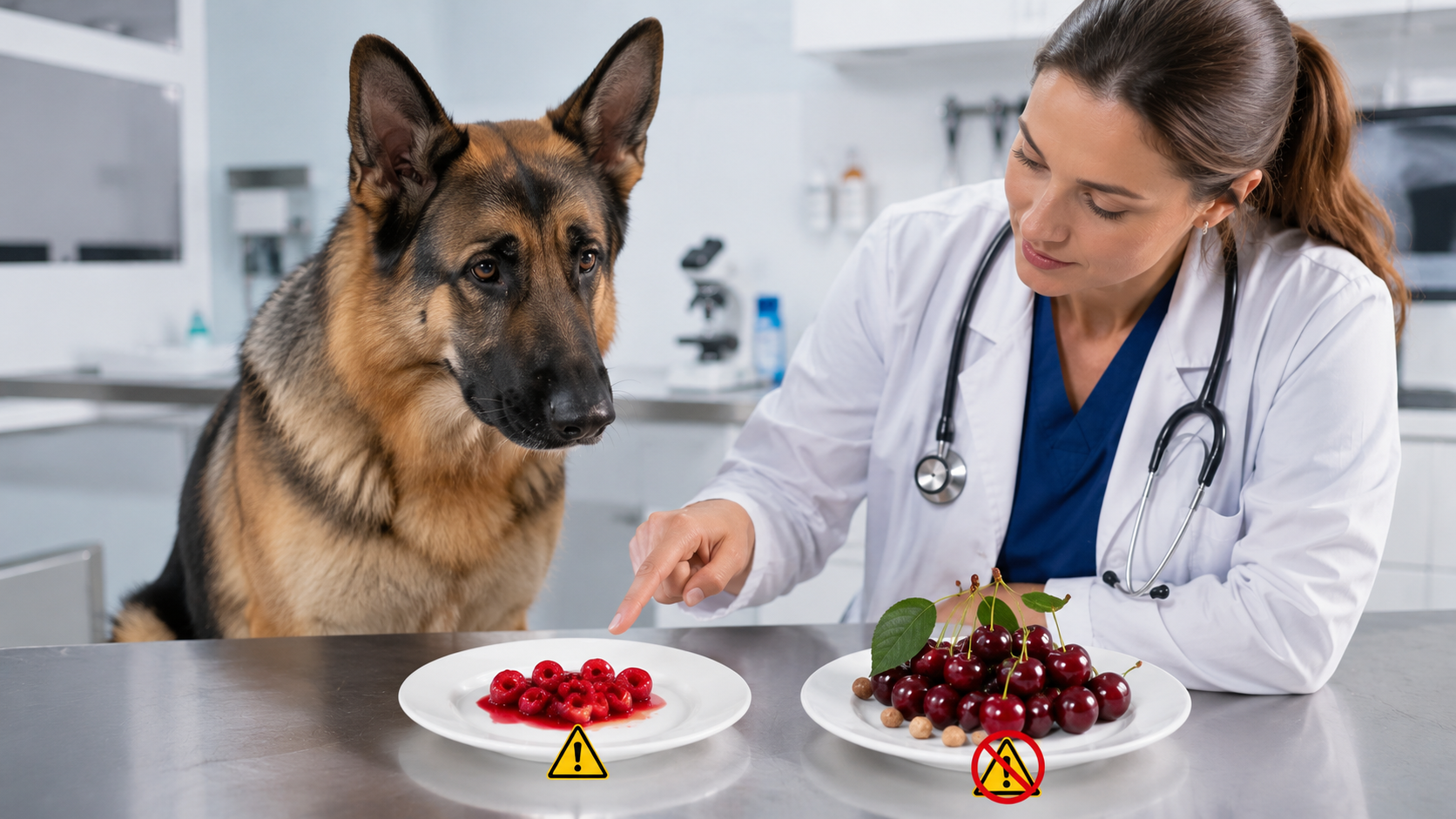
Many people assume maraschino cherries are safer because the pits have been removed.
Unfortunately, they are not a healthy choice for dogs.
| Cherry Product | Safe? | Recommendation |
|---|---|---|
| Fresh Whole Cherries |  No No | Avoid |
| Pitted Fresh Cherries |  Not Recommended Not Recommended | Choose Safer Fruits |
| Maraschino Cherries | No | High Sugar |
| Cherry Pie Filling | Never | Unsafe |
| Cherry Jam | Never | Avoid |
| Dried Cherries | Not Recommended | Too Much Sugar |
Even pitted cherries still contain a high amount of natural sugar and offer little advantage compared to safer fruits.
Safe Fruit Alternatives
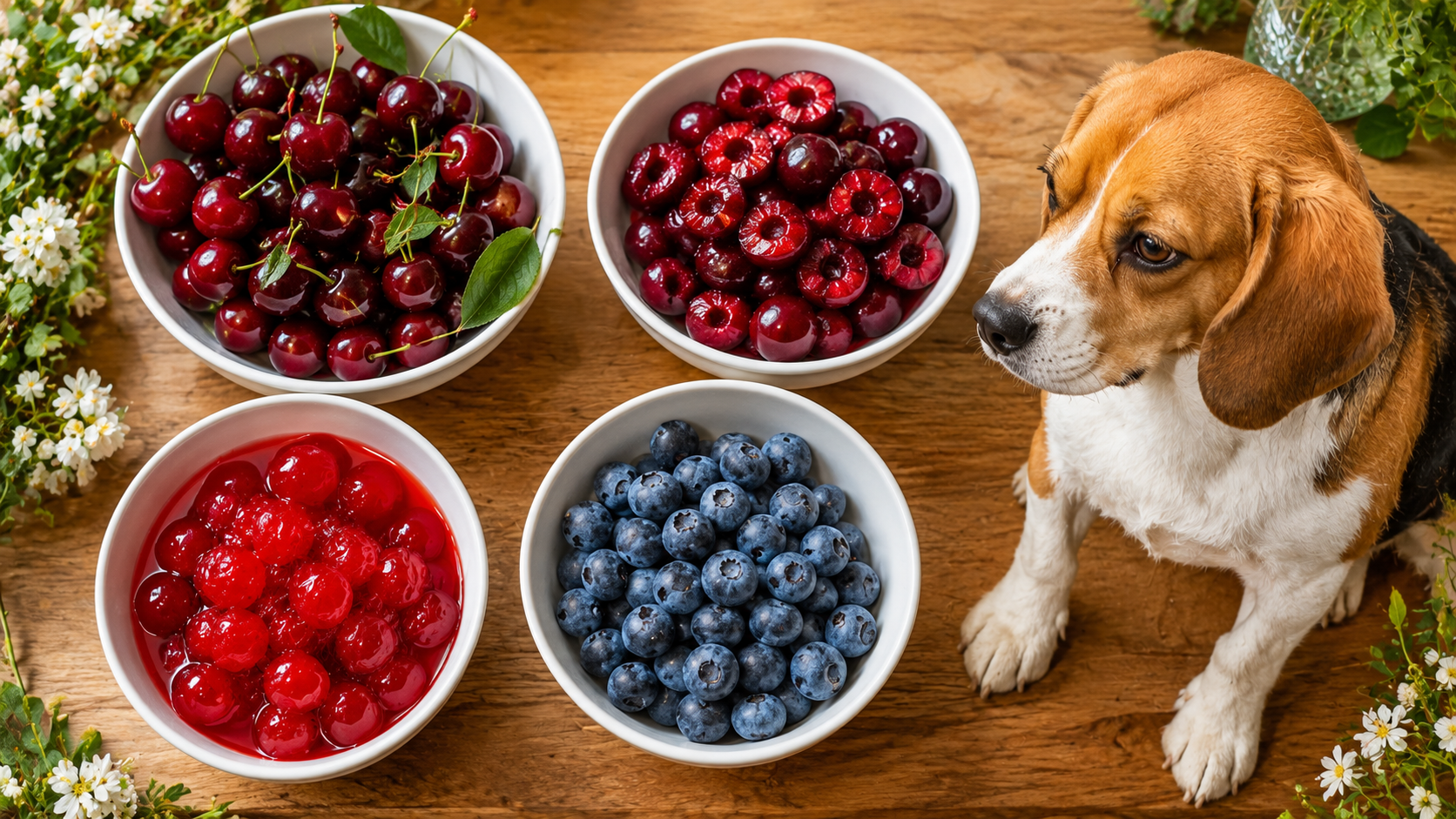
Instead of cherries, choose fruits that veterinarians commonly consider safer when prepared properly.
Some excellent alternatives include:
- Fresh blueberries
- Peeled pears
- Seedless watermelon
- Apple slices with the seeds removed
- Banana slices
- Mango without the pit
- Strawberries in moderation
These fruits provide vitamins, antioxidants, and hydration while avoiding the serious hazards associated with cherry pits.
Always introduce new foods gradually and offer fruit only as an occasional treat.
Common Mistakes Dog Owners Make
Avoid these common errors:
Assuming the flesh makes the whole fruit safe.
Feeding whole cherries during training.
Allowing dogs to play with cherry pits.
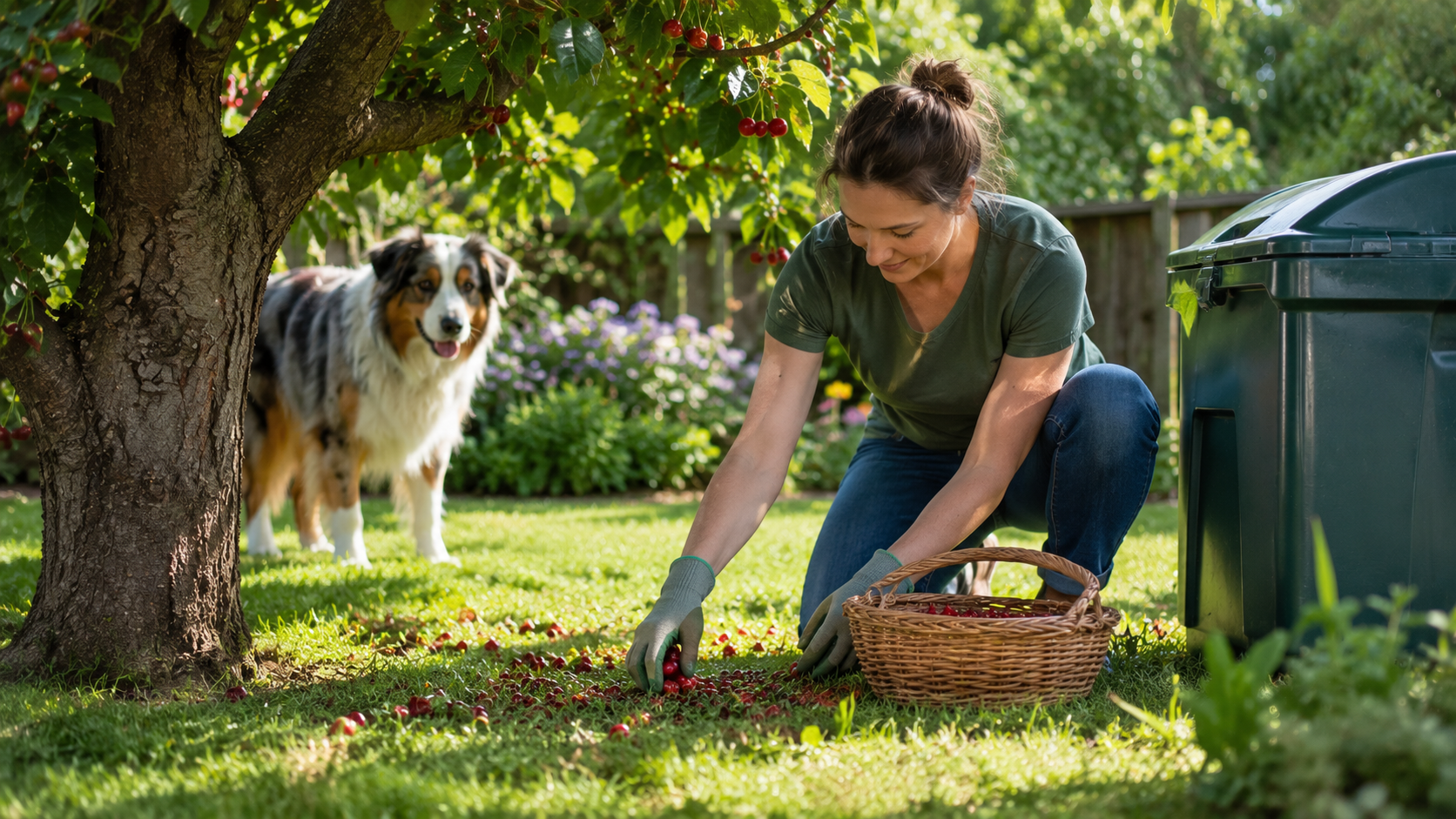
Leaving fallen cherries in the backyard.
Thinking maraschino cherries are healthier.
Ignoring mild symptoms after accidental ingestion.