Dog Nutrition Guide: Complete UK Feeding Guide by Life Stage
Good dog nutrition isn’t one fixed formula — what a dog needs changes across their life, and getting it right involves more than just picking a bag of food off a shelf. This guide brings together everything on WarmWag about dog nutrition in one place: what changes at each life stage, which treats and supplements are actually worth it, and the safety questions every owner runs into sooner or later.
Quick Answer
Good dog nutrition means matching your dog’s diet to their life stage, size, and health status — not feeding every dog the same way. Puppies need more calories and specific nutrient ratios for growth, adults need balanced maintenance feeding, and seniors often benefit from adjusted calorie and joint-support needs. Beyond the daily bowl, dog nutrition also covers safe treats, supplement decisions, and knowing which foods are genuinely dangerous — all of which this guide links out to in more depth.
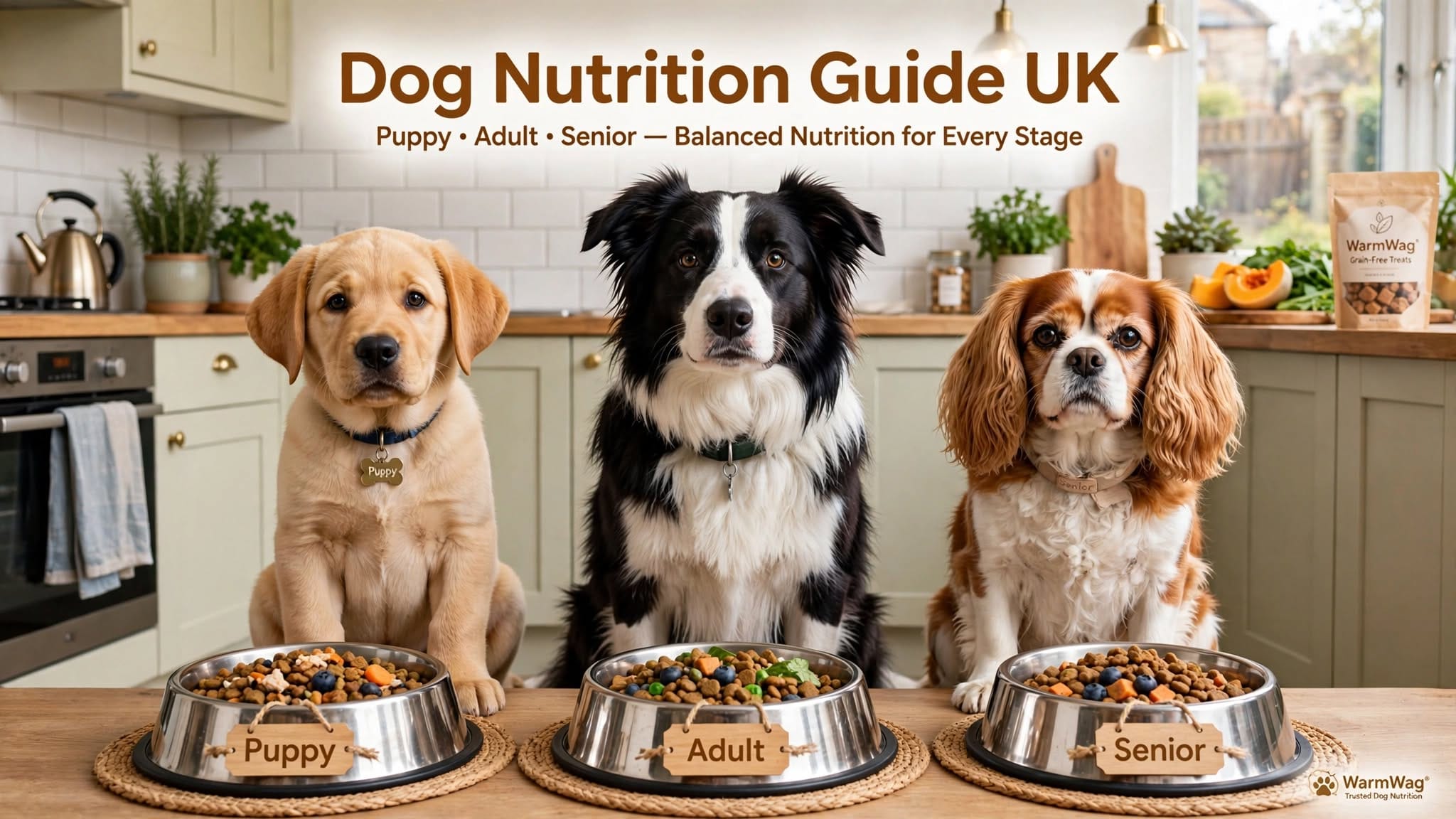
Table of Contents
- Why Dog Nutrition Isn’t One-Size-Fits-All
- Puppy Nutrition: The Growth Stage
- Adult Dog Nutrition: The Maintenance Years
- Senior Dog Nutrition: What Changes
- Reading a Dog Food Label Properly
- The Grain-Free Question
- Raw and Freeze-Dried Diets: Where They Fit
- Supplements: What’s Actually Worth It
- Safe Treats and Human Foods
- Foods and Ingredients to Never Feed
- Weight Management
- Building a Feeding Routine
- The Role of Water in Dog Nutrition
- Breed-Specific Dog Nutrition Considerations
- Common Dog Nutrition Myths
- Working With Your Vet on Dog Nutrition
- Dog Nutrition Through Special Circumstances
- Quick Reference: Life Stage Nutrition
- FAQs
- Final Verdict
Why Dog Nutrition Isn’t One-Size-Fits-All {#why-not-one-size}
The single biggest mistake in dog nutrition isn’t feeding a “bad” food — it’s feeding the wrong food for that specific dog’s life stage, size, and health status. A growing Labrador puppy, a middle-aged working sheepdog, and a small senior lapdog with early kidney changes all have genuinely different nutritional needs, even though pet food aisles often present feeding as a single, universal decision. Getting dog nutrition right starts with recognising which stage your dog is actually in, and adjusting from there.
Puppy Nutrition: The Growth Stage {#puppy-nutrition}
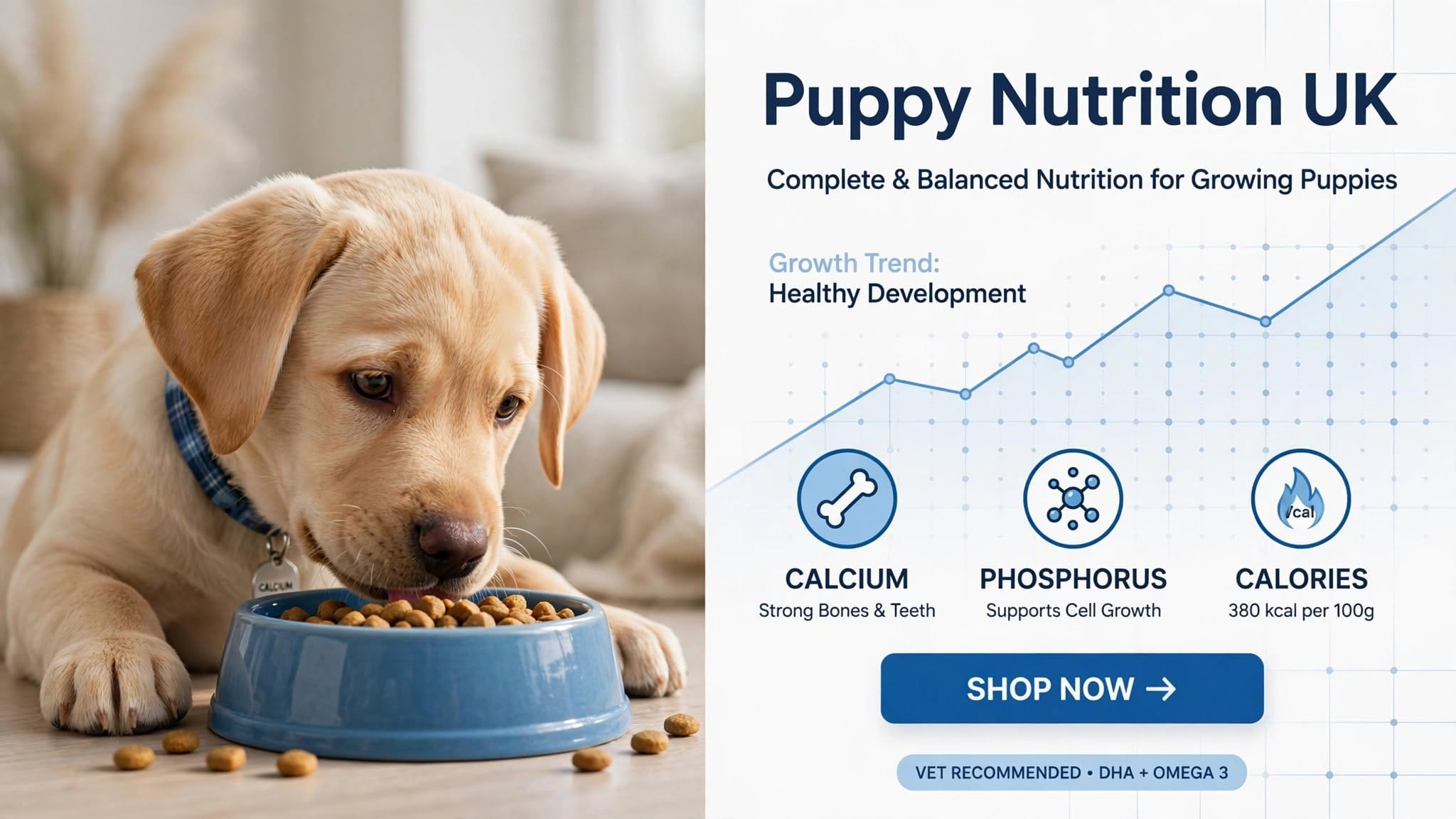
Puppy nutrition needs to support rapid growth, which means higher calorie density and specific ratios of calcium and phosphorus, particularly for large-breed puppies where growing too fast can contribute to joint problems later in life. This is exactly why “just feed adult food in smaller amounts” isn’t good puppy nutrition advice — growth-stage formulas are built differently, not just portioned differently.
Look for food specifically labelled for growth or “all life stages” that meets recognised nutritional standards (AAFCO in the US, equivalent UK/EU standards), and for large-breed puppies specifically, a large-breed puppy formula that controls calorie and mineral intake more carefully during the growth window.
Reading a Dog Food Label Properly {#reading-labels}
Good dog nutrition decisions start with actually understanding the label rather than trusting front-of-bag marketing language. A few things worth checking every time:
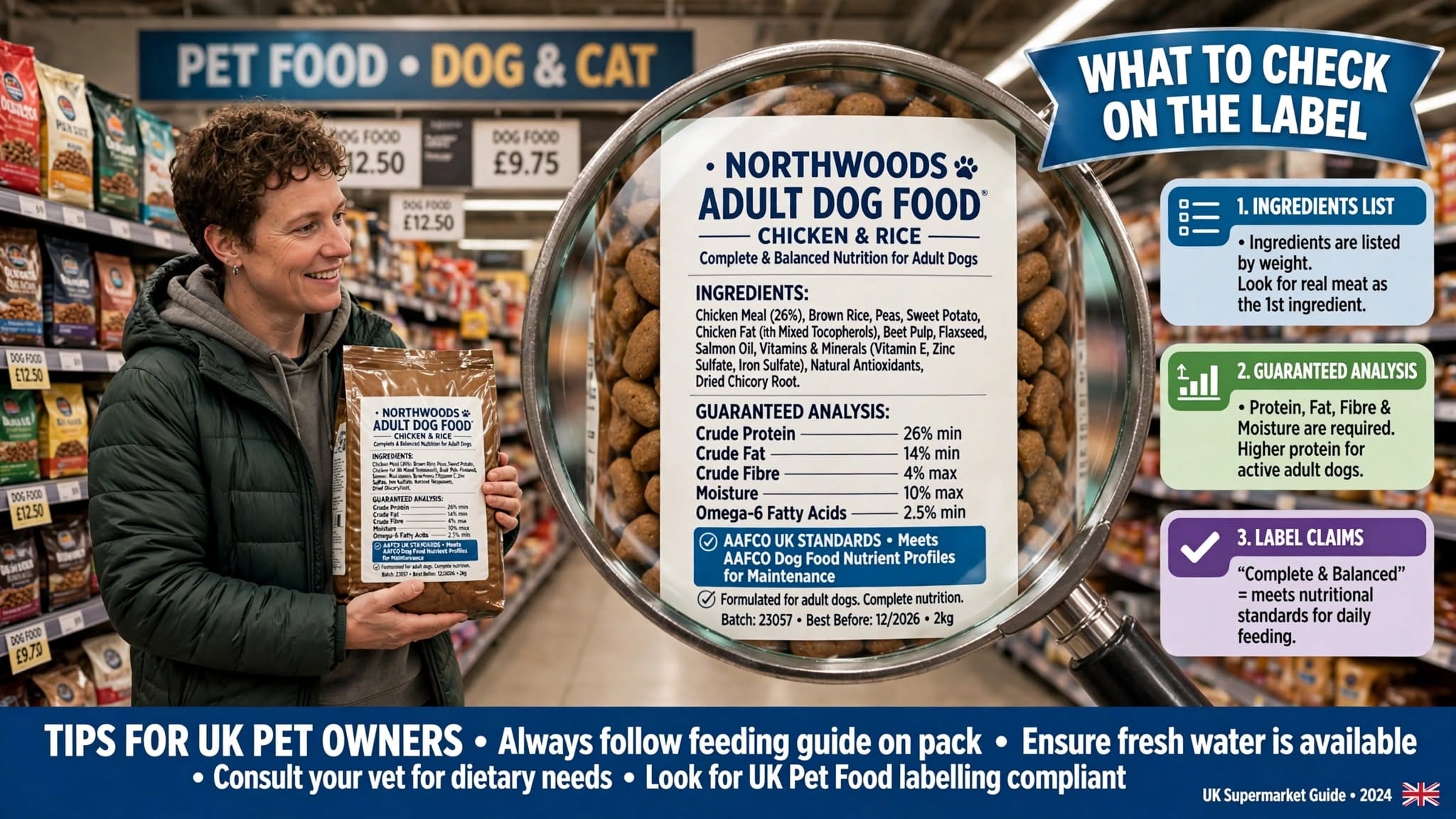
- The complete-and-balanced statement — confirms the food meets recognised nutritional standards for a specific life stage
- The first five ingredients — these make up the bulk of the food by weight, so they matter more than anything further down the list
- Guaranteed analysis — protein, fat, fibre, and moisture percentages, useful for comparing products on a like-for-like basis
- Life stage suitability — “puppy,” “adult,” “senior,” or “all life stages,” and whether it’s suitable for your dog’s specific size category
The Grain-Free Question {#grain-free}
Few dog nutrition topics have generated as much genuine controversy as grain-free food, following a real FDA investigation into a possible link with a serious heart condition in dogs eating certain grain-free, legume-heavy diets. The picture is more nuanced than either the original alarm or the more recent reassurances suggest — it’s not really about grain-free as a blanket category, but about specific formulations.
Foods and Ingredients to Never Feed {#never-feed}
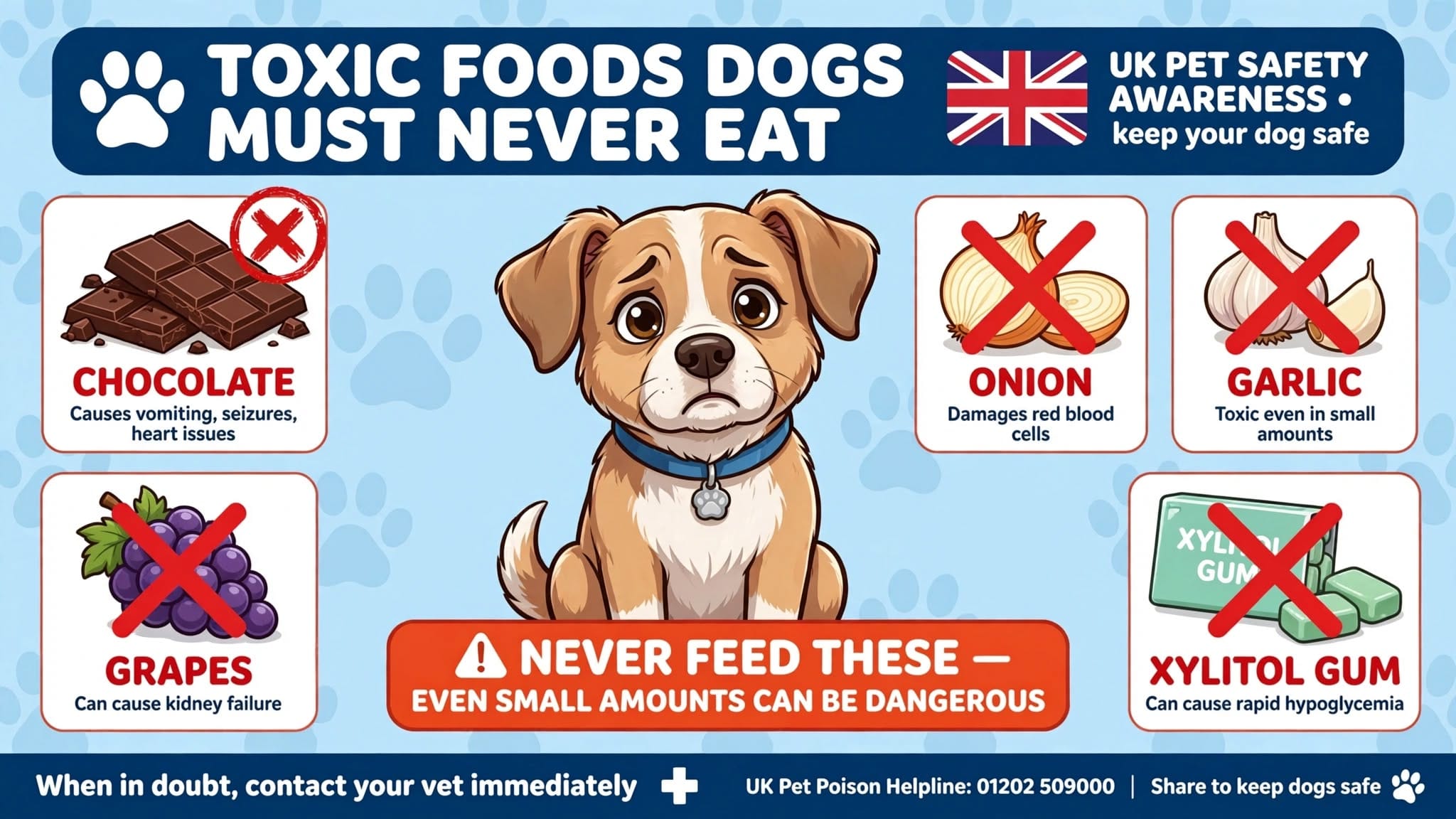
This is the part of dog nutrition where the stakes are highest, and it’s worth knowing well rather than learning it during an emergency. Chocolate, xylitol, grapes and raisins, and the allium family (onions, garlic, leeks) are among the most common causes of genuine poisoning emergencies in UK dogs.
The complete danger-ranking guide, with a symptom checker and seasonal risk calendar.
See the full safety guide →
Faster-acting and more under-recognised than chocolate — cases up 75% since 2020.
Learn where it hides →
Step-by-step emergency guidance and a full symptoms timeline.
Read the emergency guide →
Weight Management {#weight-management}
Weight management is one of the most overlooked parts of everyday dog nutrition. Treats, table scraps, and generous portioning add up quickly, and excess weight is linked to joint problems, reduced lifespan, and a range of other health issues. A simple, practical rule most vets apply: treats of any kind, including safe fruits and peanut butter, shouldn’t exceed roughly 10% of a dog’s total daily calorie intake, with the rest coming from a complete, balanced main diet.
Building a Feeding Routine {#feeding-routine}
Good dog nutrition isn’t just about what’s in the bowl — consistency matters too. Feeding at similar times each day, measuring portions rather than free-pouring, and adjusting gradually rather than switching foods abruptly all support better digestion and make it easier to spot changes in appetite that might signal a health issue. Any diet transition, whether to a new life-stage food or a different format entirely, is best done gradually over 7-10 days to avoid digestive upset.
The Role of Water in Dog Nutrition {#water}
Water is the most overlooked part of dog nutrition, despite being more immediately essential than any single nutrient in food. Fresh, clean water should be available at all times, and intake needs can shift with activity level, weather, and diet — dogs eating wet or raw food generally drink less than dogs on dry kibble, since they’re already getting significant moisture from their food. A sudden increase or decrease in water intake is worth mentioning to your vet, since it can be an early sign of several health conditions that good dog nutrition alone won’t resolve.
Breed-Specific Dog Nutrition Considerations {#breed-specific}
While life stage is the biggest factor in dog nutrition, breed and size bring their own considerations worth knowing:
- Large and giant breeds benefit from controlled-growth puppy formulas and are often more prone to joint issues, making weight management an especially important part of their nutrition throughout life
- Small and toy breeds have faster metabolisms relative to their size and can be prone to low blood sugar as puppies, often needing smaller, more frequent meals early on
- Deep-chested breeds (Great Danes, German Shepherds, and similar) carry a higher risk of bloat, and feeding practices like avoiding vigorous exercise immediately after meals are a genuine part of nutrition-related safety for these breeds
- Brachycephalic (flat-faced) breeds like Bulldogs and Pugs sometimes benefit from specially shaped kibble that’s easier to pick up and chew given their facial structure
None of this replaces individualised veterinary guidance, but knowing your breed’s general tendencies helps you ask better questions when discussing dog nutrition with your vet.
Common Dog Nutrition Myths {#myths}
“Grain is filler and adds no value.” Not accurate as a blanket statement — whole grains can provide genuine nutritional value including fibre and energy, and the grain-free-versus-grain question is more nuanced than a simple “grain bad” framing suggests, as covered in detail above.
“Raw is always more natural and therefore better.” Natural doesn’t automatically mean nutritionally superior or safer — raw and freeze-dried diets have genuine benefits but also genuine safety considerations that a properly formulated cooked diet doesn’t carry in the same way.
“If my dog is a healthy weight, their nutrition must be fine.” Body weight is one useful indicator, but it doesn’t capture everything — a dog can be a healthy weight while still missing specific micronutrients, particularly on poorly formulated homemade or boutique diets.
“Human-grade means it’s better dog nutrition.” This describes ingredient sourcing and manufacturing standards, not necessarily a more complete or balanced nutritional profile — it’s worth checking for genuine life-stage-appropriate formulation regardless of this label.
“Supplements can’t hurt, so more is better.” Some supplements genuinely can cause harm in excess, particularly fat-soluble vitamins and certain minerals — more isn’t automatically better, and dosing matters even for generally safe supplements.
Working With Your Vet on Dog Nutrition {#working-with-vet}
Your vet is genuinely the best resource for individualised dog nutrition advice, particularly for dogs with existing health conditions, unusual activity levels, or breed-specific risk factors. Bring specific questions to routine check-ups rather than waiting for a problem to arise — body condition scoring, a quick nutrition review, and questions about any supplements or treats you’re using can all be part of a normal appointment rather than requiring a dedicated visit.
If your dog has a diagnosed health condition — kidney disease, pancreatitis, diabetes, or a food allergy, for example — a prescription or veterinary-formulated diet may be genuinely necessary rather than optional, and this is an area where general dog nutrition guidance (including this guide) should defer to your vet’s specific recommendations for your individual dog.
Dog Nutrition Through Special Circumstances {#special-circumstances}
Beyond the standard life-stage picture, a few circumstances call for adjusted dog nutrition that’s worth knowing about even before you need it:
Pregnancy and nursing. A pregnant or nursing dog has significantly increased calorie and nutrient needs, particularly in the final third of pregnancy and throughout nursing — this is a situation where working directly with your vet on a feeding plan matters more than following general guidance alone.
Recovery from illness or surgery. Appetite often dips during recovery, and some dogs benefit from smaller, more frequent, easily digestible meals during this period rather than their normal feeding routine. Your vet may recommend a specific recovery or gastrointestinal-support diet temporarily.
Highly active or working dogs. Dogs with significantly higher activity levels than average — working, sporting, or highly active pet dogs — often need considerably more calories than a standard feeding guide accounts for, and may benefit from a performance-formulated diet rather than a standard adult maintenance food.
Multi-dog households with different needs. Feeding dogs of different sizes, ages, or health statuses together can make portion control genuinely difficult, particularly if one dog eats faster or steals from another’s bowl — separate feeding areas or supervised mealtimes can matter as much as the food choice itself.

A Quick Reference: Life Stage Nutrition at a Glance {#quick-reference}
| Life Stage | Key Dog Nutrition Priority | Watch For |
|---|---|---|
| Puppy | Growth-appropriate calories and calcium/phosphorus balance | Overfeeding large-breed puppies, which can affect joint development |
| Adult | Maintenance calories matched to activity level | Gradual weight creep from treats and table scraps |
| Senior | Adjusted calories, joint and digestive support | Reduced appetite, weight loss, or new sensitivities |
| Pregnant/nursing | Significantly increased calorie and nutrient needs | Under-feeding during peak nutritional demand |
| Working/highly active | Higher calorie, often performance-formulated diets | Under-fuelling relative to true energy output |
FAQs {#faqs}
What’s the most important factor in dog nutrition?
Matching the diet to your dog’s actual life stage, size, and health status — a single “best” food doesn’t exist independent of the specific dog eating it.
How do I know if my dog’s nutrition needs are being met?
A stable, healthy body condition, good energy levels, a healthy coat, and normal digestion are good general indicators — alongside regular vet check-ups, which can catch nutritional gaps before they become visible problems.
Is grain-free dog food part of good dog nutrition, or should it be avoided?
It depends on the specific formulation rather than the grain-free label alone — see our dedicated guide linked above for the full picture.
Do all dogs need supplements as part of their nutrition plan?
No — a healthy dog on a complete, balanced diet doesn’t necessarily need daily supplementation. Supplements are most evidence-backed for specific situations rather than blanket daily use.
How often should I reassess my dog’s nutrition plan?
At every major life stage transition (puppy to adult, adult to senior), and any time your vet flags a weight, health, or activity change worth adjusting for.
Can I mix wet and dry food as part of a balanced dog nutrition plan?
Yes, this is a common and generally safe approach, as long as the total calorie intake across both stays within your dog’s needs — check both products’ feeding guidelines to avoid inadvertently overfeeding.
Should dog nutrition change for a spayed or neutered dog?
Often yes — many dogs have somewhat lower calorie needs after being spayed or neutered due to metabolic changes, so it’s worth monitoring body condition closely in the months afterward and adjusting portions if you notice weight creeping up.
How much does dog nutrition actually affect lifespan?
Good nutrition, alongside healthy weight management, is one of the more meaningfully controllable factors in a dog’s long-term health — several long-term studies have linked maintaining a lean body condition throughout life to a longer average lifespan compared to overweight dogs of the same breed.
Is homemade dog food ever a good substitute for commercial diets?
It can be, but only when properly formulated — ideally with input from a veterinary nutritionist — since homemade diets that aren’t carefully balanced risk real nutritional gaps that won’t necessarily show up immediately. This isn’t a decision to make casually based on online recipes alone.
Where should I start if I want to review my dog’s current nutrition?
Begin with an honest look at what’s actually going into your dog day to day — main food, treats, table scraps, and any supplements — then compare that total against your dog’s current life stage and body condition. From there, the sections and linked guides throughout this page can help you dig into any specific area that needs attention.
Final Verdict {#final-verdict}
Good dog nutrition isn’t a single fixed formula — it’s an ongoing decision that shifts as your dog moves through puppyhood, adulthood, and their senior years, shaped by their individual size, activity level, and health status. The daily bowl matters most, but the full picture also includes safe treats, honest supplement decisions, and knowing which foods are genuine emergencies rather than minor concerns. Use the guides linked throughout this page to go deeper on any specific question — that’s exactly what they’re there for.
This guide is for general information and isn’t a substitute for professional veterinary advice. Talk to your vet about your dog’s specific nutritional needs, especially during major life stage transitions or if your dog has an existing health condition.
Further reading from UK authorities: