Safe Fruits Dogs Can Eat
The following fruits are generally considered safe when properly prepared and fed in moderation.
 Bananas
 Bananas
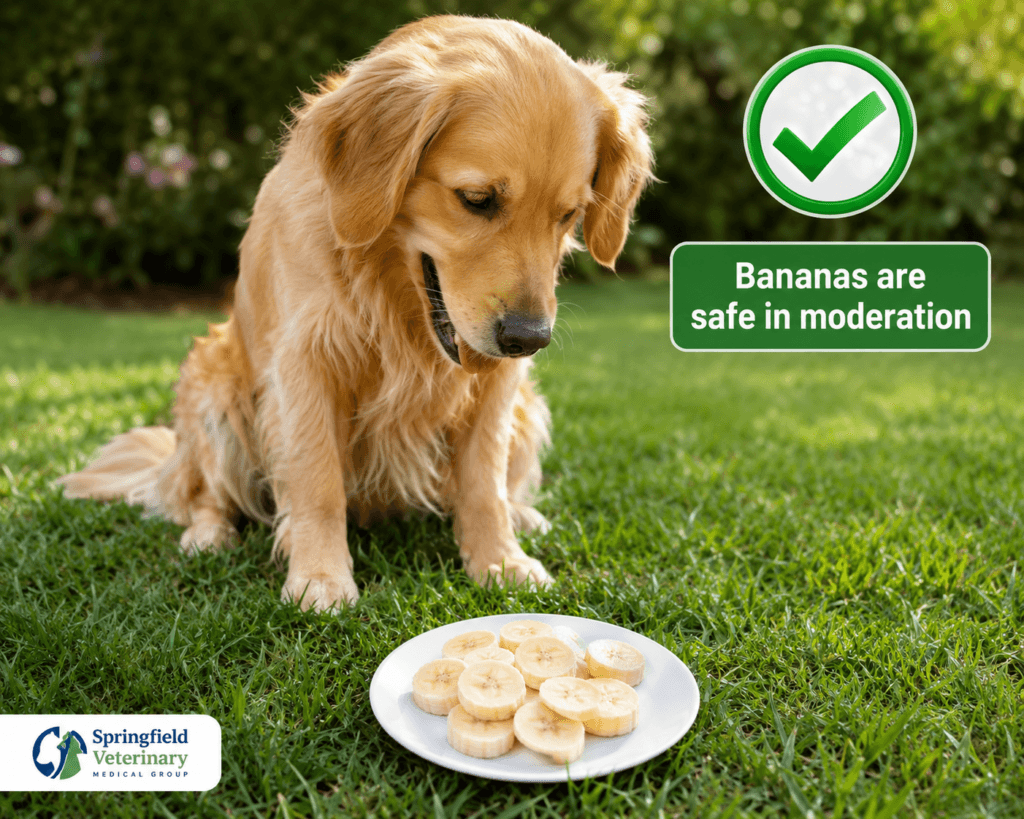
Bananas are rich in potassium, vitamin B6, vitamin C, and natural fiber. They are soft, easy to digest, and make an excellent training reward.
However, bananas also contain natural sugars, so moderation is important.
Read our complete guide: Can Dogs Eat Bananas?
Blueberries
 Blueberries
Blueberries are among the healthiest fruits for dogs. They contain powerful antioxidants that support brain function, healthy aging, and immune health.
Their small size also makes them ideal training treats.
Read more: Can Dogs Eat Blueberries?
Watermelon
 Watermelon
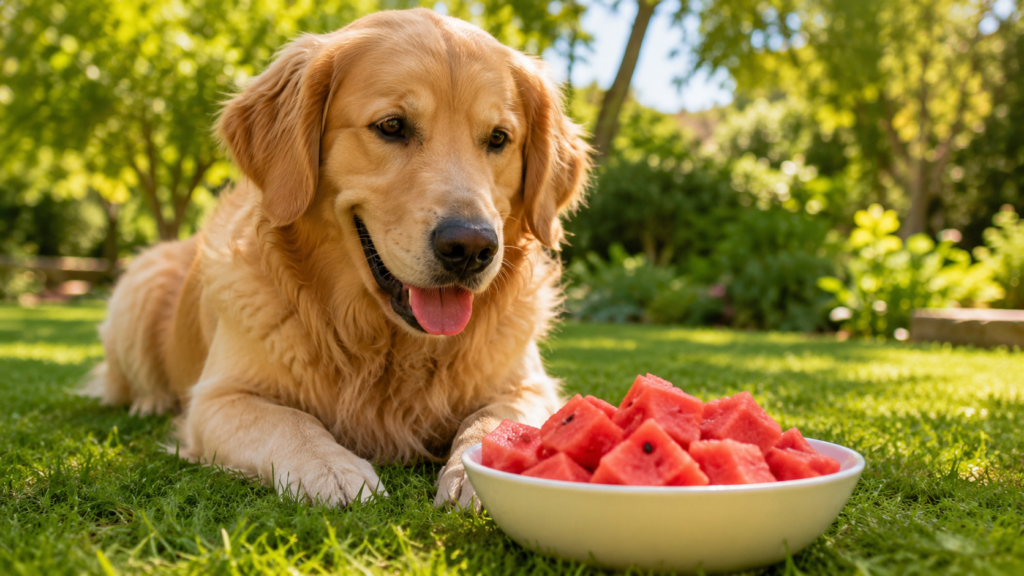
Seedless watermelon provides hydration, vitamin A, vitamin C, and potassium.
Always remove:
- Seeds
- Rind
before feeding.
Complete guide: Can Dogs Eat Watermelon?
Pineapple
 Pineapple
Fresh pineapple contains vitamin C, manganese, and bromelain, an enzyme that may help digestion.
Avoid canned pineapple because it contains added sugar.
Learn more: Can Dogs Eat Pineapple?
Honeydew
 Honeydew
Honeydew melon is rich in vitamins A and C while containing plenty of water to help dogs stay hydrated.
Remove:
- Seeds
- Rind
before serving.
Read: Can Dogs Eat Honeydew?
Cantaloupe
Cantaloupe is another refreshing fruit packed with vitamins and antioxidants.
Serve only ripe flesh and avoid the rind.
Coconut
 Coconut
Fresh coconut contains healthy fats and minerals but should only be fed occasionally due to its fat content.
Avoid sweetened coconut products.
Cucumber
 Cucumber
Technically a fruit, cucumber is low in calories and high in water, making it an excellent snack for overweight dogs.
More Safe Fruits Dogs Can Eat
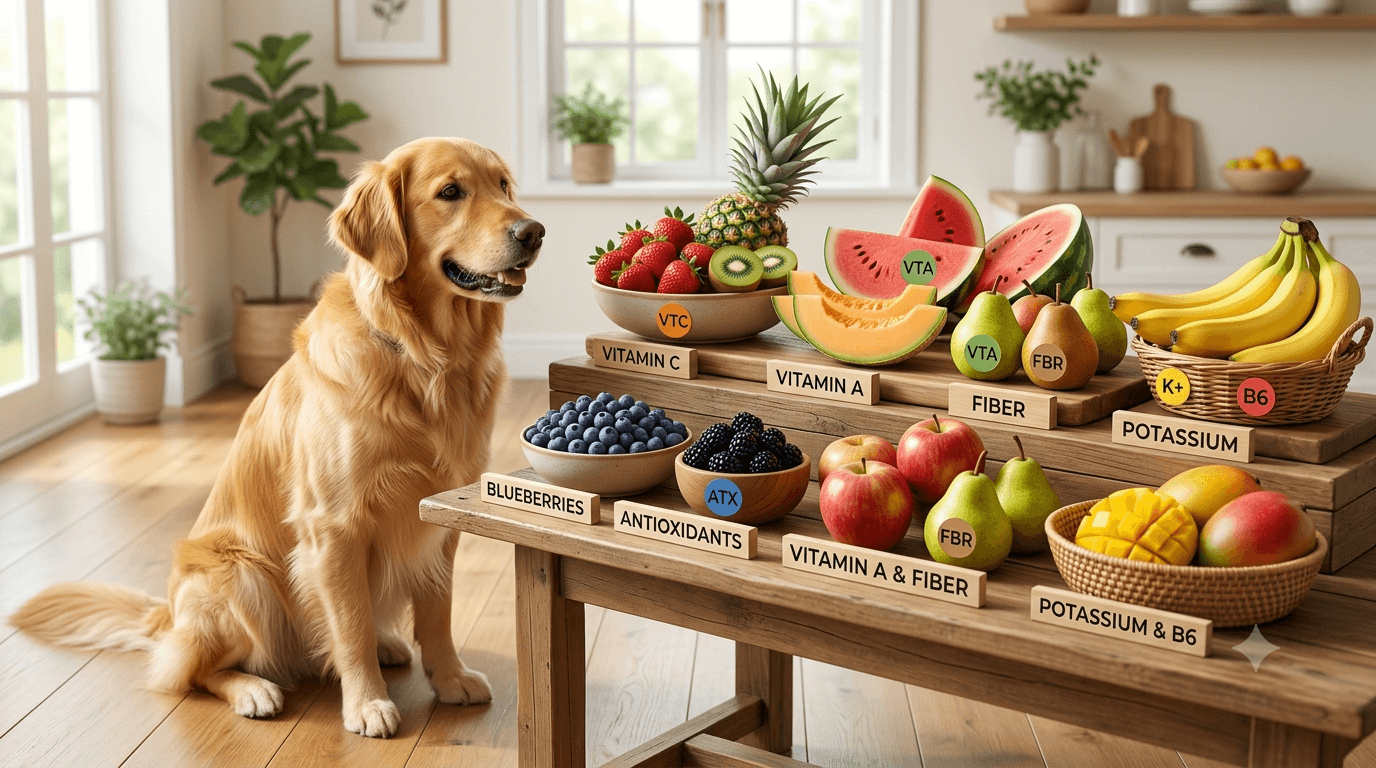
While bananas, blueberries, watermelon, and pineapple are among the most popular fruits for dogs, several other fruits can also be healthy when served properly. The key is to prepare them correctly, remove any dangerous parts, and feed them in moderation.
Pumpkin
 Pumpkin
Although many people think pumpkin is a vegetable, it is technically a fruit. It is one of the best natural foods for supporting digestive health in dogs.
Benefits
- Rich in soluble fiber
- Supports healthy digestion
- Helps relieve mild constipation
- May reduce mild diarrhea
- Contains Vitamin A and potassium
- Supports eye health
Always serve plain cooked pumpkin or 100% pure pumpkin puree. Avoid canned pumpkin pie filling because it contains added sugar and spices that are unsafe for dogs.
Read our complete guide: Can Dogs Eat Pumpkin?
Sweet Potatoes
 Sweet Potatoes
Sweet potatoes are another nutritious option that most dogs enjoy.
Benefits
- High in fiber
- Rich in Vitamin A
- Supports immune function
- Provides slow-release carbohydrates
- Good source of manganese and potassium
Always cook sweet potatoes before serving. Raw sweet potatoes are difficult for dogs to digest.
Read more: Can Dogs Eat Sweet Potatoes?
Dragon Fruit
 Dragon Fruit
Dragon fruit is becoming increasingly popular among pet owners.
Benefits
- Rich in antioxidants
- Contains Vitamin C
- High water content
- Supports immune health
- Easy to digest
Only feed the soft flesh after removing the thick outer skin.
Read our guide: Can Dogs Eat Dragon Fruit?
Raspberries
 Raspberries
Raspberries contain antioxidants and fiber that may support healthy aging.
Benefits
- Rich in Vitamin C
- High in antioxidants
- Supports immune function
- Low in calories
Because raspberries naturally contain small amounts of xylitol, they should only be fed occasionally and in small quantities.
Read more: Can Dogs Eat Raspberries?
Cranberries
 Cranberries
Fresh cranberries can be a healthy snack when offered in moderation.
Benefits
- Rich in antioxidants
- Supports urinary tract health
- Good source of Vitamin C
- Low in calories
Avoid cranberry sauce and dried cranberries that contain added sugar.
Read more: Can Dogs Eat Cranberries?
Pears
 Pears
PearsPears are safe after removing the seeds and core.
Benefits
- Vitamin C
- Vitamin K
- Fiber
- Copper
Always remove the seeds because they contain compounds that are unsafe when consumed in large amounts.
Apples
 Apples
Fresh apples are another healthy fruit.
Benefits include:
- Vitamin C
- Fiber
- Low fat
- Crunchy texture helps satisfy chewing instincts
Always remove:
- Seeds
- Core
- Stem
before serving.
Fruits Dogs Should Never Eat
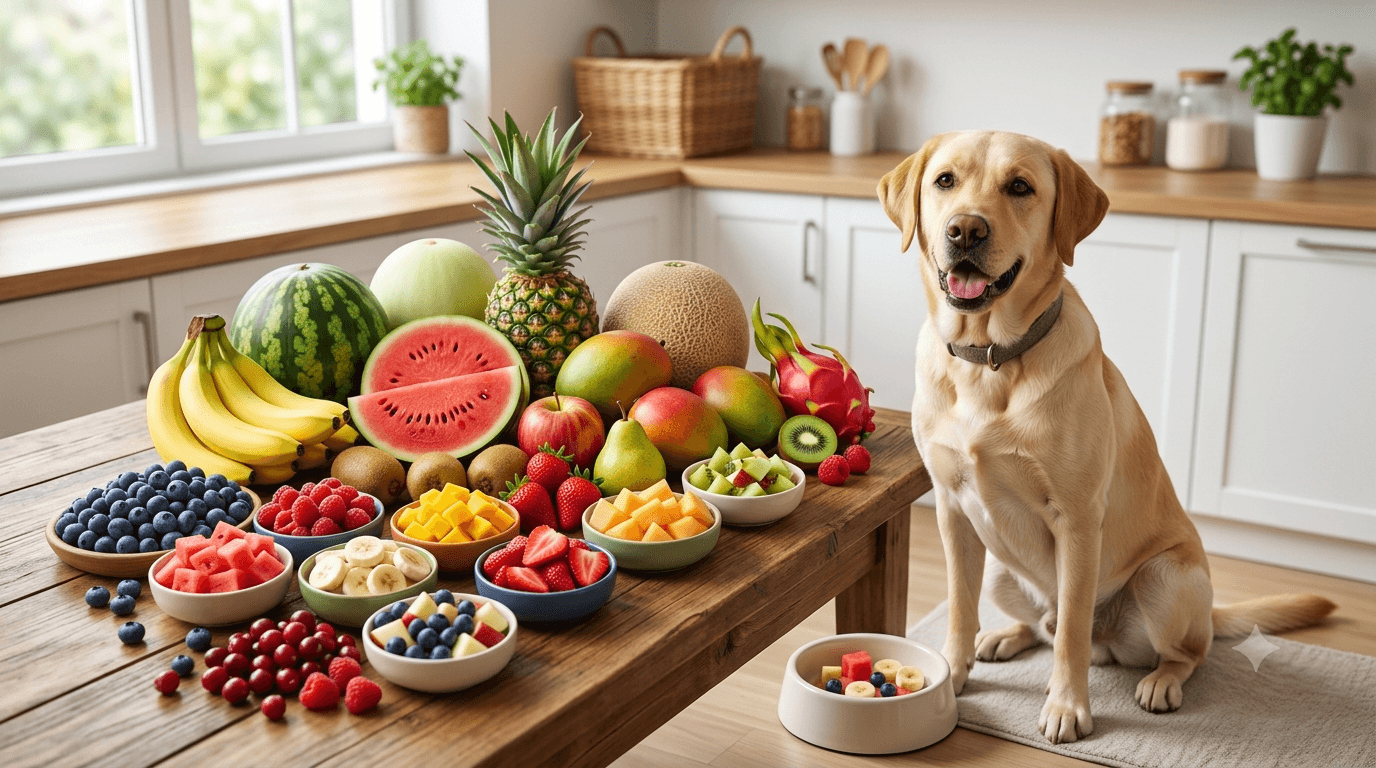
Not every fruit is safe. Some fruits contain toxins that can seriously harm dogs—even in small amounts. Knowing which fruits to avoid is just as important as knowing which ones are safe.
Grapes
 Grapes
Never feed grapes to dogs.
Grapes are among the most dangerous fruits for dogs. Even a small amount may cause sudden kidney failure in some dogs.
Possible symptoms include:
- Vomiting
- Loss of appetite
- Weakness
- Diarrhea
- Increased thirst
- Decreased urination
- Kidney damage
The exact toxin is still unknown, so all grapes should be considered dangerous.
Read our complete guide: Can Dogs Eat Grapes?
Raisins
Raisins are simply dried grapes and are equally toxic.
Because raisins are concentrated, they may be even more dangerous than fresh grapes.
Never feed raisins intentionally, and contact your veterinarian immediately if your dog eats them.
Complete guide: Can Dogs Eat Raisins?
Avocados
 Avocados
Avocados contain a natural compound called persin.
While healthy dogs may tolerate tiny amounts of avocado flesh, the pit, skin, and leaves can pose risks.
Potential dangers include:
- Digestive upset
- Vomiting
- Pancreatitis due to high fat
- Choking hazard from the pit
- Intestinal blockage
To stay on the safe side, most veterinarians recommend avoiding avocado as a regular treat.
Read more: Can Dogs Eat Avocados?
Cherries
Cherries may look harmless, but they can be risky for dogs.
The pits, stems, and leaves contain cyanogenic compounds that can release cyanide when chewed.
Risks include:
- Choking
- Intestinal blockage
- Cyanide poisoning
- Vomiting
- Difficulty breathing
Fresh cherries without pits are less dangerous, but because preparation mistakes are common, many veterinarians recommend avoiding cherries entirely.
Read our guide: Can Dogs Eat Cherries?
Plums
 Plums
PlumsPlums present similar risks.
The flesh itself isn’t highly toxic, but the pit can cause:
- Choking
- Intestinal obstruction
- Cyanide exposure if broken
Because safer fruits are available, plums are generally not recommended.
Read more: Can Dogs Eat Plums?
Lemons
 Lemons
Lemons contain high levels of citric acid and essential oils that many dogs cannot tolerate.
Possible problems include:
- Stomach irritation
- Vomiting
- Drooling
- Diarrhea
Most dogs dislike lemons because of their strong taste.
Read our guide: Can Dogs Eat Lemons?
Limes
Limes contain similar compounds to lemons and should also be avoided.
Symptoms may include:
- Digestive upset
- Vomiting
- Weakness
- Drooling
Grapefruit
 Grapefruit
Grapefruit flesh is highly acidic, while the peel contains essential oils that may irritate a dog’s digestive system.
Possible issues include:
- Vomiting
- Diarrhea
- Stomach pain
Safer alternatives like watermelon or blueberries are much better choices.
Read our guide: Can Dogs Eat Grapefruit?
Tomatoes
 Tomatoes
Ripe tomatoes are generally considered safe in small amounts. However, green tomatoes, stems, and leaves contain tomatine, which can be harmful if consumed in large quantities.
To reduce any risk:
- Feed only ripe red tomatoes.
- Remove stems and leaves.
- Offer small portions occasionally.
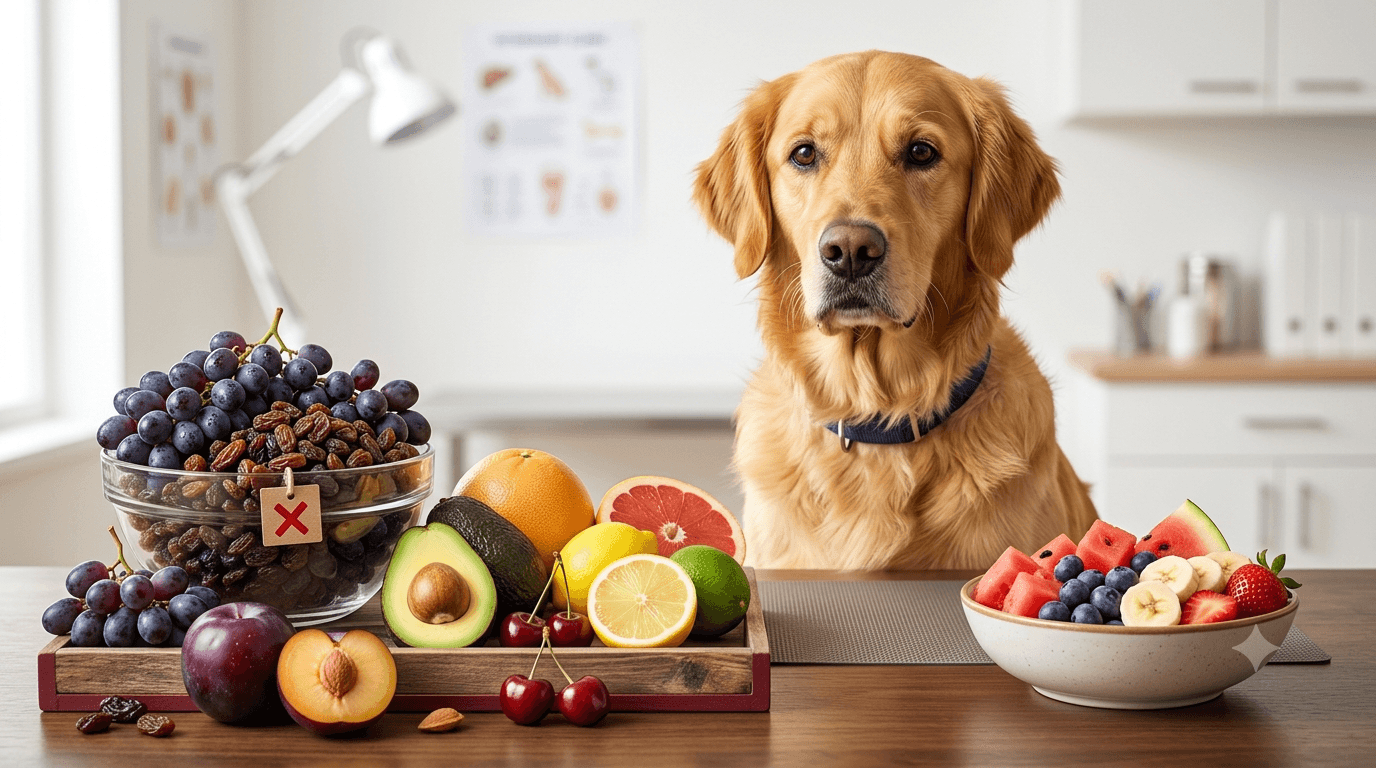
Quick Reference Table
 Safe Fruits Safe Fruits |  Feed in Moderation Feed in Moderation |  Avoid Avoid |
|---|---|---|
| Banana | Coconut | Grapes |
| Blueberries | Raspberries | Raisins |
| Watermelon | Pears | Cherries |
| Pineapple | Apples | Plums |
| Honeydew | Dragon Fruit | Lemons |
| Cantaloupe | Tomatoes (ripe only) | Limes |
| Pumpkin | Sweet Potatoes | Grapefruit |
| Cucumber | Avocado |
Fruits Dogs Can Eat in Moderation
Even healthy fruits should only be offered as occasional treats. While fruits contain valuable nutrients, they also contain natural sugars and fiber that may cause digestive upset when consumed in excess.
Veterinarians generally recommend that treats—including fruit—make up no more than 10% of your dog’s daily calorie intake, with the remaining 90% coming from a complete and balanced dog food.
Below are some fruits that are safe in moderation.
Bananas
Bananas are an excellent source of potassium and vitamin B6, but they are relatively high in natural sugar.
Best For
- Active dogs
- Training treats
- Dogs needing a quick energy boost
Feed in Moderation
Too much banana may lead to:
- Weight gain
- Constipation
- Upset stomach
Internal Link: Can Dogs Eat Bananas?
Pineapple
Fresh pineapple provides vitamin C and bromelain, an enzyme that may help digestion.
However, pineapple contains more sugar than many other fruits.
Safe Serving
- Small fresh cubes
- Occasionally only
Avoid:
- Canned pineapple
- Pineapple in syrup
- Sweetened pineapple products
Coconut
Fresh coconut contains healthy fats but also has a higher fat content than many fruits.
Too much coconut may contribute to:
- Stomach upset
- Loose stools
- Pancreatitis in sensitive dogs
Serve only tiny pieces occasionally.
Dragon Fruit
Dragon fruit is generally easy to digest but still contains natural sugar.
Offer:
- Peeled
- Fresh
- Small cubes
Tomatoes
Only fully ripe red tomatoes should be offered.
Avoid:
- Green tomatoes
- Leaves
- Stems
Pears
Pears are nutritious but naturally sweet.
Always remove:
- Core
- Seeds
- Stem
before serving.
Apples
Apples are excellent crunchy treats.
Remove:
- Seeds
- Core
- Stem
before feeding.
Fruits for Puppies
Many new pet owners ask whether puppies can eat fruit.
The answer is yes, but only after puppies have transitioned to solid food and only in very small amounts.
Puppies have more sensitive digestive systems than adult dogs, so introducing new foods should always be done slowly.
Best Fruits for Puppies
Blueberries
Benefits:
- Rich in antioxidants
- Small size
- Easy to chew
- Low calories
Bananas
Soft texture makes bananas ideal for young puppies.
Serve tiny slices only.
Watermelon
Seedless watermelon helps keep puppies hydrated during warm weather.
Always remove:
- Seeds
- Rind
Honeydew
Honeydew offers hydration along with vitamins A and C.
Feed only small cubes.
Cucumber
Low-calorie and refreshing.
Excellent for puppies that enjoy crunchy treats.
Fruits Puppies Should Avoid
Never give puppies:
- Grapes
- Raisins
- Cherries
- Plums
- Lemons
- Limes
- Grapefruit
- Avocados
Because puppies are much smaller than adult dogs, even tiny amounts of toxic fruit can become dangerous.
Dog Fruit Serving Guide
Every dog has different nutritional needs depending on size, weight, age, and activity level. The chart below provides general serving recommendations for healthy adult dogs.
| Dog Size | Weight | Fruit Serving |
|---|---|---|
| Extra Small | Under 10 lbs | 1–2 small pieces |
| Small | 10–20 lbs | 2–3 small pieces |
| Medium | 20–50 lbs | ¼ cup |
| Large | 50–90 lbs | ½ cup |
| Giant | Over 90 lbs | Up to ¾ cup occasionally |
Fruit should only be offered two or three times per week unless your veterinarian recommends otherwise.

Seasonal Fruit Guide for Dogs
Offering seasonal fruits can provide variety while ensuring freshness.
Spring
 Spring
- Blueberries
- Strawberries (occasionally)
- Cranberries
Summer
 Summer
- Watermelon
- Honeydew
- Cantaloupe
- Cucumber
- Pineapple
Summer fruits help dogs stay hydrated during hot weather.
Autumn
 Autumn
- Pumpkin
- Apples
- Pears
Autumn fruits are rich in fiber and vitamins.
Winter
 Winter
- Bananas
- Coconut
- Dragon Fruit
These fruits remain widely available throughout winter in many regions.

Final Verdict
So, can dogs eat fruit? The answer is yes—but only the right fruits and in the right amounts.
Many fruits can be healthy additions to your dog’s diet because they provide vitamins, minerals, antioxidants, fiber, and hydration. Options like bananas, blueberries, watermelon, honeydew, cantaloupe, pumpkin, pineapple, and cucumber can make nutritious treats when prepared properly.
At the same time, some fruits pose serious risks. Grapes, raisins, cherries with pits, plums with pits, avocados, lemons, limes, and grapefruit should be avoided because they may cause digestive problems, choking hazards, or more severe health complications.
The safest approach is to:
- Choose fresh, dog-safe fruits.
- Wash them thoroughly.
- Remove seeds, pits, stems, and rinds where necessary.
- Cut them into bite-sized pieces.
- Feed them in moderation as an occasional treat.
By following these simple guidelines, you can safely add variety to your dog’s diet while supporting their overall health and well-being.
Key Takeaways
Many fruits are safe for dogs when served correctly.
Blueberries, bananas, watermelon, honeydew, pumpkin, and cucumber are among the healthiest choices.
Grapes and raisins should never be fed to dogs.
Remove seeds, pits, stems, peels, and rinds whenever appropriate.
Fruit should make up no more than 10% of your dog’s daily calorie intake.
Introduce new fruits gradually and monitor your dog for any signs of digestive upset.