
Table of Contents
🟩 Quick Answer
Yes, dogs can eat oranges in moderation.
Many pet owners ask can dogs eat oranges, and the answer is yes. Fresh oranges are generally safe for healthy dogs when the peel, seeds, and white pith are removed before serving.
Although oranges contain vitamin C, fiber, and antioxidants, they are also naturally high in sugar. For that reason, can dogs eat oranges every day? No. They should only be offered occasionally as a healthy treat.
If you’re wondering can dogs eat oranges safely, always serve small seedless pieces of fresh orange flesh and avoid processed orange products.
👨⚕️ Vet’s Tip
Veterinarian Advice: Introduce oranges slowly. Some dogs enjoy the sweet taste, while others dislike citrus. If your dog develops vomiting or diarrhea after eating oranges, stop feeding them and consult your veterinarian.
Can Dogs Eat Oranges?
One of the most common questions dog owners ask is can dogs eat oranges.
The good news is that fresh orange flesh is not toxic to dogs. In fact, oranges contain several nutrients that may support overall health when fed in moderation.
However, proper preparation is essential.
Before giving oranges to your dog, always remove:
- The peel
- The seeds
- Most of the white pith
These parts are harder to digest and may cause stomach upset.
When asking can dogs eat oranges, remember that oranges are treats—not meal replacements.
Most veterinarians recommend limiting fruit treats to around 10% of your dog’s daily calorie intake.
According to the American Kennel Club (AKC), oranges can be a safe occasional treat for dogs when served without the peel or seeds.
Are Oranges Safe for Dogs?
Yes.
Fresh orange flesh is considered safe for most healthy adult dogs.
Oranges provide:
- Vitamin C
- Fiber
- Potassium
- Antioxidants
- Water
These nutrients help support healthy immune function and digestion.
Still, can dogs eat oranges without limits?
No.
Because oranges contain natural sugar and citrus acids, they should only be offered in moderation.
Dogs with obesity or diabetes should only eat oranges after discussing their diet with a veterinarian.
Orange Nutrition Facts
Fresh oranges contain several nutrients that benefit both humans and dogs.
| Nutrient | Benefit |
|---|---|
| Vitamin C | Supports immune health |
| Fiber | Supports healthy digestion |
| Potassium | Supports muscles and nerves |
| Folate | Supports healthy cells |
| Antioxidants | Help protect cells |
| Water | Supports hydration |
Although nutritious, oranges should always be treated as an occasional snack.

9 Healthy Facts About Oranges
1. Fresh Orange Flesh Is Safe
When owners ask can dogs eat oranges, veterinarians refer only to the fresh orange flesh.
Always remove:
- Peel
- Seeds
- Excess white pith
Only the juicy orange segments should be offered.
2. Oranges Provide Vitamin C
Vitamin C helps support:
- Healthy immune function
- Cell protection
- Normal tissue repair
Although dogs naturally produce vitamin C, small amounts from fruit are generally safe.
3. Oranges Help Hydration
Fresh oranges contain a high percentage of water.
During warmer weather, a few chilled orange pieces can become a refreshing occasional snack for healthy dogs.
If your dog enjoys citrus fruits, you may also like our complete guide on Can Dogs Eat Mango?, where we explain serving sizes and safe preparation methods.

4. Oranges Contain Natural Sugar
Although oranges are healthy, they are naturally sweet.
Too many oranges may contribute to:
- Weight gain
- Digestive upset
- Higher calorie intake
Dogs with diabetes should only eat oranges under veterinary guidance.
5. Portion Size Is Important
Even healthy fruits should only make up a small part of your dog’s daily diet.
A few small orange segments are usually enough for most dogs.
6. Oranges Contain Powerful Antioxidants
Oranges are naturally rich in antioxidants that help protect healthy cells from damage caused by free radicals.
These antioxidants may support:
- Healthy aging
- Immune function
- Skin health
- Overall wellness
Although dogs receive most of their nutrition from a balanced dog food, occasional antioxidant-rich fruits can provide additional variety.
When owners ask can dogs eat oranges, antioxidants are one of the biggest nutritional advantages of offering small portions.
7. Too Much Orange Can Upset Your Dog’s Stomach
Even healthy fruits should be fed carefully.
Because oranges contain natural fruit acids and fiber, eating too much may lead to:
- Vomiting
- Loose stools
- Gas
- Mild stomach discomfort
If your dog has never eaten oranges before, introduce only one or two small pieces and monitor for digestive changes over the next 24 hours.
8. Orange Juice Is Not Recommended
Many people assume orange juice is healthier than whole fruit.
For dogs, the opposite is true.
Orange juice often contains:
- Added sugar
- Artificial flavors
- Preservatives
- High acidity
Even fresh-squeezed juice is far more concentrated in sugar than whole orange segments and lacks much of the beneficial fiber.
If you’re asking can dogs eat oranges, always choose fresh fruit—not juice.
9. Moderation Is the Key
Fresh oranges can be a healthy snack, but moderation is essential.
Treats—including fruit—should make up no more than 10% of your dog’s daily calorie intake.
Instead of feeding oranges every day, rotate them occasionally with other dog-safe fruits like:
- Blueberries
- Strawberries
- Mango
- Watermelon
- Apples (without seeds)
This provides nutritional variety while preventing excess sugar intake.

Can Puppies Eat Oranges?
Yes—but with extra care.
Puppies have more sensitive digestive systems than adult dogs, so oranges should only be introduced after they are already eating a complete puppy diet.
When feeding a puppy:
- Remove the peel completely.
- Remove every seed.
- Cut the fruit into tiny bite-sized pieces.
- Offer only one small piece the first time.
Watch for signs such as:
- Vomiting
- Diarrhea
- Excessive drooling
- Refusing food
If any symptoms appear, discontinue feeding oranges and consult your veterinarian.
How Much Orange Can Dogs Eat?
Serving size depends on your dog’s size.
| Dog Size | Recommended Serving |
|---|---|
| Extra Small (2–10 lbs) | 1 small segment |
| Small (11–20 lbs) | 1–2 segments |
| Medium (21–50 lbs) | 2–3 segments |
| Large (51–90 lbs) | 3–4 segments |
| Giant (90+ lbs) | Up to 5 small segments |
These amounts should only be offered occasionally.
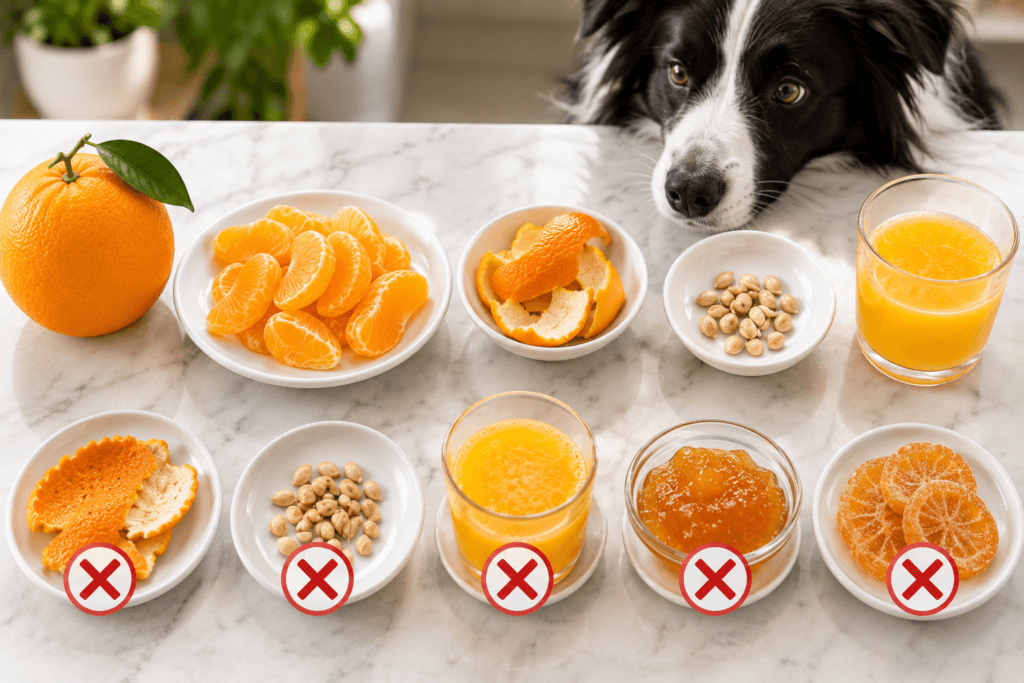
Orange Peel vs Orange Flesh vs Orange Seeds
| Part | Safe? | Recommendation |
|---|---|---|
| Fresh Orange Flesh | ✅ Yes | Best Choice |
| Orange Peel | ❌ No | Difficult to Digest |
| Orange Seeds | ❌ No | Remove Before Feeding |
| Orange Juice | ❌ Not Recommended | Too Much Sugar & Acid |
| Candied Oranges | ❌ Never | High Sugar |
| Orange Marmalade | ❌ Never | Added Sugar |
Common Mistakes Dog Owners Make
Avoid these common mistakes:
❌ Feeding oranges with the peel attached.
❌ Forgetting to remove seeds.
❌ Giving too many orange slices.
❌ Offering orange juice instead of fresh fruit.
❌ Feeding oranges every day.
❌ Assuming all citrus fruits are equally safe.

Frequently Asked Questions
1. Can dogs eat oranges every day?
No. Because oranges contain natural sugar, they should only be offered occasionally.
2. Can puppies eat oranges?
Yes, but only in tiny amounts after the peel and seeds have been removed.
3. Is orange peel safe for dogs?
No. Orange peel is difficult to digest and may cause stomach upset.
4. Can dogs drink orange juice?
No. Orange juice is high in sugar and acidity and is not recommended.
5. Are orange seeds dangerous?
Yes. Always remove all seeds before feeding oranges.
6. Which dogs should avoid oranges?
Dogs with diabetes, obesity, or sensitive stomachs should only eat oranges with veterinary approval.
7. What fruits are healthier than oranges?
Blueberries, strawberries, watermelon, pears, and apples (without seeds) are excellent alternatives.
8. What should I do if my dog eats orange peel?
Monitor your dog for vomiting, diarrhea, or signs of intestinal discomfort. Contact your veterinarian if symptoms develop or if a large amount was eaten.
Key Takeaways
- ✅ Fresh orange flesh is generally safe for healthy dogs.
- ✅ Remove the peel, seeds, and most of the white pith before serving.
- ✅ Feed only small portions as an occasional treat.
- ✅ Avoid orange juice, marmalade, and candied oranges.
- ✅ Puppies should only receive tiny amounts.
- ✅ Moderation is the key to safe feeding.
Final Verdict
So, can dogs eat oranges? Yes—fresh, peeled, seedless orange segments can be a healthy occasional treat for most dogs. They provide vitamin C, fiber, antioxidants, and hydration, making them a nutritious snack when offered in moderation.
However, oranges should never replace a balanced dog diet. Always remove the peel and seeds, keep portions small, and avoid processed orange products like juice or marmalade. By following these simple precautions, you can safely let your dog enjoy this refreshing citrus fruit from time to time.