What to Do If Your Dog Eats Chocolate? Emergency Guide
If your dog has just eaten chocolate, the most important thing to know is this: don’t wait and see. Chocolate contains theobromine, a compound dogs process far more slowly than humans do, and even a modest amount of dark chocolate can be genuinely dangerous. This guide walks through exactly what to do, why chocolate is toxic in the first place, and how to judge the real level of risk.
Quick Answer
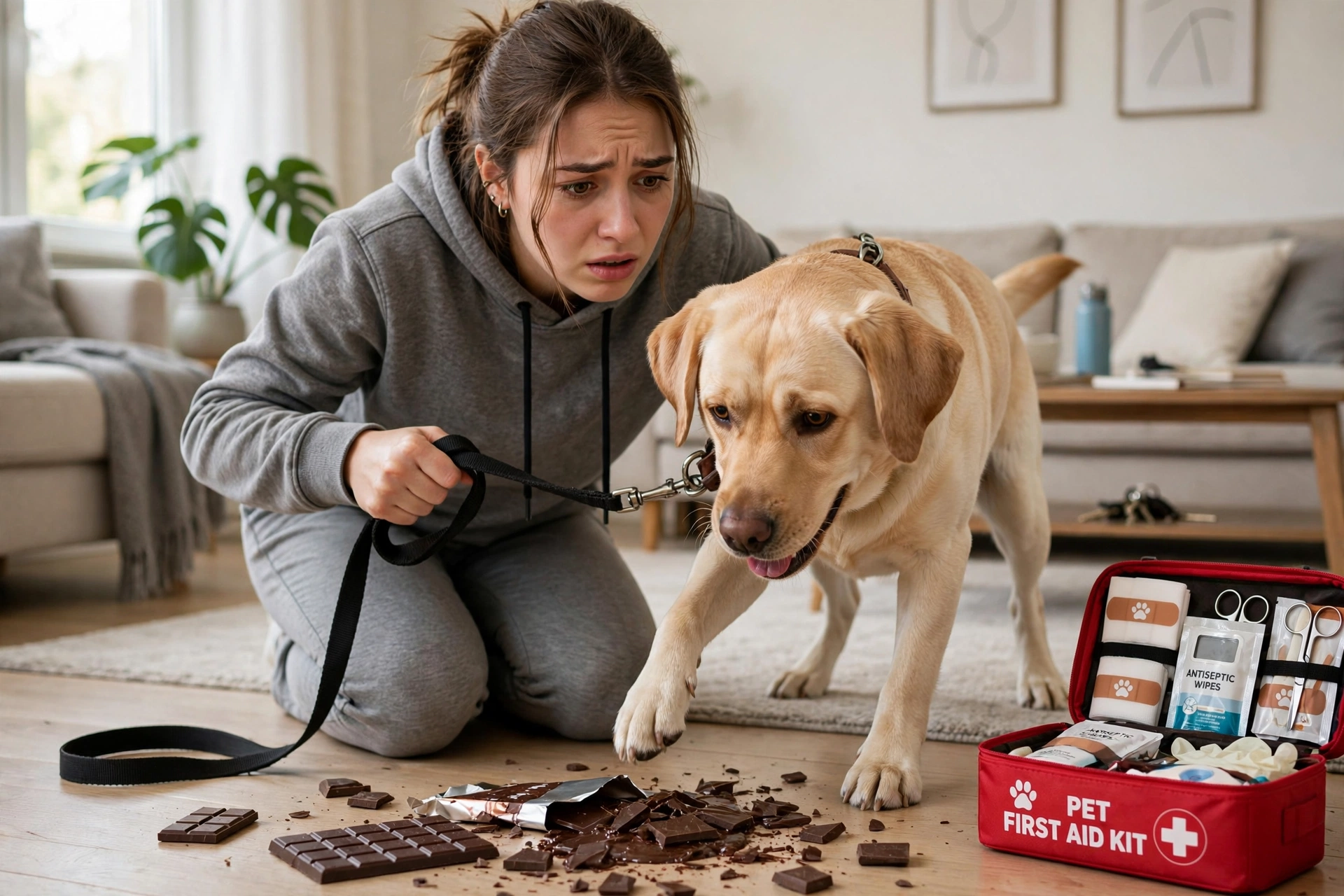
If your dog ate chocolate: remove any remaining chocolate, note the type, roughly how much, when it happened, and your dog’s weight, then call your vet or an emergency vet line immediately. Don’t wait for symptoms — by the time they show up, treatment options become more limited and more urgent. Dark chocolate, baking chocolate, and cocoa powder are the most dangerous by a wide margin; white chocolate is far less risky from a toxicity standpoint but still isn’t safe to feed on purpose.
Table Of Content:
- Remove all remaining chocolate and wrappers so your dog can’t eat more
- Keep the wrapper or packaging — it tells the vet exactly what was involved
- Note the type, roughly how much, when it happened, and your dog’s weight
- Call your vet, an emergency vet, or the Animal PoisonLine immediately
- Do not wait to see if symptoms develop
- Do not give milk, salt water, or any other home remedy
- Do not try to induce vomiting unless a vet specifically tells you to
Why Is Chocolate Toxic to Dogs?
Chocolate contains two related compounds, theobromine and caffeine, both part of a family called methylxanthines. Humans clear theobromine from their system within a few hours. Dogs metabolise it far more slowly — its half-life in a dog’s body is around 17-18 hours, roughly six to eight times longer than in a person. That’s the whole problem in one sentence: the chocolate doesn’t just “pass through,” it builds up.
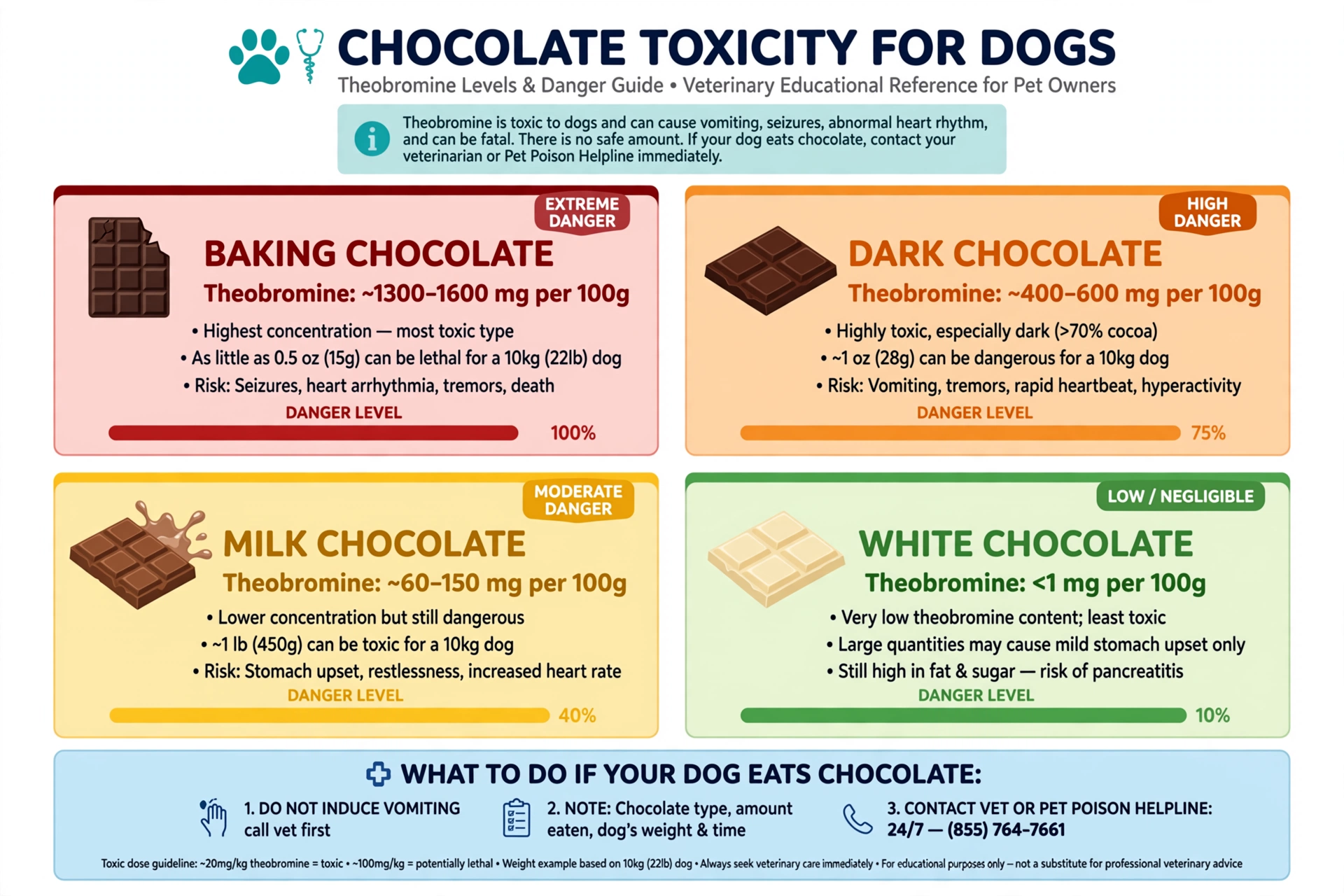
The theobromine content varies a lot by chocolate type, and this is the single biggest factor in how dangerous a given amount is:
| Chocolate Type | Approximate Theobromine (per oz) | Risk Level |
|---|---|---|
| White chocolate | ~0.25mg | Minimal theobromine risk, but high fat/sugar |
| Milk chocolate | ~44-64mg | Real risk, especially for small dogs |
| Dark / semi-sweet chocolate | ~130-150mg | High risk even in small amounts |
| Unsweetened baking chocolate | ~390-450mg | Severe risk — treat as an emergency regardless of amount |
| Cocoa powder | ~400-800mg | Highest risk of all — extremely concentrated |
(Figures are approximate and vary by brand — this is why the exact product and packaging matter when you call your vet.)
As a rough clinical guideline, doses around 9mg of theobromine per pound of body weight can cause mild symptoms like vomiting, and doses in the range of 18mg per pound and above are associated with more severe effects including tremors and seizures. This is why the same chocolate bar can be a minor stomach upset for a large dog and a genuine emergency for a small one.
Does Dog Size Really Matter That Much?
Yes, enormously. To put it concretely: a small amount of baking chocolate or cocoa powder that a large dog might shrug off as a stomach upset could be a serious, potentially fatal dose for a small dog like a Chihuahua, Yorkshire Terrier, or small mixed breed. This is exactly why “how much did they eat” and “how much does your dog weigh” are the two questions every vet or poison line will ask first — the relationship between amount and body weight is what actually determines risk, not the amount alone.
If you’re ever unsure, tools like the Vets Now dog chocolate toxicity calculator can give you a starting estimate based on weight, chocolate type, and amount — though it’s a guide, not a replacement for actually calling your vet.
Symptoms Timeline
Symptoms are often delayed, which catches a lot of owners off guard — your dog can look completely normal in the first couple of hours and still be in real danger.
0-2 hours: Often no visible symptoms at all. This is actually the most valuable window — if a vet sees your dog now, they can often induce vomiting and remove a large portion of the chocolate before it’s absorbed into the bloodstream.
2-6 hours: Vomiting, diarrhoea, excessive thirst, restlessness, hyperactivity, heavy panting.
6-12 hours: Rapid heart rate, muscle twitching, frequent urination, excessive drooling, agitation.
12-36 hours (and sometimes longer): Tremors, muscle rigidity, seizures, collapse, breathing difficulty. Heart rhythm problems can also appear during this window even in dogs who seemed to be recovering after being sick — which is why vets often want to monitor a seriously affected dog for a full 24-72 hours rather than just the first few hours.
What NOT to Do
Don’t wait and watch. This is the single most common and most dangerous mistake owners make. Because theobromine clears so slowly, waiting to “see if anything happens” simply gives it more time to be absorbed — the opposite of what you want.
Don’t give milk, salt water, or other home remedies. Milk doesn’t neutralise theobromine in any meaningful way. Salt water, sometimes suggested online as a way to induce vomiting, can cause salt (sodium) poisoning, which is a separate and serious emergency in its own right — potentially worse than the chocolate itself.
Don’t try to induce vomiting without veterinary guidance. It can genuinely help in the right circumstances, but the timing and method matter — done at the wrong time, or in a dog that’s already showing symptoms, it can cause complications like aspiration (vomit entering the lungs).
Don’t give activated charcoal at home unless a vet has told you the specific dose for your dog. Getting the dose wrong doesn’t just fail to help — it can cause its own problems, including dehydration.
Step-by-Step: What to Do
1. Remove and secure. Take away any remaining chocolate, wrappers, and packaging so your dog can’t get more. Check the floor, sofa, bin, and anywhere else they might have reached. Keep other pets away from the area — and note that chocolate is toxic to cats and rabbits too, not just dogs.
2. Note the key details. A vet needs to know the type of chocolate, roughly how much was eaten, how long ago, and your dog’s weight. Write it down or take a photo of the packaging — it’s easy to lose track of details once you’re worried.
3. Call for advice immediately. Contact your own vet, an emergency vet service if it’s outside normal hours, or the Animal PoisonLine. Give them the details you noted and answer their follow-up questions as clearly as you can. They’ll tell you whether to come in immediately or how to monitor at home.
4. Follow their instructions exactly. If they want to see your dog, bring the wrapper with you and drive safely. Don’t give food, water, or anything else unless you’ve been told to.
How Vets Typically Treat Chocolate Poisoning
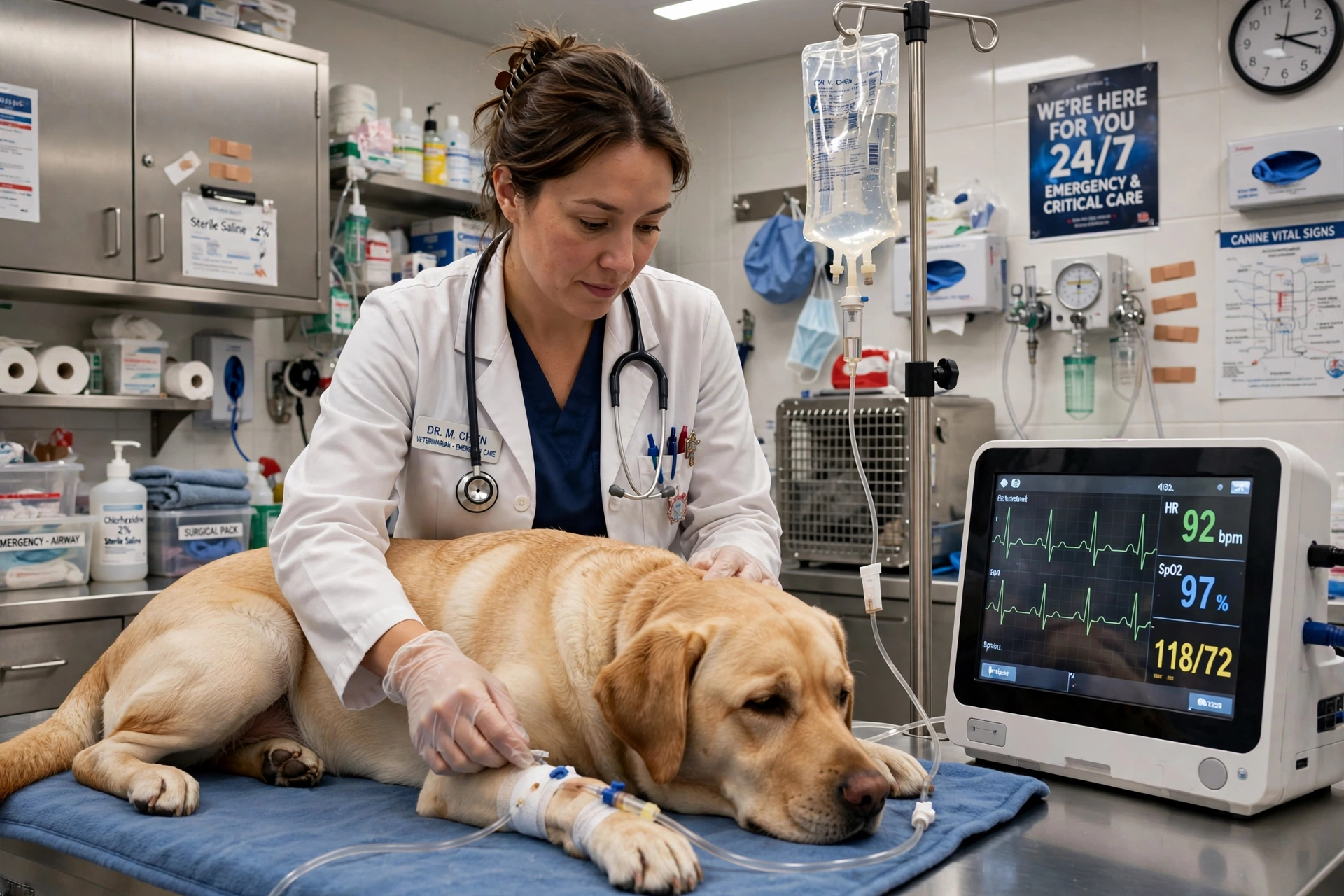
If a dog is seen within roughly the first two hours, a vet may induce vomiting (often with an injection, which works faster and more reliably than anything that can be done at home) to remove as much unabsorbed chocolate as possible. Beyond that window, treatment usually shifts toward activated charcoal, given orally or via a tube, to bind theobromine remaining in the gut and reduce further absorption — this may be repeated over the following 24 hours or so, since theobromine can recirculate through the gut rather than clearing in one pass.
Alongside this, IV fluids are commonly used to support hydration and help flush theobromine out through the kidneys. Heart rate and rhythm are usually monitored closely, since that’s where the most serious complications tend to show up, and medication may be given if the heart rate is dangerously high or irregular. In dogs with tremors or seizures, sedatives may be used to bring things under control.
Because theobromine takes a while to clear and heart problems can lag behind the initial symptoms, a dog with a serious exposure is often kept in for continued monitoring rather than sent home the same day, even if they seem to be doing better.
What If Your Dog Ate Chocolate Hours Ago?
Still call your vet — this is not a “too late to matter” situation. If it’s already been several hours, inducing vomiting is less likely to help, since the chocolate has probably moved further into the digestive tract, but a vet can still start supportive treatment like charcoal and fluids, and importantly, begin monitoring for the delayed heart complications that can appear well after the initial exposure. Even if your dog seems completely normal 12 or more hours later, it’s still worth getting them checked, since heart rhythm issues in particular can lag behind everything else.
Other Foods Often Found Near Chocolate — Worth Knowing About
Chocolate poisoning cases often involve more than just chocolate, especially around holidays. A few related dangers worth knowing, since they’re commonly mixed in with or near chocolate treats:
- Raisins and grapes — found in some chocolate-covered treats and trail mixes, and separately toxic to dogs in a way that can cause kidney injury. See our full guide on grapes and raisins if this applies to your situation.
- Macadamia nuts — sometimes found in chocolate-coated snacks, and toxic to dogs in their own right, typically causing weakness, tremors, and elevated temperature rather than the heart effects seen with chocolate.
- Xylitol — an artificial sweetener found in some “sugar-free” chocolate and baked goods, and genuinely more dangerous than chocolate itself in some cases, since it can cause a rapid, severe drop in blood sugar.
If your dog got into a mixed treat, cake, or gift box rather than a plain chocolate bar, mention every ingredient you can identify when you call — not just the chocolate.
Is Carob a Safe Alternative?
If you want to give your dog something chocolate-like as an occasional treat, carob is a genuinely safe substitute — it looks and tastes broadly similar but doesn’t contain theobromine. It’s worth knowing this exists so “no chocolate, ever” doesn’t have to mean “no chocolate-flavoured treats, ever.” Just double-check any product labelled as a carob treat doesn’t also contain real chocolate mixed in, which does happen with some lower-quality products.
Prevention Tips
- Store all chocolate somewhere your dog genuinely can’t reach — a high, closed cupboard, not just “out of sight” on a counter
- Practise a reliable “leave it” or “drop it” cue — genuinely useful in the exact moment a dog finds something on the floor
- Be extra vigilant around Christmas, Easter, Halloween, and Valentine’s Day, when chocolate is far more likely to be sitting around at dog height, including in bags, stockings, and under trees
- Make sure kids in the house understand chocolate isn’t a safe thing to share with the dog, however much the dog seems to want it
- Save your vet’s number and your nearest emergency vet’s number somewhere easy to find, so you’re not searching for it while panicking
- If you bake with chocolate or cocoa powder, be aware raw batter and mixing bowls are just as much a risk as the finished product
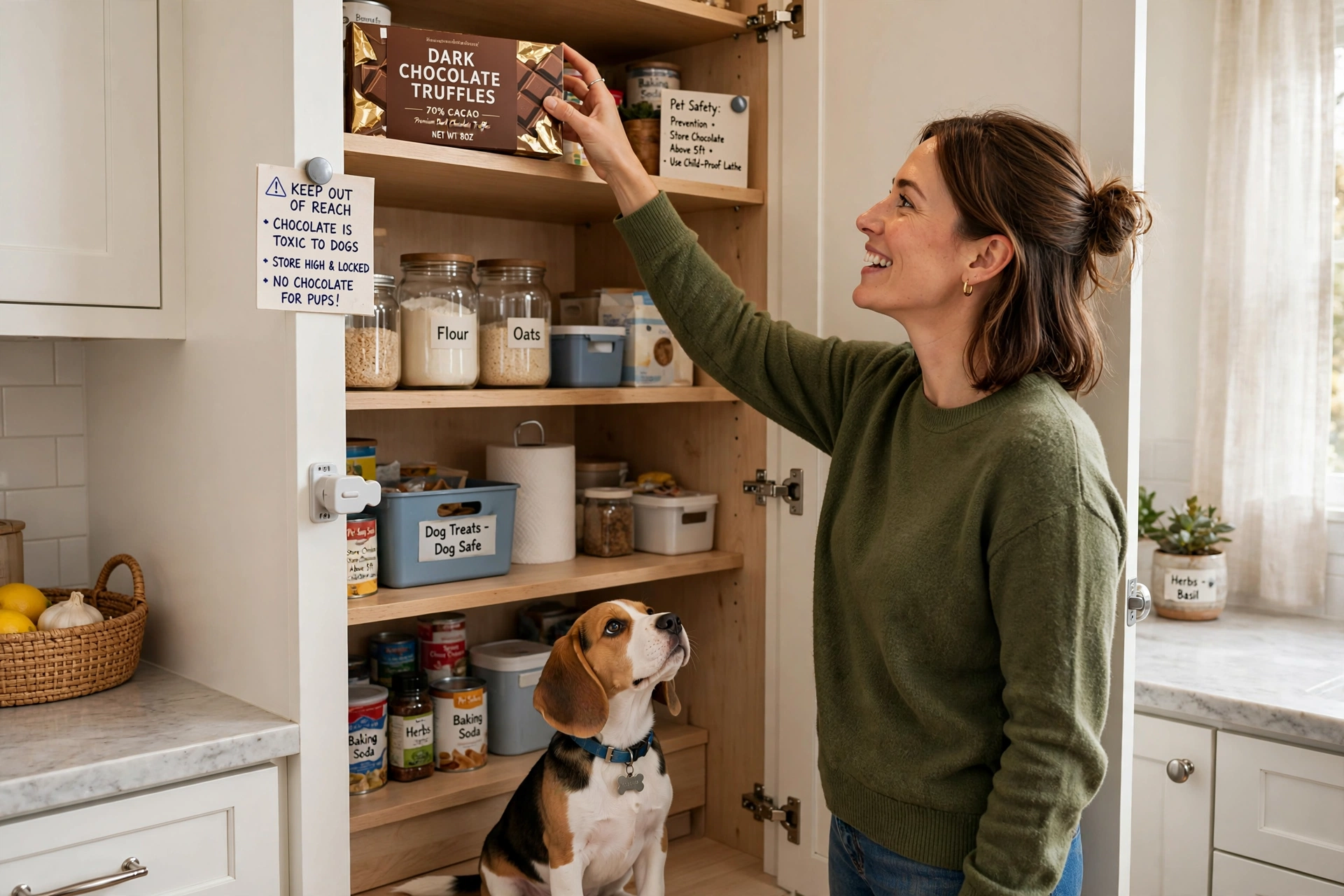
How These Cases Usually Happen
It helps to know the common patterns, since they’re often preventable once you see them clearly. Advent calendars and stocking treats are a frequent culprit around Christmas — dogs are good at working out that a cardboard box smells interesting, and calendars are often left at floor or table height.
Easter egg hunts are another common scenario, particularly when eggs are hidden outdoors or low down for children and a dog finds them first, sometimes before anyone realises eggs are missing. Baking is another one: a bowl of melted chocolate or cake batter left to cool on a counter is well within reach for a lot of dogs, and raw batter carries the same theobromine risk as the finished product. Finally, visitors and guests are a common blind spot — someone unfamiliar with your dog’s rules might leave a bag or coat with chocolate inside somewhere accessible, or hand over a “treat” without knowing it’s dangerous.
None of this is about blaming an owner for a slip-up — dogs are genuinely good at finding things, and it happens in careful households too. The point is just that knowing the common patterns makes it easier to spot the risk before it becomes a problem.
Recovery and Aftercare
Most dogs who are treated promptly for chocolate poisoning make a full recovery. For mild cases — a small amount of milk chocolate in a larger dog, for instance — recovery is often quick, sometimes with nothing more than a day of monitoring and an unsettled stomach. More serious cases, especially those involving dark or baking chocolate, tremors, or heart rhythm changes, understandably take longer, and your vet may want a follow-up check even after your dog seems back to normal, particularly to confirm heart rate and rhythm have properly settled.
Once home, dogs recovering from chocolate poisoning are often kept on a bland, easily digestible diet for a day or two while their stomach settles, and it’s worth watching for any return of vomiting, diarrhoea, or lethargy in the days that follow — if anything changes, it’s worth another call to your vet rather than assuming it will pass on its own.
A Note on Breed and Age Risk
While size is the biggest factor, a few other things shift the risk further. Older dogs, particularly those with existing heart conditions, are more vulnerable to the cardiac effects of theobromine even at doses that a younger, healthy dog of the same size might tolerate better. Puppies are more at risk partly because of their smaller size and partly because they’re more likely to eat something indiscriminately without hesitation. Toy and small breeds — Chihuahuas, Yorkshire Terriers, Dachshunds, and similar — are overrepresented in serious chocolate poisoning cases for the simple reason that a “normal” amount of chocolate for a person is a disproportionately large dose relative to their body weight.
None of this means larger or younger dogs are risk-free — it simply means the margin for error is smaller at the extremes, which is worth keeping in mind if your household includes an older dog, a puppy, or a particularly small breed.
Can one piece of chocolate really harm my dog?
Yes, particularly for small dogs and particularly with dark, baking chocolate, or cocoa powder. Don’t assume a small piece is automatically fine — call your vet with the details.
My dog ate chocolate hours ago and seems totally fine — do I still need to call?
Yes. Heart-related complications can appear later than the initial digestive symptoms, so “seeming fine” a few hours in doesn’t rule out a developing problem.
Is dark chocolate really that much worse than milk chocolate?
Yes — dark and baking chocolate contain roughly two to ten times more theobromine per ounce than milk chocolate, depending on the specific products being compared.
What if my dog ate white chocolate?
White chocolate has very little theobromine, so the classic toxicity risk is low, but it’s high in fat and sugar, which can trigger pancreatitis, particularly in larger amounts or in dogs already prone to digestive issues. Still worth a call, especially for small dogs.
Can dogs eat chocolate-containing baked goods like brownies or cookies?
No — beyond the chocolate itself, these often contain other risky ingredients (raisins, high sugar, sometimes xylitol). Treat it the same as a chocolate exposure and call your vet, mentioning everything you know was in it.
Is there a safe amount of chocolate I can give my dog on purpose?
No — there’s no amount of real chocolate that’s worth intentionally feeding. If you want to give a treat, use a carob-based alternative made specifically for dogs.
What’s the single most important thing to remember?
Don’t wait. The window where treatment is easiest and most effective is the first couple of hours — use it rather than watching and hoping.
Should I make my dog vomit myself, right now, just in case?
No, not without guidance. It seems like the obvious safe move, but it isn’t — if it’s done too late, if your dog is already showing symptoms, or if it’s done incorrectly, it can cause complications like vomit entering the lungs, which is its own emergency. Call first and let a professional tell you whether and how to do it.
Is it worth getting pet insurance partly because of things like this?
It’s a reasonable thing to weigh up. Chocolate poisoning and similar accidental poisonings are common enough that many pet insurance policies cover emergency treatment for them, and knowing that cover is in place can make it easier to act immediately rather than hesitating over cost during a stressful moment. It’s worth checking what your own policy covers, since this varies between providers.
Final Verdict
There’s no genuinely safe amount of dark chocolate, baking chocolate, or cocoa powder for a dog, and the danger isn’t always obvious right away — symptoms can take hours to appear, and the most serious complications can lag even further behind that. The single most useful thing you can do is act immediately: remove the chocolate, note the type, amount, timing, and your dog’s weight, and call your vet or an emergency vet line straight away rather than waiting to see what happens.
For more on foods that are and aren’t safe for dogs, see our complete fruit safety guide, or if grapes or raisins were also involved, our grapes and raisins emergency guide.
This guide is for general information and isn’t a substitute for professional veterinary advice. If your dog has eaten chocolate, contact your vet or an emergency vet service directly rather than relying on this guide alone.