
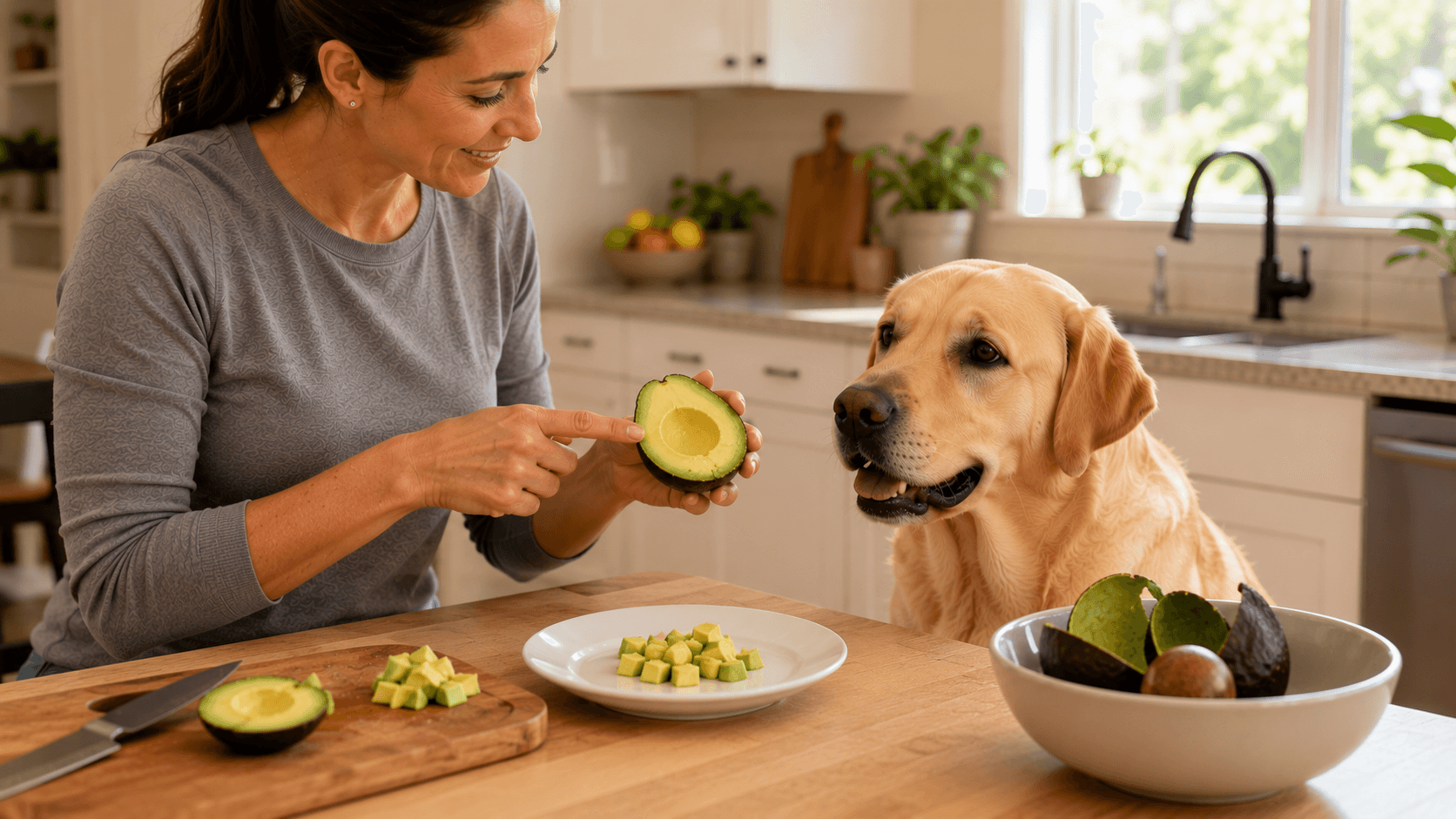
Can Dogs Eat the Avocado Pit?
If there’s one part of an avocado that poses the greatest immediate danger to dogs, it’s the pit.
The avocado pit is not only inedible, but it also presents two major risks:
- Choking hazard, especially for puppies and small breeds.
- Intestinal blockage, which may require emergency surgery.
Many dogs swallow objects without chewing them properly. Because the avocado pit is large, smooth, and hard, it can become lodged in the throat, stomach, or intestines.
Signs Your Dog May Have Swallowed an Avocado Pit
Watch for symptoms such as:
- Repeated vomiting
- Loss of appetite
- Abdominal pain
- Constipation
- Difficulty passing stool
- Weakness
- Restlessness
- Excessive drooling
If you suspect your dog swallowed an avocado pit, contact your veterinarian immediately. Do not try to induce vomiting unless instructed by a veterinary professional.
Can Dogs Eat Guacamole?
No.
Guacamole is far more dangerous than plain avocado because it usually contains ingredients that are unsafe for dogs.
Common ingredients include:
 Onions (toxic to dogs)
- Garlic (toxic to dogs)
- Salt
- Chili peppers
- Spices
- Lime juice
 Onions (toxic to dogs)
 Garlic (toxic to dogs)
 Salt
Salt Chili peppers
 Spices
 Lime juice
Even if the avocado itself doesn’t cause severe problems, these additional ingredients can.
Dogs should never eat guacamole.
Can Puppies Eat Avocado?
Puppies have much more delicate digestive systems than adult dogs.
Because of their:
- Smaller body size
- Developing immune system
- Sensitive stomach
- Higher risk of choking
Avocado is not suitable for puppies.
If your puppy accidentally eats avocado, monitor closely and contact your veterinarian if symptoms develop.
Can Small Dogs Eat Avocado?
Small breeds are generally more vulnerable to avocado-related problems.
Examples include:
- Chihuahua
- Yorkshire Terrier
- Pomeranian
- Maltese
- Shih Tzu
- Toy Poodle
A quantity that may only cause mild stomach upset in a Labrador could create much more significant problems in a 5-pound dog.
This is another reason veterinarians recommend avoiding avocado regardless of breed.
Can Large Dogs Eat Avocado?
Large breeds tolerate many foods better simply because of their body size.
However, this does not make avocado safe.
Dogs such as:
- Labrador Retriever
- Golden Retriever
- German Shepherd
- Rottweiler
- Great Dane
can still experience:
- Vomiting
- Diarrhea
- Pancreatitis
- Digestive irritation
Additionally, even a large dog can suffer an intestinal blockage if it swallows the pit.
Symptoms of Avocado Poisoning in Dogs
Every dog reacts differently.
Some dogs may only experience mild digestive upset, while others develop more serious complications.
Common Symptoms
- Vomiting
- Diarrhea
- Nausea
- Drooling
- Loss of appetite
- Lethargy
- Abdominal discomfort
Severe Symptoms
Although uncommon, seek veterinary attention immediately if your dog develops:
- Continuous vomiting
- Bloody diarrhea
- Difficulty breathing
- Collapse
- Severe weakness
- Signs of intestinal blockage
Prompt treatment usually leads to a much better outcome.
Why Is Avocado High Risk for Some Dogs?
Not every dog becomes sick after eating avocado.
However, several factors increase the risk.
Dogs with Pancreatitis
Because avocado contains significant fat, it may trigger pancreatitis in susceptible dogs.
Overweight Dogs
Extra dietary fat is unnecessary for overweight dogs and may worsen existing health conditions.
Dogs with Sensitive Stomachs
Some dogs develop digestive upset after eating even small amounts of fatty foods.
Dogs with Existing Medical Conditions
Dogs suffering from liver disease, kidney disease, diabetes, or chronic gastrointestinal disorders should never be offered avocado.
Can Dogs Eat Avocado Oil?
Many pet owners ask whether avocado oil is different.
Although refined avocado oil contains much lower amounts of persin than other parts of the fruit, it still is not recommended as a regular addition to a dog’s diet.
Dogs do not need avocado oil, and safer dietary fats are available if recommended by a veterinarian.
What Should You Do If Your Dog Eats Avocado?
If your dog accidentally eats avocado, follow these steps.
Step 1 – Stay Calm
Do not panic.
Many dogs recover well after eating a very small amount of ripe avocado flesh.
Step 2 – Remove Remaining Avocado
Prevent your dog from eating any more.
Dispose of:
- Pit
- Peel
- Leftover fruit
- Guacamole
Step 3 – Determine What Was Eaten
Ask yourself:
- Was it only the flesh?
- Did your dog swallow the pit?
- Was the peel eaten?
- Was it guacamole?
Knowing exactly what your dog consumed helps your veterinarian provide better advice.
Step 4 – Observe Your Dog
Monitor your dog for the next 24 hours.
Watch for:
- Vomiting
- Diarrhea
- Drooling
- Weakness
- Abdominal pain
- Appetite changes
Step 5 – Contact Your Veterinarian
Seek veterinary advice if:
- Your dog swallowed the pit.
- Your dog ate guacamole.
- Your puppy ate avocado.
- Symptoms appear.
- A large quantity was consumed.

Are There Any Benefits of Avocado for Dogs?
Many people call avocado a superfood because it contains healthy fats, vitamins, minerals, and antioxidants. Naturally, dog owners wonder if their pets can enjoy the same benefits.
The truth is a little more complicated.
Although avocado contains nutrients such as:
- Vitamin E
- Vitamin K
- Vitamin B6
- Folate
- Potassium
- Fiber
- Healthy monounsaturated fats
dogs do not need avocado to obtain these nutrients.
A complete and balanced dog food already provides everything a healthy dog requires. The potential nutritional value of avocado does not outweigh its risks, especially when much safer fruits are available.
For this reason, veterinarians recommend skipping avocado and choosing dog-friendly fruits instead.
Why Healthy Fats Can Still Be a Problem
One of avocado’s biggest selling points for humans is its healthy fat content.
However, dogs process dietary fat differently.
Even healthy fats can become problematic when consumed in excess.
Too much fat may contribute to:
- Digestive upset
- Weight gain
- Obesity
- Pancreatitis
- Reduced appetite
- Loose stools
Dogs with a history of pancreatitis should never be intentionally fed avocado.
Can Avocado Cause Pancreatitis?
Yes, it can increase the risk in susceptible dogs.
Pancreatitis is inflammation of the pancreas and can become a serious medical emergency.
Foods that are high in fat—including avocado—may trigger pancreatitis, particularly in dogs that already have digestive or metabolic problems.
Symptoms of Pancreatitis
Watch for:
- Severe vomiting
- Diarrhea
- Hunched posture
- Pain when touching the abdomen
- Refusing food
- Fever
- Weakness
- Dehydration
If your dog develops these symptoms after eating avocado, seek veterinary care immediately.
Dogs That Should Never Eat Avocado
Some dogs face greater risks than others.
Avoid avocado completely if your dog is:
- A puppy
- A senior dog
- Overweight
- Diagnosed with pancreatitis
- Living with diabetes
- Suffering from kidney disease
- Suffering from liver disease
- Experiencing chronic digestive disorders
- Recovering from surgery
These dogs should eat only veterinarian-approved treats.
How Much Avocado Is Too Much?
There is no officially recommended safe serving size because veterinarians do not recommend feeding avocado intentionally.
Even though some dogs may tolerate a tiny amount of ripe flesh, there is no nutritional advantage that justifies making avocado part of their diet.
Because every dog reacts differently, there is no guaranteed “safe amount.”
Can Dogs Be Allergic to Avocado?
Although uncommon, food sensitivities are possible.
Signs may include:
- Itchy skin
- Red ears
- Paw licking
- Vomiting
- Diarrhea
- Facial swelling (rare)
If your dog develops signs of an allergic reaction after eating avocado, contact your veterinarian immediately.
Can Dogs Eat Cooked Avocado?
Cooking does not make avocado safe.
Whether the avocado is:
- Fresh
- Mashed
- Cooked
- Grilled
- Baked
the same concerns remain:
- Persin
- High fat
- Digestive irritation
Cooking does not remove these risks.
Can Dogs Eat Avocado Toast?
No.
Avocado toast usually contains ingredients that are unsafe for dogs, including:
- Garlic
- Onion
- Salt
- Butter
- Pepper
- Chili flakes
These ingredients make avocado toast an even poorer choice than plain avocado.
Can Dogs Eat Avocado Ice Cream?
No.
Avocado ice cream often contains:
- Sugar
- Dairy
- Artificial flavors
- Chocolate (in some recipes)
- Xylitol (in sugar-free products)
These ingredients can be dangerous for dogs.
Can Dogs Eat Avocado Chips?
No.
Avocado chips are processed snack foods that typically contain:
- Salt
- Oil
- Seasonings
- Artificial flavorings
Dogs should never eat avocado chips.
Best Fruit Alternatives to Avocado
Fortunately, there are many safer fruits your dog can enjoy in moderation.
Blueberries
 Blueberries
Rich in antioxidants and low in calories.
Bananas
 Bananas
Easy to digest and naturally sweet.
Apples
 Apples
A crunchy treat after removing the seeds and core.
Watermelon
 Watermelon
Refreshing and hydrating when served seedless.
Strawberries
 Strawberries
An occasional healthy snack.
Pineapple
 Pineapple
Fresh pineapple pieces are generally a better option than avocado.
Pears
 Pears
PearsFresh pear slices without seeds make another excellent occasional treat.
These fruits provide enjoyment with far fewer risks than avocado.
Veterinary Tips for Feeding Fruit
Whenever offering fruit to your dog:
✔ Wash thoroughly.
✔ Remove pits.
✔ Remove seeds.
✔ Remove thick skins.
✔ Cut into bite-sized pieces.
✔ Feed only in moderation.
✔ Introduce one new fruit at a time.
✔ Monitor your dog for digestive upset.
Remember that treats—including fruit—should make up no more than about 10% of your dog’s daily calorie intake, with the remainder coming from a complete and balanced diet.

Final Verdict: Can Dogs Eat Avocado?
After examining the facts, the answer is clear:
Can Dogs Eat Avocado?
No—avocados are not recommended for dogs.
Although many people consider avocados one of the healthiest foods available, dogs have completely different nutritional requirements than humans.
Avocados contain persin, a naturally occurring compound that can cause digestive problems in dogs. In addition, the fruit is high in fat, while the pit creates a serious choking and intestinal blockage hazard.
Even if a small amount of ripe avocado flesh does not always make every dog seriously ill, veterinarians still recommend avoiding avocado because there are much safer fruits available.
Choosing safe treats instead of risky ones is always the better decision.
Quick Safety Summary
| Question | Answer |
|---|---|
| Can Dogs Eat Avocado? |  No No |
| Can Dogs Eat Avocado Flesh? |  Not Recommended Not Recommended |
| Can Dogs Eat Avocado Peel? | No |
| Can Dogs Eat Avocado Pit? | Never |
| Can Dogs Eat Guacamole? | No |
| Can Puppies Eat Avocado? | No |
| Is Avocado Toxic to Dogs? | It Can Cause Health Problems |
| Is Avocado Safe Daily? | No |
| Better Fruit Choices? |  Yes Yes |
What Should You Remember?
If your dog accidentally eats avocado:
Stay calm.
Remove any remaining avocado.
Determine what was eaten:
- Flesh
- Peel
- Pit
- Guacamole
Watch your dog for:
- Vomiting
- Diarrhea
- Loss of appetite
- Weakness
- Abdominal pain
If your dog swallowed the pit or develops serious symptoms, contact your veterinarian immediately.
Veterinarian’s Recommendation
Professional veterinarians generally advise not intentionally feeding avocado to dogs.
Instead, choose safer fruits that provide enjoyment with significantly lower risk.
Some excellent options include:
- Blueberries
- Bananas
- Apples
- Watermelon
- Strawberries
- Pineapple
- Pears
These fruits are much better occasional treats when prepared properly.
Frequently Asked Questions
Can dogs eat avocado?
No. Avocado is generally not recommended because it contains persin, is high in fat, and the pit creates a choking hazard.
Is avocado poisonous to dogs?
Dogs are generally more resistant to persin than some other animals, but avocado can still cause digestive upset and other health problems.
Can dogs eat avocado flesh?
A tiny accidental amount may not always cause severe illness, but veterinarians still recommend avoiding it.
Can dogs eat avocado skin?
No. The skin contains higher concentrations of persin and is difficult to digest.
Can dogs swallow an avocado pit?
They can—but it is extremely dangerous.
The pit may cause choking or intestinal blockage and requires immediate veterinary attention.
Can dogs eat guacamole?
No.
Guacamole often contains onion, garlic, salt, lime juice, and spices that are unsafe for dogs.
Can puppies eat avocado?
No.
Puppies have sensitive digestive systems and should never intentionally eat avocado.
Can dogs eat avocado oil?
Avocado oil is not recommended as a regular part of a dog’s diet.
What fruits are safer than avocado?
Safer fruits include:
- Blueberries
- Bananas
- Apples
- Watermelon
- Pears
- Pineapple
- Strawberries
Should I call my veterinarian if my dog eats avocado?
Yes, especially if:
- Your dog swallowed the pit.
- Your dog ate guacamole.
- Your puppy ate avocado.
- Your dog develops vomiting, diarrhea, weakness, or abdominal pain.
Veterinary Disclaimer
This article is intended for educational purposes only and should not replace professional veterinary advice.
Every dog is unique, and reactions to foods may vary depending on breed, age, size, medical history, allergies, medications, and overall health.
If your dog eats avocado and develops concerning symptoms, consult your veterinarian immediately.
Never ignore persistent vomiting, severe diarrhea, abdominal pain, breathing difficulties, or signs of intestinal blockage.