Table of Contents
- Introduction
- Quick Answer: Can Dogs Eat Honeydew?
- What Is Honeydew Melon?
- Is Honeydew Safe for Dogs?
- Nutritional Value of Honeydew for Dogs
- Health Benefits of Honeydew for Dogs
- Can Honeydew Help Hydrate Dogs?
- Honeydew and Dietary Fiber
- Vitamins and Minerals in Honeydew
- Can Dogs Eat Honeydew Every Day?
- How to Prepare Honeydew for Dogs
- Can Dogs Eat Honeydew Rind?
- Can Dogs Eat Honeydew Seeds?
- How Much Honeydew Can Dogs Eat?
Introduction
If your dog comes running whenever you start cutting fresh fruit in the kitchen, you may have wondered whether sharing a piece of honeydew melon is safe. Can dogs eat honeydew, or is this sweet, juicy fruit better left for humans?
For most healthy dogs, the answer is yes. The soft flesh of honeydew melon is generally considered non-toxic and can be offered as an occasional treat when prepared properly. The ASPCA lists honeydew melon as non-toxic to dogs, while veterinary-reviewed guidance from PetMD also explains that healthy dogs can generally enjoy small portions of the fruit.
However, safe does not mean unlimited. Honeydew naturally contains sugar, and feeding your dog too much fruit may cause digestive upset or contribute unnecessary calories to the diet. The tough outer rind should be removed before serving, and the seeds are best discarded as well. The rind can be difficult for dogs to digest and may pose an obstruction risk if swallowed, while seeds can create choking or digestive concerns.
For a healthy dog, a few small pieces of properly prepared honeydew can be a refreshing occasional snack, particularly during warmer weather. The safest approach is simple: serve only the edible flesh, remove the rind and seeds, cut the melon into appropriately sized pieces, and keep the serving small.
In this guide, WarmWag explains everything dog parents need to know before sharing honeydew with their pets. We will cover the fruit’s nutritional value, possible benefits, potential risks, appropriate serving sizes, safe preparation, and the situations in which you should consult your veterinarian before offering it.
Quick Answer: Can Dogs Eat Honeydew?
Yes, dogs can eat honeydew melon in moderation.
The ripe flesh of honeydew is generally safe for healthy dogs when served correctly. The fruit contains a significant amount of water and provides small amounts of nutrients such as fiber, potassium, folate, and vitamin C. However, honeydew also contains natural sugars, so it should be treated as an occasional snack rather than a regular part of your dog’s daily meals.
Before serving honeydew to your dog:
- Remove the outer rind completely.
- Remove the seeds.
- Cut the flesh into small, manageable pieces.
- Start with a small amount if your dog has never tried it.
- Monitor your dog for digestive problems after introducing the fruit.
- Keep honeydew within your dog’s overall daily treat allowance.
- Ask your veterinarian before offering it if your dog has diabetes, obesity, or a medical condition requiring dietary restrictions.
The ASPCA specifically classifies honeydew melon as non-toxic to dogs. However, non-toxic foods can still cause problems when served in excessive amounts or prepared incorrectly.
So, if your healthy dog eats a small piece of peeled honeydew, there is generally no reason to panic. For future servings, prepare it carefully and offer only a modest portion.

What Is Honeydew Melon?
Honeydew is a sweet melon that belongs to the Cucurbitaceae family. It is recognized by its smooth outer skin and juicy, pale-green flesh.
In the United States, honeydew is commonly eaten fresh, added to fruit salads, blended into smoothies, or served chilled as a refreshing snack. Because dogs often become interested in the foods their owners are eating, many pet parents eventually wonder whether they can share a small piece.
The answer depends partly on which part of the melon is being offered.
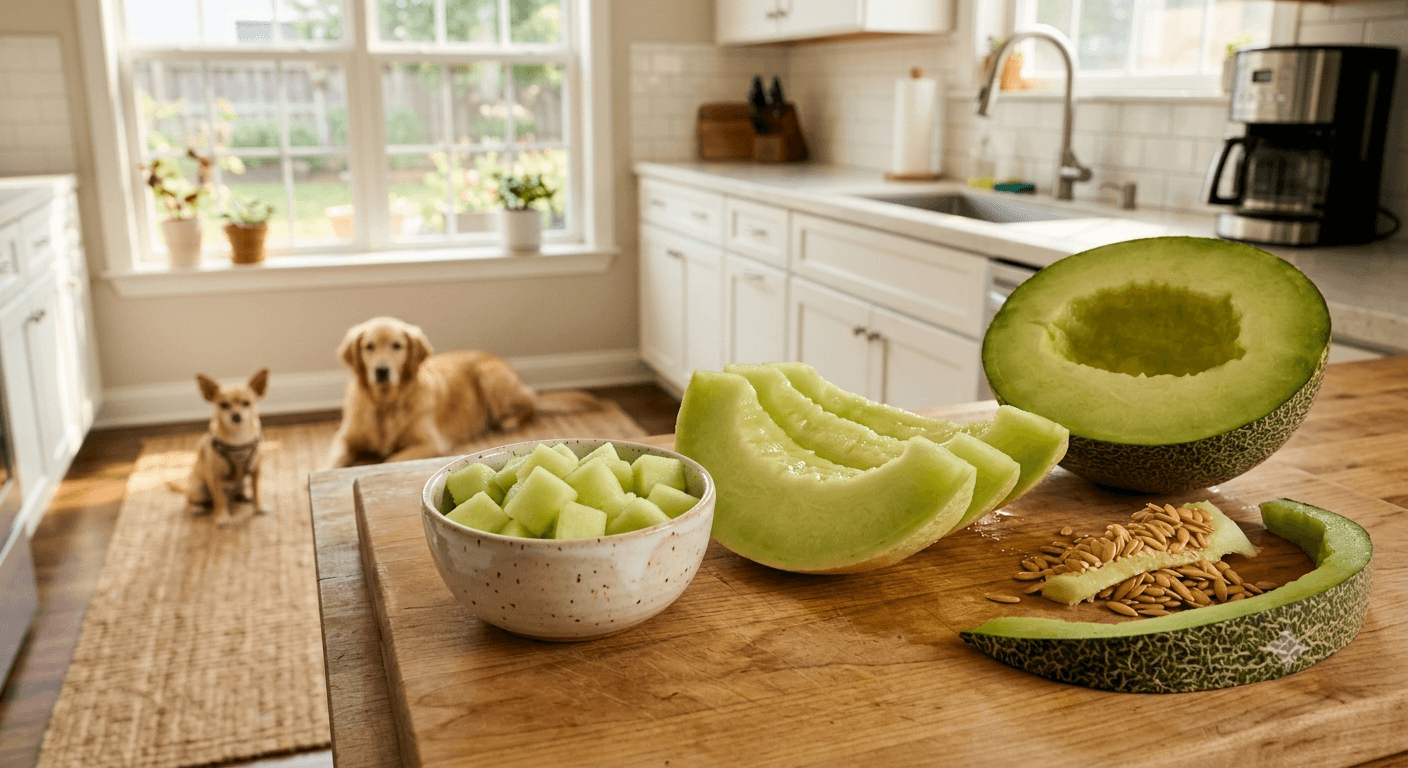
The soft inner flesh is the part generally considered appropriate for dogs in moderation. The tough outer rind should be removed before serving, and the seeds should also be taken out.
This distinction matters because dogs do not naturally know which parts of human foods are safe. A dog may happily chew through a piece of rind or swallow it if given the opportunity.
Honeydew is also not a necessary food for dogs. Your dog’s main diet should consist of a complete and balanced food that meets their nutritional requirements. Fruits such as honeydew are optional treats that may add variety, moisture, and flavor but should not replace a balanced meal.
The goal is to use honeydew as an occasional addition to an already appropriate diet—not to turn it into a major source of your dog’s nutrition.
Is Honeydew Safe for Dogs?
For most healthy dogs, the flesh of honeydew is safe when offered in moderation.
The ASPCA lists honeydew melon as non-toxic to dogs, and veterinary-reviewed PetMD guidance describes honeydew as an appropriate occasional snack when prepared correctly.
However, several factors should be considered before adding any new food to your dog’s routine.
1. Consider Your Dog’s Individual Health
A healthy dog without dietary restrictions can generally enjoy a small amount of honeydew.
However, some dogs need more careful dietary management. Honeydew contains natural sugar, so pet parents of dogs with diabetes or significant weight-management concerns should consult their veterinarian before offering it.
PetMD specifically recommends caution when feeding honeydew to dogs with diabetes or obesity because of its sugar content.
Dogs following a prescription diet should also not receive additional foods without veterinary approval. Even a seemingly harmless treat can interfere with a carefully controlled nutritional plan in certain medical situations.
2. Portion Size Matters
Even foods that are considered safe can cause problems when consumed in excessive amounts.
Too much honeydew may contribute to:
- Loose stools
- Diarrhea
- Gas
- Vomiting
- Stomach discomfort
- Excess calorie intake
A few bite-sized pieces are very different from allowing a dog to eat a large quantity of melon.
When introducing any new treat, moderation is one of the most important safety principles.
3. Preparation Is Important
Do not simply hand your dog a large wedge of honeydew and assume they will eat only the soft flesh.
Remove the rind and seeds first. Then cut the edible portion into appropriately sized pieces.
Small pieces are easier for dogs to chew and can help reduce the risk of gulping.
For small dogs, especially, the pieces should be noticeably smaller than those given to a large breed.
4. Honeydew Counts as a Treat
Honeydew should be included within your dog’s overall treat allowance.
Veterinary nutrition guidance commonly recommends that treats and other extras account for no more than approximately 10% of a dog’s daily calorie intake, with the majority of calories coming from a complete and balanced diet.
That means honeydew should complement your dog’s regular diet—not compete with it.
If your dog already receives training treats, dental chews, table scraps, or other snacks throughout the day, you should consider the total amount of extras rather than looking at honeydew in isolation.
Nutritional Value of Honeydew for Dogs
Honeydew is best considered a water-rich, refreshing occasional treat rather than a major nutritional component of a dog’s diet.
The edible flesh contains water and small amounts of several nutrients, including:
- Vitamin C
- Potassium
- Dietary fiber
- Folate
- Vitamin B6
- Vitamin A
- Niacin
Honeydew’s high water content and relatively low calorie density can make it an appealing alternative to many calorie-heavy human snacks. However, the amount of fruit a dog normally receives as a treat is unlikely to provide enough nutrients to significantly change an otherwise complete and balanced diet.
That distinction is important.
Honeydew can be a pleasant and nutritious addition to your dog’s treat rotation, but it should not be promoted as a nutritional supplement or treatment for a health condition.
If your dog already eats an appropriate complete and balanced diet, their primary nutritional requirements should be supplied by that food.

Health Benefits of Honeydew for Dogs
While honeydew should never replace a complete and balanced diet, small portions may offer a few practical benefits when used as an occasional treat.
1. Its High Water Content Can Add Moisture
One of honeydew’s most notable characteristics is its high water content.
Fresh fruit can contribute additional moisture alongside your dog’s normal access to clean drinking water. This can make small pieces of honeydew a refreshing snack, particularly during warm weather.
However, honeydew should never replace your dog’s drinking water.
If your dog is dehydrated, refusing to drink, excessively panting, vomiting, or showing signs of heat-related illness, do not rely on fruit as a home treatment. Seek veterinary advice promptly.
For a healthy dog on a warm day, however, a few chilled pieces of properly prepared honeydew can be an enjoyable occasional snack.
2. It Provides Some Dietary Fiber
Honeydew contains dietary fiber, which plays a role in normal digestive function.
Appropriate amounts of fiber can support healthy bowel movements as part of a balanced diet. However, suddenly feeding a large amount of fruit may have the opposite effect and contribute to digestive upset.
This is one reason to introduce honeydew gradually.
If your dog has never eaten the fruit before, start with one or two small pieces. If your dog tolerates them well, you can occasionally offer a modest portion appropriate for their size.
Dogs with chronic gastrointestinal problems should be evaluated individually by a veterinarian before new treats are added to their diet.
3. It Contains Small Amounts of Vitamins and Minerals
Honeydew provides small amounts of nutrients such as vitamin C and potassium.
These nutrients have important functions in the body, but it is important to maintain realistic expectations about the benefit of a small fruit serving.
A few pieces of honeydew will not replace the nutritional value of a complete dog food.
Instead, think of honeydew as a varied occasional treat that can provide some additional nutrients while introducing a different flavor and texture to your dog’s snack routine.
4. It May Be a Lighter Alternative to Some Human Snacks
Fresh honeydew can be a better choice than many calorie-dense human desserts.
If your dog is begging while you are eating cookies, cakes, or other sweet foods, offering a small piece of plain honeydew may be a more appropriate option for a healthy dog.
Still, “lighter” does not mean unlimited.
Honeydew contains natural sugars, and frequent treats can contribute to excess calorie intake over time.
Dogs that are overweight or prone to gaining weight may need stricter portion control. Dogs with diabetes should only receive honeydew if their veterinarian considers it appropriate.
5. It Can Add Variety to Treats
Honeydew can occasionally be incorporated into simple enrichment activities.
Small pieces can be:
- Chilled before serving
- Cut into tiny training rewards
- Frozen in appropriately sized portions
- Used as an occasional food topper
- Combined with other dog-safe fruits
If you freeze honeydew, use pieces that are appropriate for your dog’s size and chewing ability.
Very large or hard frozen pieces may be difficult for some dogs to chew and could increase the risk of choking.
The goal should always be safe enrichment and enjoyment—not simply increasing the amount of food your dog consumes.
Benefits of Honeydew for Dogs
As discussed in Part 1, honeydew can be a safe occasional treat for many healthy dogs when the edible flesh is served in appropriate portions. Its main advantages are its high water content, mild sweetness, and the small amounts of vitamins, minerals, and fiber it provides.
However, these benefits should be viewed realistically. Honeydew is not a necessary food for dogs, and it cannot replace a complete and balanced canine diet.
1. Honeydew Can Be a Refreshing Treat
Because honeydew contains a high amount of water, small pieces can be refreshing for dogs, especially on a warm day.
Some dogs enjoy the cool, juicy texture of chilled melon. You can serve a few small pieces straight from the refrigerator or occasionally freeze appropriately sized pieces for a different texture.
Still, fresh drinking water should always be available. Honeydew is an optional treat, not a substitute for your dog’s regular water supply.
2. Honeydew Offers Some Dietary Fiber
The flesh of honeydew contains dietary fiber. Fiber plays a role in normal digestive function and can contribute to healthy bowel movements.
However, more is not always better.
If your dog suddenly eats a large amount of fruit, the extra fiber and water may cause loose stools or diarrhea. Introduce new foods gradually and always keep portions small.
3. Honeydew Provides Some Vitamins and Minerals
Honeydew contains nutrients such as vitamin C, potassium, and folate.
While these nutrients are valuable, the amount your dog receives from a small treat is limited. A complete commercial dog food or properly formulated veterinary diet should remain the foundation of your dog’s nutrition.
Think of honeydew as an occasional source of variety—not a nutritional supplement.
4. It Can Be an Alternative to High-Calorie Human Desserts
If your dog is interested in your food while you are eating dessert, a small piece of plain honeydew may be a more suitable option than cookies, cakes, or other sugary human foods.
However, honeydew still contains natural sugar and calories.
Dogs that are overweight, prone to weight gain, or diagnosed with diabetes may need stricter dietary control. Always discuss new treats with your veterinarian when your dog has a medical condition affected by diet.
5. Honeydew Can Add Variety to Treat Time
Dogs can become excited by different flavors, textures, and aromas.
A few appropriately prepared pieces of honeydew can occasionally add variety to your dog’s treat rotation. You can also use tiny pieces as occasional rewards, provided they fit within your dog’s overall daily treat allowance.
Potential Risks of Honeydew for Dogs
Although the flesh of honeydew is generally safe for healthy dogs, there are several risks that responsible pet parents should understand.
1. Too Much Honeydew Can Cause Digestive Upset
One of the most common problems is simply eating too much.
A dog that consumes a large amount of honeydew may experience:
- Diarrhea
- Loose stools
- Gas
- Vomiting
- Stomach discomfort
This can happen because your dog’s digestive system may not be accustomed to large quantities of fruit.
If your dog accidentally eats a small amount of honeydew, there is usually no reason to panic. However, monitor them for any unusual symptoms.
If vomiting or diarrhea is severe, persistent, or accompanied by weakness, blood, abdominal pain, or other concerning signs, contact your veterinarian.
2. Honeydew Contains Natural Sugar
Honeydew contains naturally occurring sugars.
For a healthy dog eating a small portion, this is generally not a major concern. However, repeatedly feeding large amounts can add unnecessary sugar and calories to the diet.
This is particularly important for dogs that are:
- Overweight
- Obese
- Diabetic
- At risk of weight gain
- Following a calorie-controlled diet
If your dog has diabetes or another condition that requires dietary management, ask your veterinarian before adding honeydew to their diet.
3. The Rind Can Be Difficult to Digest
The tough outer rind of honeydew should be removed before serving.
Dogs may have difficulty digesting large pieces of the thick rind. If swallowed, pieces can potentially contribute to gastrointestinal obstruction.
For this reason, never intentionally feed your dog the rind.
If your dog accidentally swallows a tiny piece, monitor them closely. If they swallow a large amount or develop vomiting, loss of appetite, abdominal pain, lethargy, or difficulty passing stool, seek veterinary advice promptly.
4. Seeds Should Be Removed
The safest approach is to remove honeydew seeds before giving the fruit to your dog.
Seeds can create a choking concern, especially for small dogs, and swallowing multiple seeds along with fruit may contribute to digestive problems.
Take a few extra seconds to remove them before cutting the melon into bite-sized pieces.
5. Choking Is Possible
Any food can potentially become a choking hazard if it is too large for the dog eating it.
A large, slippery chunk of melon may be difficult for some dogs to chew properly.
Small dogs and dogs that tend to gulp their food may need especially small pieces.
Always consider:
- Your dog’s breed
- Body size
- Age
- Chewing habits
- Individual eating behavior
Veterinarian Advice Before Feeding Honeydew
For a healthy dog, occasional honeydew is generally considered a reasonable treat when served properly. However, every dog is an individual, and certain health conditions may change what foods are appropriate.
Before introducing honeydew, consider your dog’s overall health, current diet, and medical history.
Dogs With Diabetes
Dogs with diabetes require careful management of their diet and blood glucose levels.
Because honeydew contains natural sugar, it may not be appropriate for every diabetic dog.
Do not assume that because a fruit is non-toxic, it is automatically suitable for a dog with diabetes.
Speak with your veterinarian before offering honeydew or other sweet fruits.
Overweight or Obese Dogs
If your dog is overweight, treats should be carefully controlled.
Even healthy foods can contribute to weight gain when offered too frequently or in excessive portions.
A veterinarian can help determine whether small pieces of honeydew fit within your dog’s calorie requirements.
Dogs on Prescription Diets
Some dogs need prescription diets because of kidney disease, gastrointestinal problems, food allergies, urinary conditions, or other medical concerns.
In these situations, adding new foods without veterinary guidance may interfere with the purpose of the diet.
Always ask your veterinarian before introducing new treats to a dog receiving therapeutic nutrition.
Dogs With Sensitive Stomachs
Some dogs have digestive systems that react quickly to dietary changes.
If your dog frequently experiences vomiting, diarrhea, gas, or other gastrointestinal problems, introduce new foods cautiously.
Your veterinarian may recommend avoiding certain treats altogether depending on the underlying cause.
Puppies
Puppies have developing digestive systems and specific nutritional needs.
A puppy’s primary diet should be a complete and balanced food formulated for growth.
A tiny piece of properly prepared honeydew may be tolerated by some puppies, but it should not replace nutritious puppy food or become a major part of their diet.
We will discuss puppies and honeydew in greater detail in Part 3.
Safe Serving Sizes for Honeydew
There is no universal honeydew serving size that is appropriate for every dog.
The correct amount depends on your dog’s:
- Body size
- Age
- Weight
- Activity level
- Health status
- Existing diet
- Treat intake
A useful general approach is to start with a very small amount.
Suggested Starting Portions
| Dog Size | Starting Amount | General Treat Approach |
|---|---|---|
| Toy / Very Small Dogs | 1 small bite | Start cautiously |
| Small Dogs | 1–2 small pieces | Occasional treat |
| Medium Dogs | 2–4 small pieces | Moderate occasional treat |
| Large Dogs | 4–6 small pieces | Occasional treat |
| Giant Dogs | Several small pieces | Portion based on total calories |
These are general starting guidelines, not veterinary prescriptions.
The pieces should be small, peeled, and seedless.
The amount should also be adjusted based on what else your dog eats during the day.
For example, if your dog has already consumed several training treats and a dental chew, you may want to skip the honeydew or offer only a very small piece.
The goal is to keep all treats and extras within a reasonable portion of your dog’s daily calorie intake.
How to Serve Honeydew Safely
If you decide to give your dog honeydew, follow these steps.
Step 1: Wash the Melon
Wash the outside of the melon before cutting it.
This helps reduce the possibility of transferring dirt or contaminants from the surface to the edible flesh during cutting.
Step 2: Cut the Melon
Use a clean knife and cutting board.
Cut the melon into manageable sections.
Step 3: Remove the Rind
Separate the soft flesh from the thick outer rind.
Discard the rind rather than allowing your dog to chew on it.
Step 4: Remove the Seeds
Scoop out the seeds and discard them.
Check the flesh for any remaining seeds before serving.
Step 5: Cut Into Small Pieces
Cut the edible flesh into pieces appropriate for your dog’s size.
For small breeds, use very small pieces.
For larger breeds, pieces can be somewhat larger, but they should still be easy to chew.
Step 6: Start Small
If your dog has never eaten honeydew before, offer just one or two small pieces.
Wait and observe how your dog responds.
If there are no signs of digestive upset, you can offer a small serving again on another occasion.

How Much Honeydew Can Dogs Eat?
The right amount of honeydew depends on your dog’s size, weight, health, activity level, and the number of other treats they receive throughout the day.
There is no single serving size that works for every dog. A Great Dane and a Chihuahua should obviously not receive the same portion.
For a healthy dog, a sensible approach is to start with a very small amount and see how they respond.
General Honeydew Serving Guide
| Dog Size | Suggested Starting Portion | General Guidance |
|---|---|---|
| Toy / Very Small Dogs | 1 tiny piece | Start with a very small bite |
| Small Dogs | 1–2 small pieces | Occasional treat |
| Medium Dogs | 2–4 small pieces | Keep portions moderate |
| Large Dogs | 4–6 small pieces | Occasional treat |
| Giant Dogs | Several small pieces | Adjust based on total calorie intake |
These are general guidelines rather than veterinary prescriptions.
The pieces should always be:
- Fresh
- Plain
- Peeled
- Seedless
- Cut into manageable sizes
Your dog’s total daily treat intake matters more than any single fruit.
For example, if your dog already receives training treats, dental chews, or other snacks, the honeydew portion should be reduced accordingly.
A useful rule is to keep all treats and extras within approximately 10% of your dog’s daily calorie intake, with the rest coming from a complete and balanced diet.
Start With Less
If your dog has never eaten honeydew before, do not immediately give them a large bowl.
Start with one small piece.
Then observe your dog for the rest of the day.
Look for signs such as:
- Loose stool
- Diarrhea
- Vomiting
- Excessive gas
- Abdominal discomfort
- Unusual itching
If your dog remains comfortable, a small serving can occasionally be offered again.
Can Dogs Eat Honeydew Every Day?
Although the edible flesh is generally safe for healthy dogs, there is usually no need to feed honeydew every day.
Honeydew contains natural sugars, and your dog does not need fruit to meet their basic nutritional requirements if they already eat a complete and balanced diet.
Offering honeydew occasionally is a better approach than making it a daily staple.
If you want to provide fruit regularly, rotate small portions of different dog-safe fruits rather than relying heavily on one type.
However, fruit should still remain a relatively small part of the overall diet.
Dogs that need to lose weight or have diabetes may need to avoid sweet fruit or have it carefully portioned under veterinary guidance.
Signs of Allergy or Food Intolerance
A true allergy to honeydew is not commonly reported in dogs, but individual dogs can react differently to new foods.
It is also possible for a dog to experience digestive intolerance without having a true food allergy.
Possible Signs of a Reaction
Watch your dog for:
- Itching
- Red or irritated skin
- Facial swelling
- Hives
- Repeated vomiting
- Diarrhea
- Excessive licking
- Ear irritation
- Difficulty breathing
Digestive symptoms after eating honeydew may simply indicate that your dog ate too much or is not accustomed to the fruit.
However, symptoms such as facial swelling, widespread hives, or difficulty breathing can indicate a serious allergic reaction and require immediate veterinary attention.
If you suspect your dog has reacted badly to honeydew, stop feeding it and contact your veterinarian for advice.
Do not assume that every reaction is an allergy. Your veterinarian can help determine whether the problem is more likely related to an allergy, intolerance, portion size, or another underlying issue.

Can Puppies Eat Honeydew?
Yes, puppies can potentially eat a very small amount of properly prepared honeydew, but extra care is needed.
Puppies have different nutritional requirements from adult dogs. Their growing bodies need a balanced puppy diet formulated to support healthy development.
Because of this, honeydew should never replace a puppy’s regular food.
If your veterinarian agrees that a small fruit treat is appropriate, you can offer a tiny piece of peeled and seedless honeydew.
Puppy Safety Tips
When giving honeydew to a puppy:
- Remove the rind completely.
- Remove all visible seeds.
- Cut the flesh into a very small piece.
- Offer only a tiny amount initially.
- Monitor for digestive upset.
- Do not give large portions.
- Keep treats limited overall.
Young puppies can also be more sensitive to dietary changes than adult dogs.
If a puppy develops repeated vomiting or diarrhea, contact your veterinarian promptly. Puppies can become dehydrated more quickly than adult dogs, and persistent gastrointestinal symptoms should not be ignored.
If your puppy is currently eating a prescription diet or has a health concern, ask your veterinarian before introducing honeydew or any other new treat.
Can Senior Dogs Eat Honeydew?
Many healthy senior dogs can enjoy small amounts of honeydew, but their individual health needs should be considered.
Older dogs may be more likely to have conditions that affect their diet, including:
- Diabetes
- Obesity
- Kidney disease
- Dental problems
- Digestive disorders
A senior dog with healthy teeth may be able to chew small pieces comfortably, while another dog may need softer foods or smaller pieces.
If your senior dog has difficulty chewing, cut the fruit into very small pieces.
If they have a medical condition requiring dietary management, ask your veterinarian before introducing honeydew.
Can Dogs Eat Honeydew Rind?
It is best not to give dogs the honeydew rind.
The outer skin is tough and may be difficult to digest.
Large pieces can potentially contribute to gastrointestinal obstruction if swallowed.
Always separate the edible flesh from the rind before giving honeydew to your dog.
If your dog accidentally eats a small piece of rind, monitor them carefully. Contact your veterinarian if you notice:
- Repeated vomiting
- Loss of appetite
- Abdominal pain
- Severe lethargy
- Difficulty passing stool
- Persistent digestive problems
If your dog has swallowed a large amount of rind, contact your veterinarian for guidance rather than waiting for symptoms to appear.
Can Dogs Eat Honeydew Seeds?
The safest practice is to remove honeydew seeds before serving the fruit.
While accidentally swallowing a single small seed may not necessarily cause a serious problem, there is no benefit to intentionally feeding seeds to your dog.
Seeds can potentially create choking concerns and may be harder for small dogs to swallow safely.
The simplest approach is to scoop out the entire seed cavity before cutting the flesh into pieces.
This takes only a few seconds and makes the treat easier to prepare safely.
Related Dog Fruit Safety Topics
Honeydew is one of many fruits that dog owners ask about.
Some fruits are generally safe in moderation, while others require careful preparation or should be avoided completely.
For example, the flesh of some common fruits may be appropriate as an occasional treat, while certain seeds, pits, stems, or toxic compounds can create serious risks.
Dog owners should always research a fruit before sharing it.
The most important thing is to distinguish between:
- The edible flesh
- Seeds
- Pits
- Rinds
- Stems
- Leaves
Different parts of the same fruit can have very different safety profiles.
For more information, explore WarmWag’s guides to other fruits, including Can Dogs Eat Watermelon, Can Dogs Eat Bananas, Can Dogs Eat Cantaloupe, and Can Dogs Eat Mango.
Honeydew vs. Other Melons for Dogs
Different types of melon can vary in taste, texture, sugar content, and nutritional composition.
Here’s a simple comparison for dog owners.
| Fruit | Generally Safe for Healthy Dogs? | Main Consideration |
|---|---|---|
| Honeydew | Yes, in moderation | Natural sugar; remove rind and seeds |
| Cantaloupe | Yes, in moderation | Natural sugar; portion control |
| Watermelon | Yes, in moderation | Remove seeds and tough rind |
| Grapes | No | Potentially toxic to dogs |
| Raisins | No | Potentially toxic and can cause serious illness |
This comparison highlights an important point: not every fruit is safe for dogs.
Honeydew and some other melons can be offered as occasional treats when prepared correctly, while grapes and raisins should not be given to dogs.
If you are unsure about a particular fruit, check with your veterinarian before feeding it.

Trusted Veterinary Resources
10 Frequently Asked Questions
1. Can dogs eat honeydew?
Yes. Most healthy dogs can eat small amounts of plain, ripe honeydew melon flesh as an occasional treat. The rind and seeds should be removed before serving, and the fruit should be cut into appropriately sized pieces.
2. Is honeydew melon toxic to dogs?
No. Honeydew melon is generally considered non-toxic to dogs. However, non-toxic does not mean dogs should eat unlimited amounts. Too much honeydew can cause digestive upset and add unnecessary sugar and calories to the diet.
3. Can dogs eat honeydew seeds?
It is best to remove the seeds before giving honeydew to your dog. Seeds can present a choking concern, particularly for small dogs, and there is no nutritional reason to intentionally feed them.
4. Can dogs eat honeydew rind?
No. The tough outer rind should be removed before serving. It can be difficult to digest and may create a gastrointestinal obstruction risk if a dog swallows a large piece.
5. How much honeydew can a dog eat?
The appropriate amount depends on your dog’s size, health, weight, and overall diet. Start with one or two small pieces and monitor your dog. For healthy dogs, honeydew should remain an occasional treat rather than a large part of the diet.
6. Can puppies eat honeydew?
Healthy puppies may be able to eat a tiny piece of peeled and seedless honeydew, but their primary nutrition should come from a complete and balanced puppy food. Always introduce new foods carefully, and ask your veterinarian if your puppy has health concerns.
7. Can diabetic dogs eat honeydew?
Dogs with diabetes may need to avoid or strictly limit sweet fruits because honeydew contains natural sugar. Consult your veterinarian before giving honeydew to a diabetic dog.
8. Can overweight dogs eat honeydew?
An overweight dog may be able to have a very small amount occasionally, but portion control is important. Your veterinarian can help determine whether honeydew fits into your dog’s calorie-controlled diet.
9. What should I do if my dog eats too much honeydew?
Monitor your dog for vomiting, diarrhea, gas, abdominal discomfort, or other unusual symptoms. If symptoms are severe, persistent, or your dog appears seriously unwell, contact your veterinarian.
10. Is honeydew better than other fruit for dogs?
Not necessarily. Honeydew is one option among many fruits that may be suitable as occasional treats for healthy dogs. The most important factors are proper preparation, portion control, and your dog’s individual health needs.
Final Verdict: Can Dogs Eat Honeydew?
Yes, healthy dogs can generally eat honeydew in moderation.
The soft flesh of honeydew melon is considered non-toxic to dogs and can be offered as an occasional treat. Its high water content makes it a refreshing option, while its natural sweetness may make it appealing to dogs that enjoy fruit.
However, there are a few important rules to remember.
Always remove the rind and seeds before serving. Cut the flesh into small pieces that are appropriate for your dog’s size and chewing ability. Start with a small amount, especially if your dog has never eaten honeydew before.
Honeydew should also remain a treat—not a replacement for your dog’s regular food.
Dogs with diabetes, obesity, sensitive digestive systems, or medical conditions requiring dietary management may need different advice. In these cases, speak with your veterinarian before introducing honeydew.
The safest approach is simple: plain, peeled, seedless honeydew in small portions for a healthy dog.
Conclusion
So, can dogs eat honeydew?
For most healthy dogs, the answer is yes.
Honeydew can be a refreshing and enjoyable occasional treat when served correctly. The fruit’s juicy texture and high water content can make it especially appealing during warmer months, while small amounts of fiber and nutrients add some nutritional value.
But moderation is essential.
Before giving honeydew to your dog, remove the tough outer rind and seeds. Then cut the soft flesh into small, manageable pieces. Start with a tiny portion and watch your dog for any signs of digestive upset or an unusual reaction.
Remember that every dog is different. A healthy adult dog may tolerate honeydew without a problem, while a dog with diabetes, obesity, food sensitivities, or another medical condition may require a more carefully controlled diet.
Honeydew should never replace a complete and balanced dog food. Instead, think of it as an occasional treat that can add a little variety to your dog’s routine.
If you’re exploring other fruits for your dog, continue researching each one individually. Some fruits are safe in moderation, some require careful preparation, and others—including grapes and raisins—should never be fed to dogs.
Ultimately, responsible treat choices come down to three things: know the food, prepare it safely, and control the portion.
When those principles are followed, a few small pieces of properly prepared honeydew can be a perfectly enjoyable treat for many healthy dogs.